A Cornix alternative for Binance Futures comes in one of four shapes: another channel-reading copier that parses a Telegram channel and places its trades, a bot platform with a signal or webhook terminal for your own alerts, Binance's own futures copy trading, or a service that makes its own signals and executes them, such as HafizeBot. Pick the shape first, then check the product.
HafizeBot, one of the options, wrote this guide, and it ranks nothing. It names only Cornix, Binance and ourselves; for every other vendor it tells you what to check rather than who to pick. Facts about Cornix and Binance come from their own pages as listed on 17 October 2026, linked; if a page has moved on since, trust the page. For a head-to-head view, see our earlier comparison of HafizeBot and Cornix.
What Cornix does, so you know what you are replacing
Cornix will "translate supported trading-group signals into orders using settings you control", its homepage says, and adds DCA, grid and TradingView bots, backtesting and a demo account (cornix.io).
As listed on 17 October 2026:
- Exchanges. Twelve, per its page updated 16 September 2026: Binance with spot, futures and inverse futures, eight more with futures, and Coinbase, Huobi and Kraken for spot only (Cornix exchanges).
- Price. Advanced is $32.99 a month and Premium $52.99 a month, both billed annually; the page says annual billing is 33% off. A 14-day free trial needs no credit card (cornix.io).
- Free plan. Closed to new users from 18 February 2026; existing users keep it (Cornix plans).
That is a broad product, and for many traders the right one. Reasons to look elsewhere are usually practical: a free tier, a narrower tool for one exchange, one bill instead of a tool plus a channel, or signals with a record you can check.
The four kinds of Cornix alternative
Two questions sort the alternatives: who decides the trades, and where the automation runs.
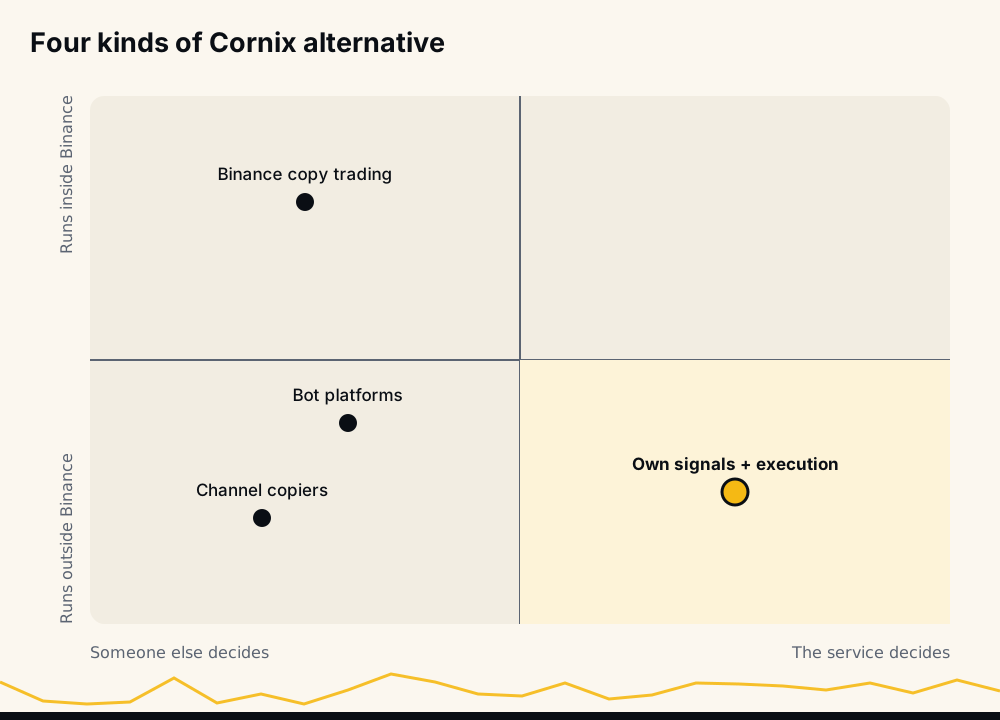
- Channel-reading copiers. You bring a Telegram channel; the tool parses its posts and places the orders. Cornix is the best-known one.
- Bot platforms with signal or webhook terminals. You bring the logic, usually as TradingView alerts or your own webhook; some also connect providers they list.
- Exchange-native copy trading. You follow a lead trader inside Binance itself, with no outside service in between.
- Signal services that execute their own signals. One service makes the signals and, if you switch it on, trades them on your account.
The first two are tools: their quality is the quality of what you feed them. The last two sell decisions, so the question becomes whose record you are trusting.
Channel-reading copiers: closest to how Cornix works
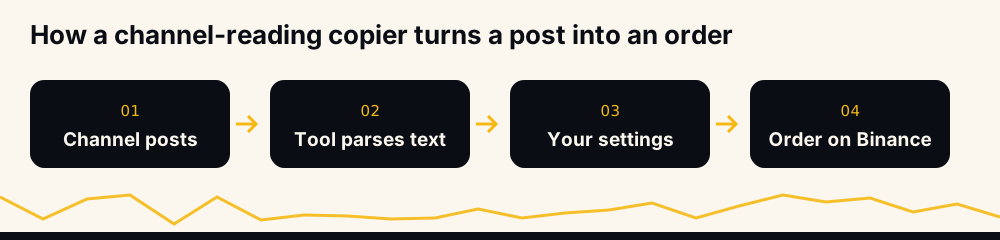
If you like the Cornix model and only want a different tool, this is your category: a channel posts, the tool reads it, your settings decide size and leverage, and the order goes to your exchange account.
What to check on any copier's own pages before you connect a key:
- The exact Binance product. "Binance" on a logo wall can mean spot only. Look for USDⓈ-M Futures by name, and check that futures is on the plan you would buy.
- What the free tier really does. Some free plans parse signals and show them to you but place no trades; auto-execution starts on a paid plan.
- Which formats it parses. Channels write entries, ranges, targets and stops in very different ways. Test the parser on your channel's real posts at a small size first: a misread entry range or stop places the wrong trade.
- Who runs it. A company name, an address and terms you can read. You are handing this service a trading key.
- Price. Entry-level paid plans on the copier pages we read on 17 October 2026 started at roughly $20 to $35 a month, lower when billed annually. That is a snapshot, not a quote: check the vendor's own pricing page on the day you buy, and remember the channel is billed separately.
Bot platforms with signal or webhook terminals
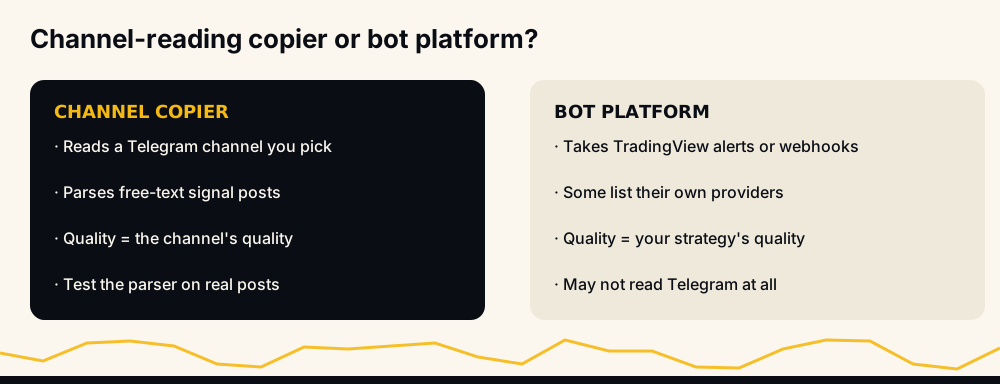
Bot platforms fit when the signal comes from you: a TradingView strategy, a script, or rules you wrote. They are not always a drop-in replacement for Cornix, and the difference is easy to miss.
- Does it read Telegram at all? One platform we read states that its signal bot does not read Telegram or Discord messages, and routes you to its TradingView or webhook bot instead; ask the same of any other. If your signals live in a Telegram channel, that settles it.
- Which bots run on futures. On one platform we read, grid and HODL bots were spot only, while DCA, signal and webhook bots ran on "supported futures markets". Ask whether Binance USDⓈ-M is one of them.
- Position mode. Some platforms support Hedge mode on Binance futures and some tools need One-way mode; check which mode each tool needs before running two on one account.
- Price. Several have a free tier for a bot or two, with paid plans billed per month or cheaper per year, sometimes in euros. Check the vendor's own pricing page.
Our earlier comparison looks at this category in more depth.
Binance Futures copy trading: no outside tool at all
Binance's own copy trading skips the middleman: you pick a lead trader's portfolio inside Binance and the system copies their trades. Binance's FAQ (updated 16 July 2026) says:
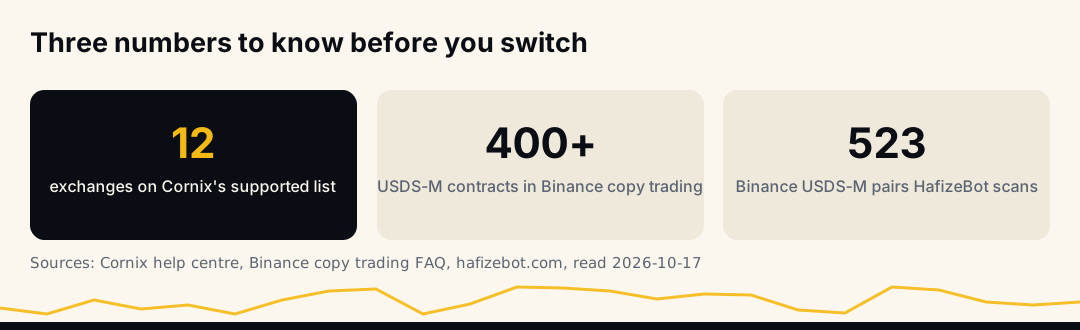
- It supports "400+ USDⓈ-M Futures contracts"; Multi-Assets mode is not supported.
- Copy traders choose Fixed Amount (a set amount per trade) or Fixed Ratio (a total investment the system copies in proportion), and can copy up to 20 portfolios at once.
- Lead traders "can receive up to 30% profit share from their copy traders", plus a 10% commission on copy traders' trading fees.
- Binance's own warning: "Copy trading does not guarantee profits and carries a significant level of risk."
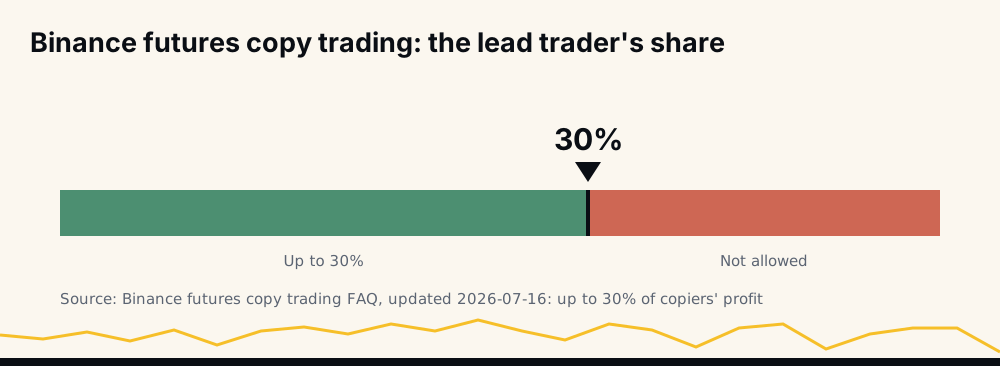
Source: Binance Futures copy trading FAQ. You pay with a share of profits, and the lead trader's risk habits become yours; copy trading vs crypto signals covers that trade-off.
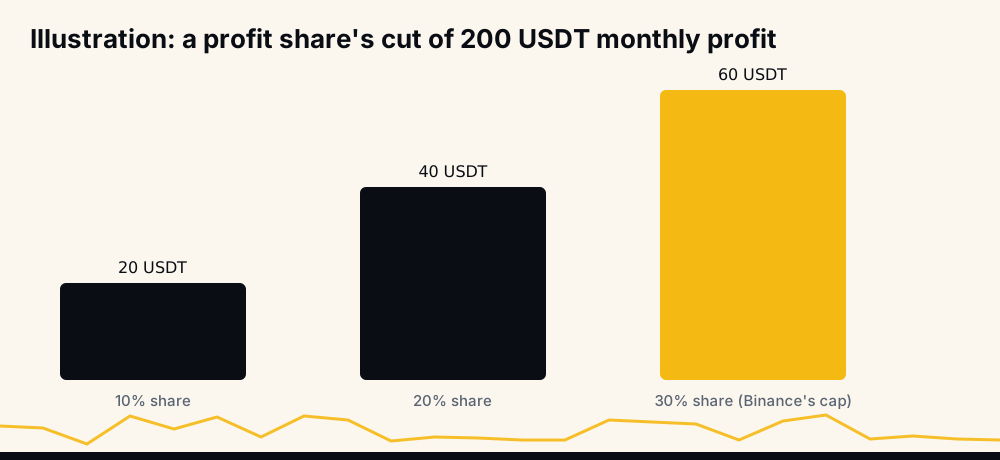
The arithmetic is simple and worth doing before you copy anyone: on an illustrative 200 USDT of profit in a month, a 30% share is 60 USDT. The share comes out of profit; a loss is yours in full.
Signal services that trade their own signals
The fourth option drops the channel. HafizeBot is one example; here is what it is and is not.
- What it does. AI-generated signals from a model that evaluates 240+ indicators, formulas and components, across the 523 Binance USDⓈ-M pairs listed on our home page. VIP members receive them instantly and can switch on autotrading on their own Binance account, through Telegram (@hafizebot) or the website.
- What it cannot do. It cannot read another channel or execute anyone else's signals. It trades Binance USDⓈ-M Futures only: no spot, no other exchange. Payment is USDT only, no card.
- Your controls. You set your own leverage, size, maximum open positions and stop-loss. The bot asks you to lower a stop that sits beyond what your leverage allows before liquidation. Autotrading needs your Binance futures account in One-way mode.
- Price. Tier 1, 2 and 3 are 50, 100 and 200 USDT a month, or 500, 1,000 and 2,000 USDT for 12 months. All three tiers receive identical signals at the same moment; they differ in autotrading limits and controls (plans and prices). Nothing renews unless you switch on /subscribe. A 3-day free trial of Tier 1 via /trial caps autotrading at 10 USDT of margin per entry and 3 open positions, one free VIP per Telegram account.
If you already have a channel you trust, a channel-reading copier is what you need.
The four kinds side by side
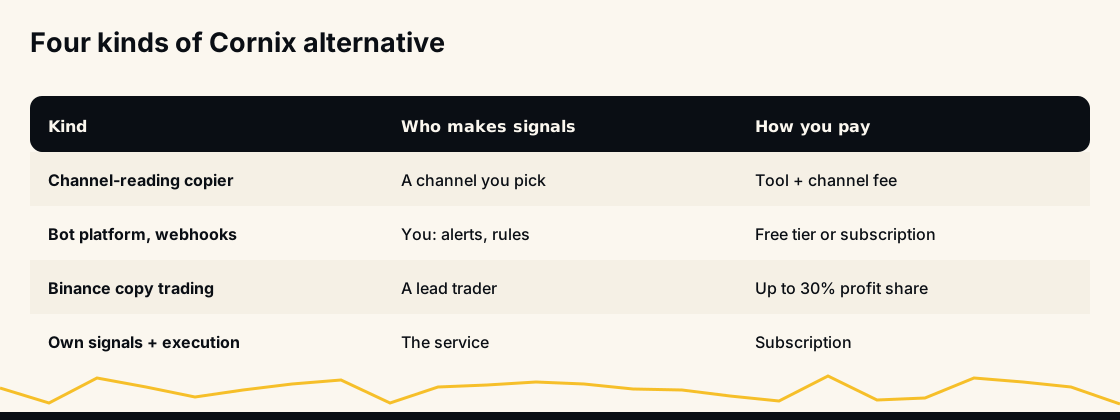
| Kind | Who makes the signals | How you pay | Example named here |
|---|---|---|---|
| Channel-reading copier | A channel you choose | Tool subscription, plus the channel | Cornix: $32.99 a month billed annually |
| Bot platform with signal or webhook terminal | You: alerts, scripts, rules | Free tier or tool subscription | Check the vendor's own pricing page |
| Exchange-native copy trading | A lead trader | Profit share, up to 30% | Binance Futures copy trading |
| Own signals plus execution | The service | Subscription | HafizeBot: 50 USDT a month |
The price column is not comparable line for line: billing periods and currencies differ, and one is a share of profit.
What a setup costs in a month
A channel-reading copier or bot platform is half a setup: it still needs signals, often from a paid channel, and that channel can be the larger bill.
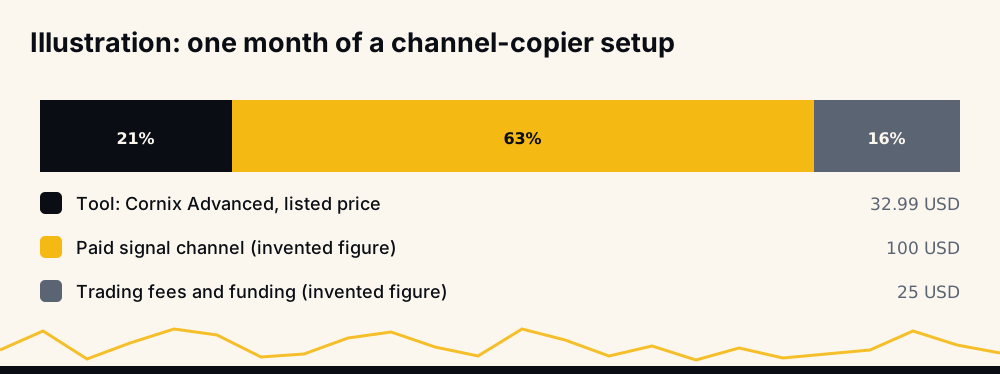
Above, the tool is Cornix Advanced at its listed $32.99; the channel and fee figures are invented. Fees and funding land on every option here, ours included. Annual billing lowers the tool's share: Cornix lists 33% off, and HafizeBot's 12 months for the price of 10 is about 17%. The full picture is in how much crypto signals cost.
Key permissions: what each option asks of your Binance account
Every outside tool needs a Binance API key, and that key is the real risk. The rules:
- Withdrawals off. A key that cannot withdraw cannot move your money off Binance even if it leaks. A service that asks for withdrawal permission to place trades is a reason to stop. HafizeBot needs futures trading only, never withdrawals: use a key with withdrawals off.
- Only the permission the job needs. Cornix's Binance guide (dated 8 June 2026) lists reading, spot and margin trading, and futures when you create a Binance Futures or Coin-M account, and tells you to restrict the key to the Cornix IP list shown in your account (Cornix API keys). Whatever the service, switch on nothing beyond what its own guide lists.
- IP restriction wherever the service publishes its addresses.
- One key per service, so deleting one never breaks another.
The step-by-step is in how to connect a trading bot to Binance safely.
When a tool shuts down: the key outlives it
Trading tools close, merge or drop features, and the key you gave one does not expire when it does. A key left active on Binance for a service that no longer exists is a key nobody is watching.
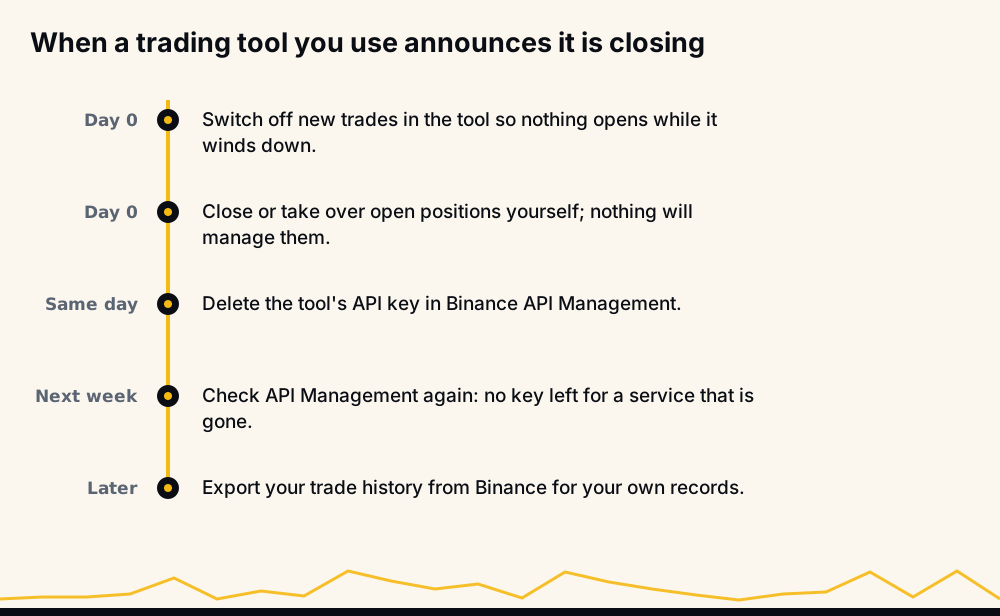
When a tool announces it is closing, stop new trades, deal with open positions yourself, and delete the key in Binance's API Management the same day. The same applies to any service you leave by choice, Cornix included.
Who makes the signals, and where is the record
A channel-reading copier or bot platform has no record of its own, because the trades are someone else's or yours. That moves the question to whoever writes the signals. A channel's screenshots and a percentage in a pinned post are not a record, as why signal screenshots prove nothing explains. Ask for the full list: each signal, its entry, its outcome and its time.
For a service that makes its own signals, that list should be public before you pay. Ours: /performance has been regenerated hourly from the trade database since June 2026, with Wins, Missed and Open columns, and missed signals count against the target-hit rate. Broadcast signals carry a target and a maximum hold but no stop. The older archive is 33 monthly reports from June 2021 to February 2024, 33,694 signals, at /reports and as one file at /data. Any archive rate is only as reported in those spreadsheets; nobody has audited it.
Switching from Cornix without breaking anything
- Let open positions finish, or close them yourself. A new tool does not adopt trades the old one opened.
- Turn the old automation off before the new one goes live, so one signal cannot be traded twice.
- Check your position mode. Some tools work in Hedge mode; HafizeBot's autotrading needs One-way mode. Hedge mode vs One-way mode explains what changes.
- Create a fresh key for the new service, withdrawals off.
- Start small and compare a few days of fills against what the signal said.
- Delete the old key on Binance.
A decision checklist
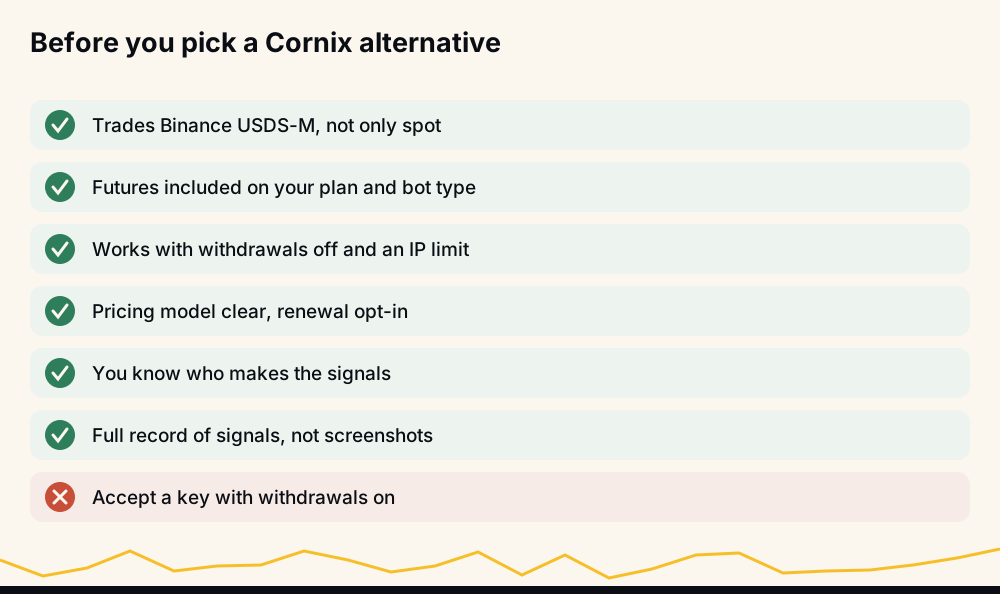
- Exchange support. Does it trade your exchange, and the right product on it (Binance USDⓈ-M specifically, rather than "Binance" in general)?
- Futures support. Is futures on your plan, and on the bot type you will use?
- Key permissions. Can it work with withdrawals off and an IP restriction?
- Pricing model. Monthly, annual, profit share, or a channel bill on top? Does it renew by itself?
- Who makes the signals. You, a channel you pay separately, a lead trader, or the service?
- Proof of record. Can you see each signal and its outcome before paying, not a highlight reel?
Frequently asked questions
What is the best Cornix alternative for Binance Futures? There is no single best one. A Telegram channel calls for another channel-reading copier, TradingView alerts for a bot platform, and if you want someone else to decide, compare Binance copy trading with a signal service that publishes its record.
Is Cornix safe to use? Cornix trades through an API key you create, and its Binance guide tells you to restrict that key to Cornix's IP addresses. The same rules apply to any service: withdrawals off, only the permissions the job needs, and delete the key when you stop. A safe key protects your funds from theft. It does nothing about bad signals.
How much does Cornix cost? As listed on 17 October 2026, Advanced is $32.99 a month and Premium $52.99 a month, both billed annually, with a 14-day free trial and no card needed. The free plan closed to new users on 18 February 2026. The signal channel you follow is usually billed separately.
Can HafizeBot execute signals from my Telegram channel? No. HafizeBot only executes its own signals and cannot read other channels. If you want a channel automated, a channel-reading copier such as Cornix is built for that.
Do I need an API key for Binance copy trading? Binance's FAQ mentions API keys only for lead traders; as a follower you set the copy up inside your Binance account. Every outside tool in this guide does need a key.
Is there a free Cornix alternative? Some copiers and bot platforms have free tiers, but check whether the free tier actually places trades. Binance copy trading charges through a profit share of up to 30% to the lead trader. HafizeBot's free channel carries the stronger signals, strength 3 and up, 20 minutes after VIP, without autotrading.
Before you switch
Decide where your signals come from, choose the kind of tool that fits, then check the product's own page on the day you buy. If you want signals made for you on Binance USDⓈ-M Futures, compare our free channel with the live record on /performance for a week before paying; joining is /join in @hafizebot.
None of this is investment advice; trade only what you can afford to lose. Futures carry a high risk of loss with any tool, and no service in this guide can promise profit.