The best Telegram crypto signal group is the one you scored yourself over a month, and there is no shortcut around that — which is why this article gives you a comparison method rather than a ranking. Score any channel on eight attributes: signal format, record accessibility, free-tier structure, delivery consistency, custody demands, pricing, how losses are handled, and how easily you can leave. Run three channels through it simultaneously and the answer for your trading is unambiguous.
We are not going to list ten competitors in order. We have not audited their records, almost every "top signal groups" article is ordered by affiliate commission, and a ranking you cannot check is exactly the kind of evidence this site argues against accepting.
Why published rankings are close to worthless
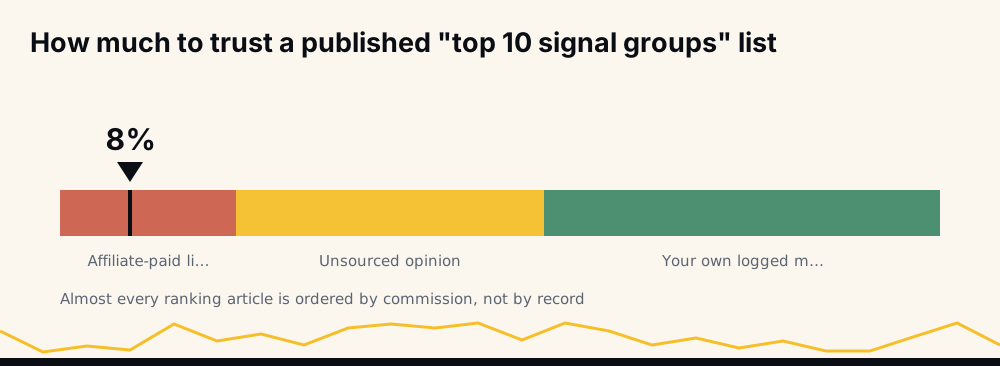
Signal services pay referral commissions. An article ranking them earns per sign-up, which means the ordering reflects commission rates rather than performance — and there is no way for a reader to tell the difference from the outside. Even a well-intentioned list has a deeper problem: the author almost never logged the calls, so the "review" is a summary of the channel's own marketing.
The method below costs a month and produces evidence about your own trading rather than someone else's.
What Telegram changes about the evaluation
Telegram is where most crypto signals are published, including from legitimate operators, so its use is not itself a warning sign. But the platform has specific properties that shape how you should read a channel.
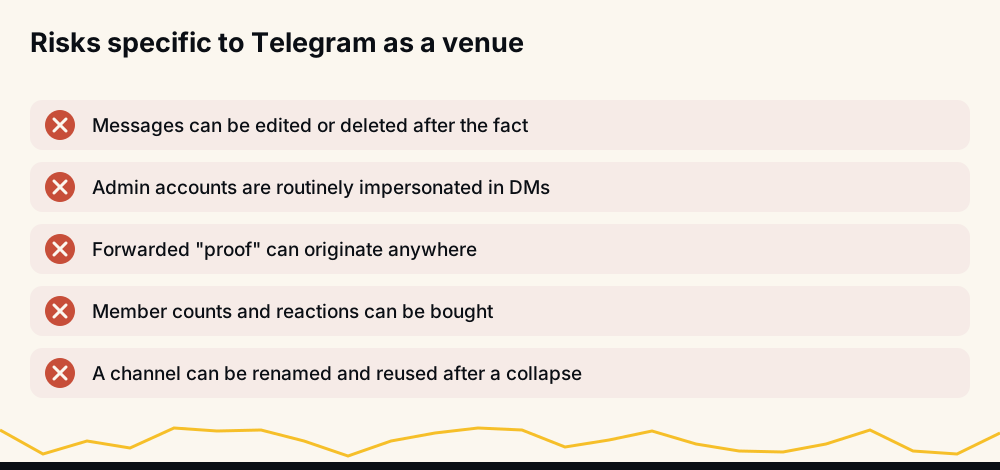
The first item is the structural one. A channel history is editable, so it is not a record. Losing calls can be deleted, and their absence is undetectable by scrolling. This is why the record question is separate from the channel question: whatever the channel shows, ask for a file.
The impersonation risk deserves its own habit. Admins of large channels are routinely copied, and the copies message members offering help, upgrades or recovery. A useful rule: treat every unsolicited direct message as fraudulent regardless of the display name. Real operators do not need to approach you individually.
Channel or group: the format matters
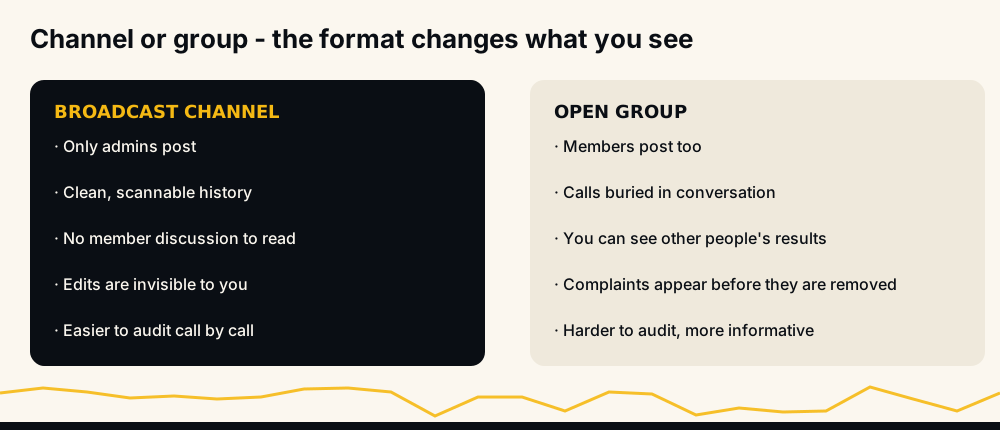
Broadcast channels are easier to audit and tell you less. Open groups are messier and often more revealing, because you can see what other members say after a call goes badly — and how quickly those messages disappear.
If you are choosing between two otherwise similar services, spending a week in the open group is usually more informative than a week in the clean channel.
The eight attributes to score
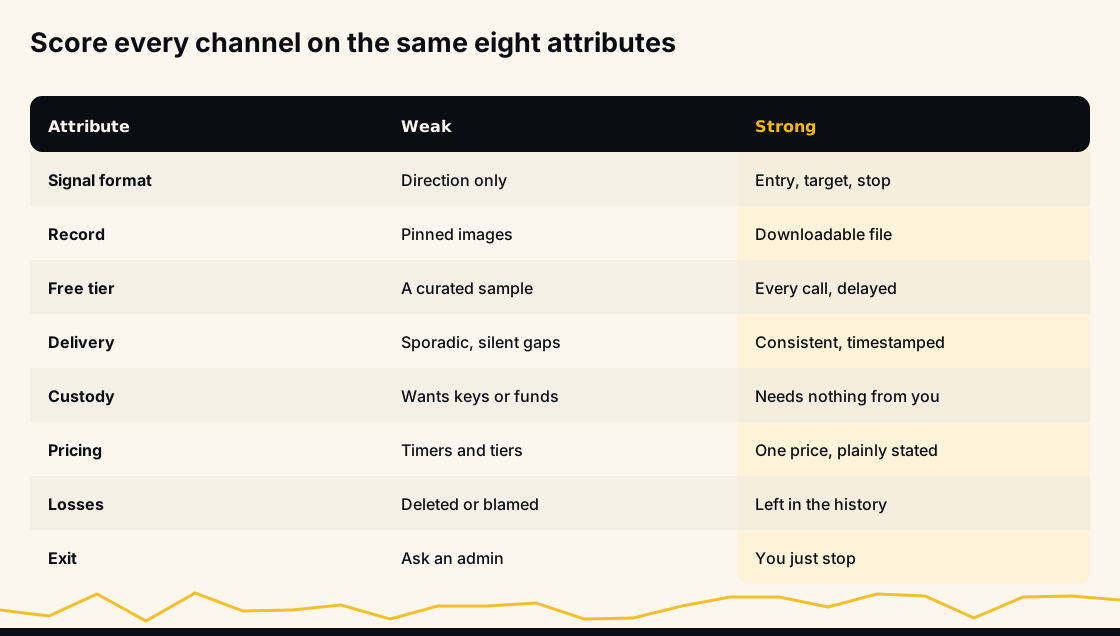
Take them one at a time.
Signal format. Does every call carry a pair, direction, entry, target and an invalidation level? A call without a stop cannot be scored as a loss, which makes the channel's accuracy claim meaningless by construction. Reading a signal line by line covers what each field commits you to.
Record accessibility. A downloadable file with a fixed row count, or nothing. Screenshots are a view someone chose; a file can be recounted. How to verify a win rate sets out how to audit one in an afternoon.
Free-tier structure. Does the free channel mirror every paid call on a delay, or is it a curated sample? Only the mirror lets you evaluate the service, and offering one is a statement of confidence in the record.
Delivery consistency. Watch for silent gaps. A channel that goes quiet for three days without explanation is either not running a systematic process or is skipping periods that went badly.
Custody demands. Anything beyond trading permission is disqualifying. Autotrading needs API keys that cannot withdraw, and nothing legitimate ever needs funds sent for management or a seed phrase.
Pricing. One price, stated plainly, that you can stop paying. Countdown timers and expiring tiers are designed to shorten your evaluation, which is the opposite of what you want.
Losses. Are losing calls still visible weeks later, and does the provider discuss a bad month without being asked? A channel whose losses are always the customer's fault has made itself unfalsifiable.
Exit. Can you leave without asking anyone? If autotrading is involved, API access should be revocable at the exchange by you, not released by them.
Where a channel lands after five minutes
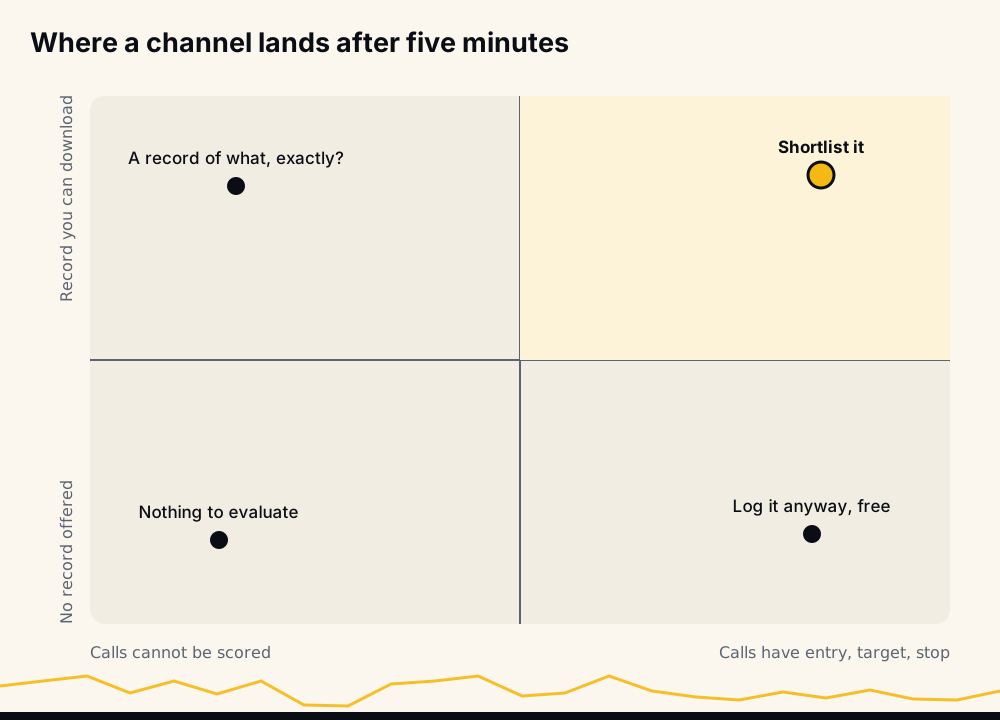
Most candidates are eliminated in the bottom-left quadrant before you have invested anything. The bottom-right — scoreable calls, no published record — is still worth logging, because a free channel with well-formed calls gives you the raw material to build the record yourself.
Comparing three channels in one month
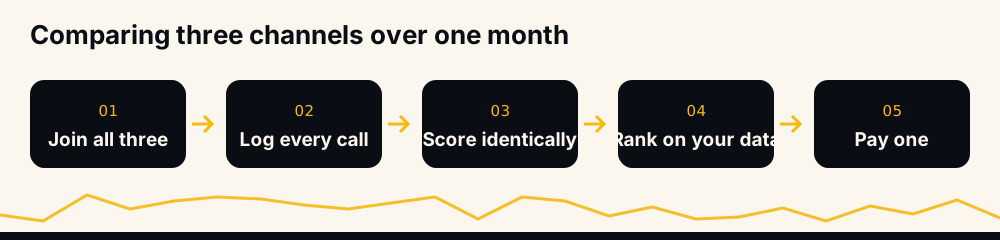
Three is the right number. One gives you nothing to compare against; five is more logging than most people sustain for a month.
The rules that make the comparison valid:
- Log every call from all three, at the moment it arrives, before the outcome is known.
- Use one scoring rule for all of them. Target hit before stop is a win; stop first is a loss; neither within the stated window is an expiry that counts as not-a-win.
- Record the same fields for each: pair, direction, entry, target, stop, timestamp.
- Do not trade any of it. Paper only. You are measuring the channels, and real money changes which calls you take.
- Do not stop early because one channel is ahead in week two. That is noise.
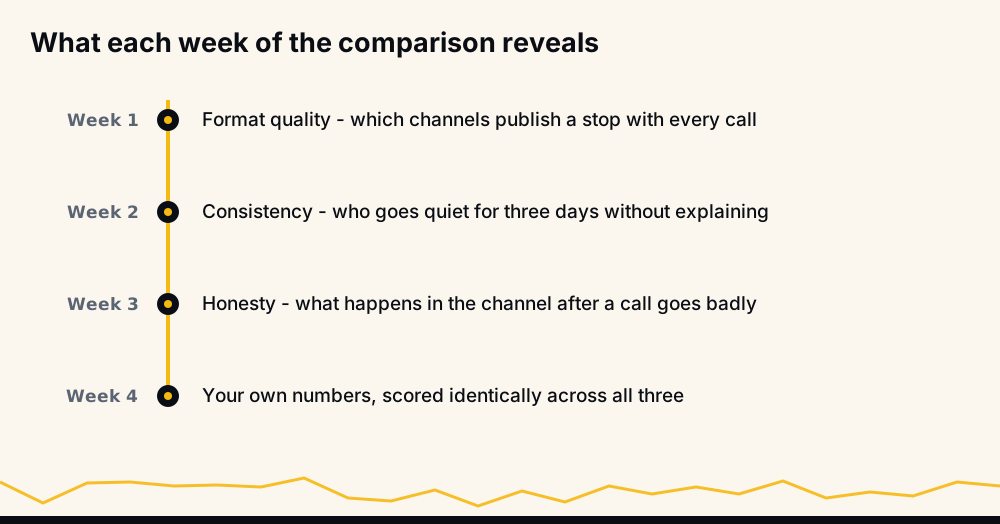
Week three is the one that surprises people. Watching how a channel behaves immediately after a call goes badly reveals more than a month of winners does — it is where deletions happen, where blame gets assigned, and where an operator either explains or goes quiet.
Compute the ratio, not just the count
When you tally the results, do not stop at the win percentage. For each channel also compute the average distance from entry to target and from entry to stop.
A channel winning 80% of calls with targets half the distance of its stops is losing money. A channel winning 45% with targets three times its stop distance is making it. The reward-to-risk ratio is what determines the win rate a system needs, and comparing channels on accuracy alone will reliably pick the wrong one — whether signal groups are profitable works through that arithmetic.
The uncomfortable part: the channel is not the main variable
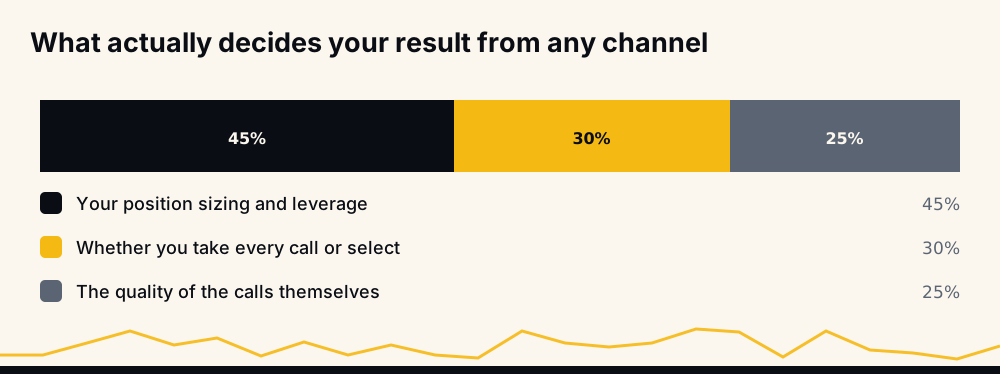
Most of the effort people spend choosing between channels would be better spent on the two larger slices. Two traders following the identical best channel will end the year in completely different places based on sizing and leverage alone, and neither of those has anything to do with which group they joined.
This is not an argument for choosing carelessly. It is an argument for finishing the choice and then spending your attention where it actually matters — starting with setting a stop on every position and sizing so that a run of losses is survivable.
Practical setup before you start logging
A month of logging fails for boring operational reasons more often than for lack of discipline, so spend twenty minutes on the setup.
Turn on notifications for the channels you are evaluating, and off for everything else. The most common way the exercise collapses is missing calls, and a muted channel among forty others will be missed. If you cannot tolerate the notifications, the evaluation is telling you something useful about whether you can act on signals at all.
Decide your time window in advance. If you are asleep for eight hours, decide now whether calls arriving then count as taken at the price when you woke, or are excluded from the sample entirely. Either is defensible; deciding afterwards is not, because by then you know which choice flatters the result you were hoping for.
Use one sheet with one row per call and a column for the channel. Separate sheets per channel invite different conventions to creep in, and the entire value of the exercise is that all three are scored identically.
Record the timestamp of the message, not of your log entry. Latency between the two is exactly what you are trying to measure when comparing a delayed free tier against an instant one, and it disappears if you only note when you got round to writing it down.
Write down your scoring rule before the first call arrives, and do not revise it mid-month. The rule will feel wrong at some point — usually when a call you liked expires — and that feeling is precisely why it has to be fixed in advance.
Common mistakes when choosing
- Choosing on follower count. It is among the cheapest metrics to inflate, and it selects for marketing budget.
- Choosing on recent performance. A great fortnight is a small sample; runs of five or six winners are ordinary at almost any win rate.
- Choosing on the loudest claim. The highest advertised accuracy usually reflects the loosest definition of a win, not the best trading.
- Paying before logging. Every check in this article is free, and none of them requires a subscription.
- Joining ten channels at once. You will log none of them properly, and conflicting calls on the same pair produce paralysis rather than diversification.
Where we sit, stated plainly
So you can apply the scorecard to us: signals carry pair, direction, entry, target and a strength rating, from a model evaluating 240+ indicators, formulas and components across 500+ Binance USDT-M perpetual pairs. The historical record is at /reports — 33 monthly spreadsheets covering June 2021 to February 2024, 33,694 signals, at a median monthly accuracy of 98.9% as reported in those sheets. The live page, /performance, has regenerated hourly from the trade database since June 2026, with expirations counted against the hit rate, PnL shown unleveraged, and losing months published as they occur.
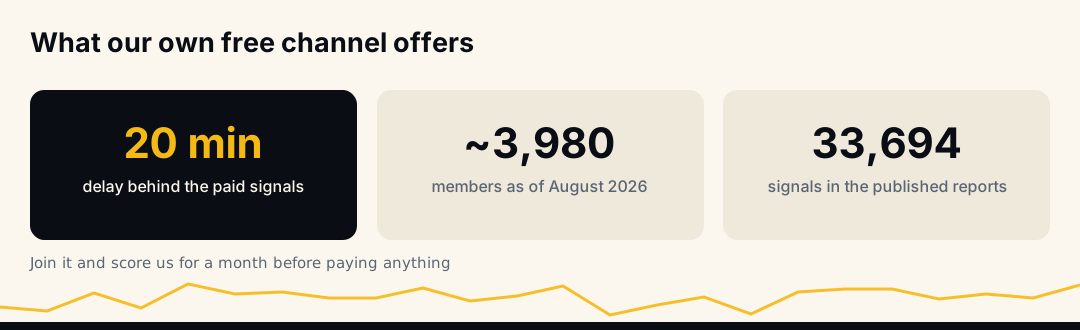
The free channel is t.me/getbinancefutures — the same signals on a 20-minute delay, with nothing withheld, so you can run the month of logging above against us without paying. Autotrading, if you want it, uses API keys with withdrawal permission disabled; funds stay on your own Binance account. Pricing is in USDT, with no card and no auto-renewing subscription.
What we will not publish is how the model reaches a call. That is proprietary, and it is why the evidence offered is the outcome record rather than the method — which is exactly the standard you should hold every channel on your shortlist to.
This is information, not investment advice. No channel makes trading safe, and leverage can end an account faster than any accuracy figure implies. Trade only what you can afford to lose.
FAQ
Which is the best Telegram channel for crypto trading signals? The one that scores best on your own month of logging, because the answer depends on your holding period, the pairs you trade and your time zone. Be sceptical of any article that ranks channels for you — the ordering usually reflects affiliate commissions rather than audited records.
Are Telegram crypto signal groups worth joining? The free ones cost nothing but attention, so joining two or three to evaluate is reasonable. Whether a paid one is worth it depends on whether the delay on the free tier demonstrably costs you more than the fee, which is something you can measure rather than guess.
How do I find a good crypto signal group on Telegram? Score candidates on signal format, record accessibility, free-tier structure, delivery consistency, custody demands, pricing, how losses are handled and how easily you can leave. Then log three of them for a month and rank on your own data.
Are free Telegram crypto signals as good as paid ones? With a delayed-mirror free tier the calls are identical and only the timing differs. Whether that matters depends on your holding period — twenty minutes is most of a scalp and almost nothing on a multi-day position.
How can I tell if a Telegram signal group is fake? Look for deleted losing calls, calls with no stop level, guaranteed returns, and any request for funds or withdrawal-enabled API keys. Follower counts and testimonials prove nothing, since both are cheap to manufacture.
How many crypto signal channels should I follow? Two or three while evaluating, and typically one afterwards. Following many produces conflicting calls on the same pairs and makes consistent position sizing impossible, which costs more than any gain from broader coverage.