To set a stop loss in crypto, place it where your trade idea is proven wrong — not at a round number of pain you can tolerate. In practice that means just beyond a support or resistance level, with a volatility buffer (one ATR is a good default), then size the position so a stop hit costs a fixed 1–2% of your account. Use a stop-market order so the exit actually fills. This guide walks through each step — and the wick traps that empty most beginners' accounts.
What does stop loss mean in crypto trading?
A stop loss is a standing instruction to your exchange: if price reaches this level, close my position. Long BTC at 60,000 with a stop at 58,200? If BTC trades down to 58,200, the exchange sells automatically and your loss stops at roughly 3% — while you sleep, work, or resist the urge to "wait for it to come back."
Its mirror is the take-profit order, which closes the trade at your target; together they turn a vague hope into a bracket with defined risk and reward.
Crypto makes stops less optional than anywhere else: markets run 24/7, majors routinely move several percent a day, and nobody watches a chart around the clock — a stop loss is the part of your plan that does. It's the most basic tool of managing financial risk: deciding what a trade may cost you before you enter, instead of discovering it afterwards.
Can you put a stop loss on crypto?
Yes — on every serious trading venue. Spot and futures exchanges (Binance, and effectively all of its major competitors) support stop-market and stop-limit orders, and futures interfaces let you attach a take-profit and stop-loss to a position the moment you open it. Many also offer trailing stops.
The places where people struggle are simplified broker and payment apps, where order types can be limited or hidden behind different names ("trigger order", "conditional order"). If a platform genuinely offers no way to pre-set an exit, that tells you it's built for buying and holding, not trading — and you should not be actively trading there.
What is a good stop loss percentage for crypto?
There is no universal number, and anyone giving you one is guessing. But here is the honest framing: the percentage that matters is what a stop hit costs your account, not the distance on the chart.
Common practice looks like this:
- Majors (BTC, ETH): stops around 2–5% below entry on short-term trades.
- Volatile alts: wider — often 5–10% — because their daily noise is bigger.
- Your account: a stop hit should cost 1–2% of total capital, regardless of the chart distance. The chart sets where the stop goes; your account sets how big the position may be.
A 1% stop on an asset that routinely swings 5% a day isn't discipline — it's a donation to volatility. Which is exactly why placement method matters more than any magic percentage.
Where to set a stop loss: three placement methods
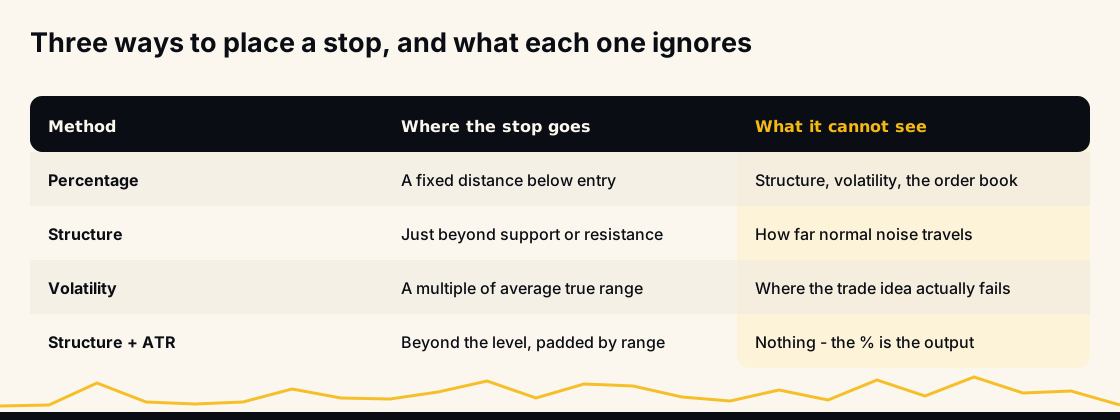
Three methods dominate, and each one is blind to something the next one sees:
1. Percentage stops (simple, but blind)
Pick a fixed distance — say 3% below entry — every time. Easy to automate, easy to size. The weakness: the market doesn't know or care about your 3% — the stop lands at an arbitrary price, often inside normal noise or at the exact level everyone else picked.
2. Structure stops (below support, above resistance)
Put the stop just beyond the level that invalidates your idea: below support for longs, above resistance for shorts. If you bought because a support level held, the trade thesis dies when that level breaks — so that's where the exit belongs. If you're unsure how those levels form, read our primer on support and resistance in crypto analysis first; structure stops only work as well as the levels you draw.
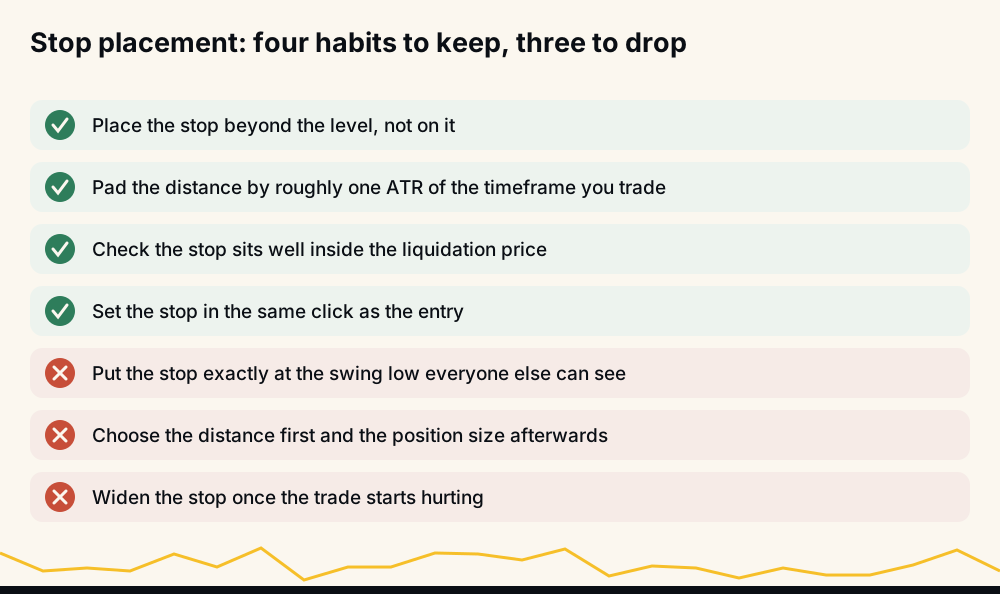
The classic mistake is placing the stop exactly at the swing low. Levels are zones, not lines — give the stop room beyond the zone.
3. Volatility stops (ATR)
The Average True Range (ATR) measures how far an asset typically moves per candle. A volatility stop places your exit a multiple of ATR away from entry — commonly 1.5–2× ATR on the timeframe you trade. The logic: a stop inside one ATR is inside ordinary noise and will be hit by ordinary noise. ATR stops automatically widen in wild markets and tighten in quiet ones.
The strongest placement combines the last two: behind structure, padded by ATR. The percentage that results is an output, not an input — and it is worth seeing what that output is actually made of:
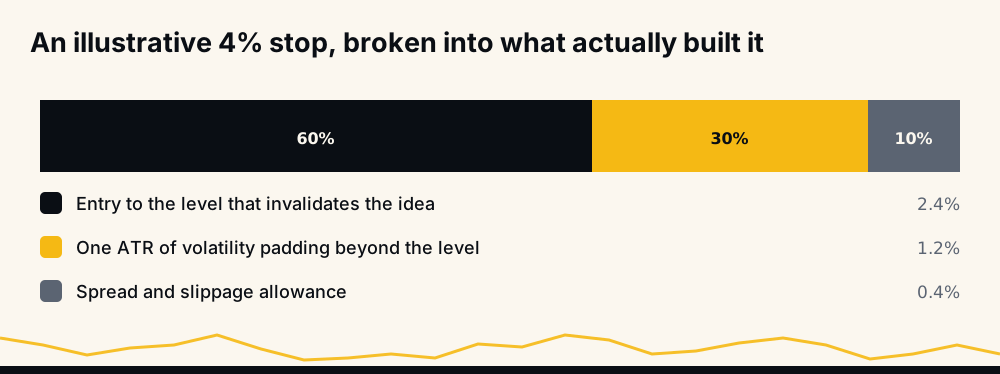
Read left to right, that 4% is a decision about the level, a decision about volatility, and a small allowance for the spread. Nobody chose "4%" — it fell out.
Why tight stops keep getting wicked out
Every futures trader knows the scene: price dips 30 seconds after entry, tags your stop to the tick, then rallies to your target without you. That's a wick-out, and in crypto it's structural, not bad luck. Played back slowly, the whole event takes about ten minutes:
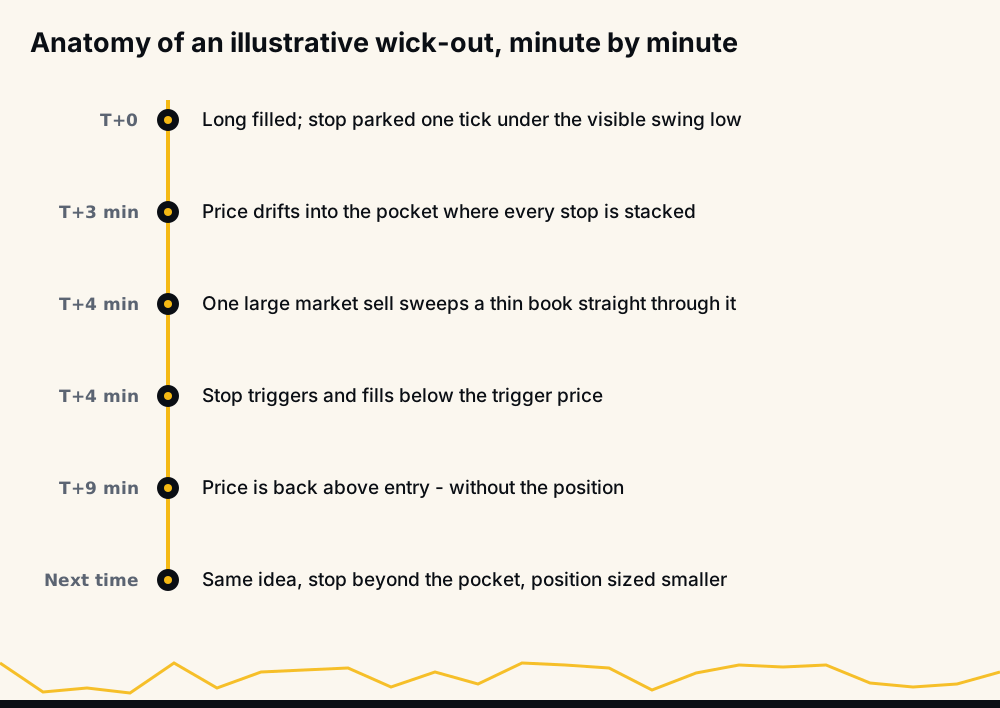
Three forces cause it:
- Volatility. Crypto's routine candle wicks are wider than most traders' stops. A stop inside the market's normal breathing range is a coin flip with bad odds.
- Clustered liquidity. Stops pile up at obvious places — round numbers, the exact swing low, yesterday's low. Price is drawn to liquidity, so those pockets get swept before the real move. Traders call it stop hunting; it doesn't require a villain, just an order book.
- Thin books. On smaller pairs, one market order can spike price through a level for a second — long enough to trigger stops.
The fix is never "no stop." It's a stop placed beyond the obvious pocket, padded by ATR, with the position sized smaller to keep the account risk identical. A wide stop on a small position and a tight stop on a big one can risk exactly the same money — but only one of them survives the wick.
Plot candidate stops against those two axes — how crowded the price is, and whether it sits inside a normal day's range — and the survivable corner is obvious:
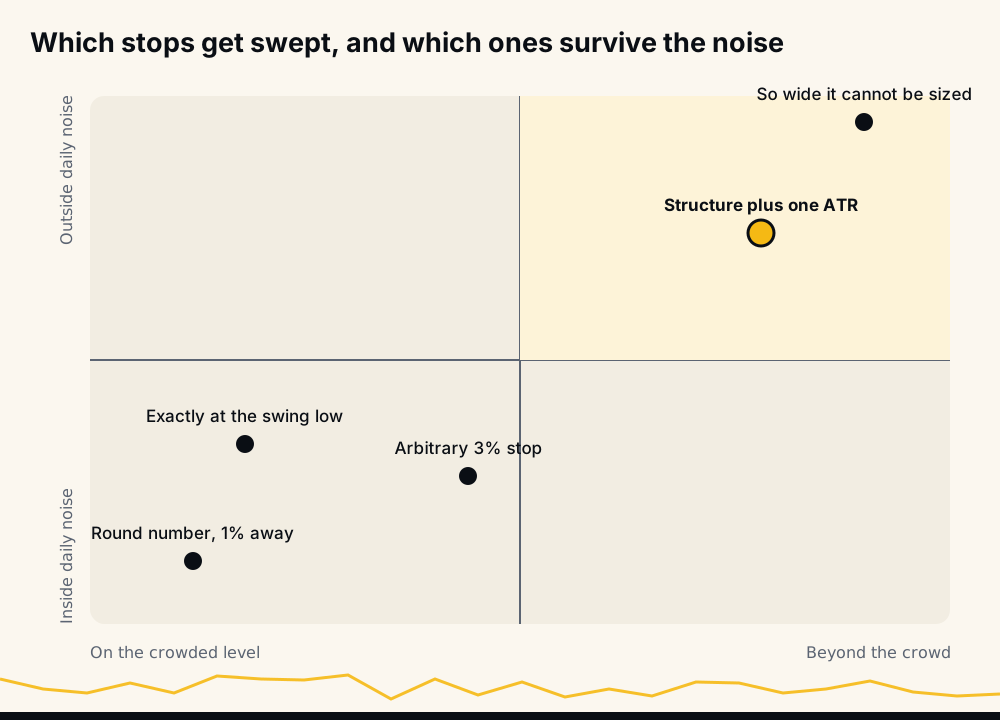
The top-right corner is the only one that isn't a coin flip — and the top edge has its own limit, because a stop nobody can size around is not usable either.
Stop-limit vs stop-market: which order type should you use?
A stop order has a trigger price. What happens at the trigger is the difference:
- Stop-market: at the trigger, a market order fires. You will exit; you just might exit slightly worse than the trigger price in a fast move (slippage).
- Stop-limit: at the trigger, a limit order is placed at your limit price. You control the fill price — but if the market gaps through your limit, the order sits unfilled while the position keeps losing.
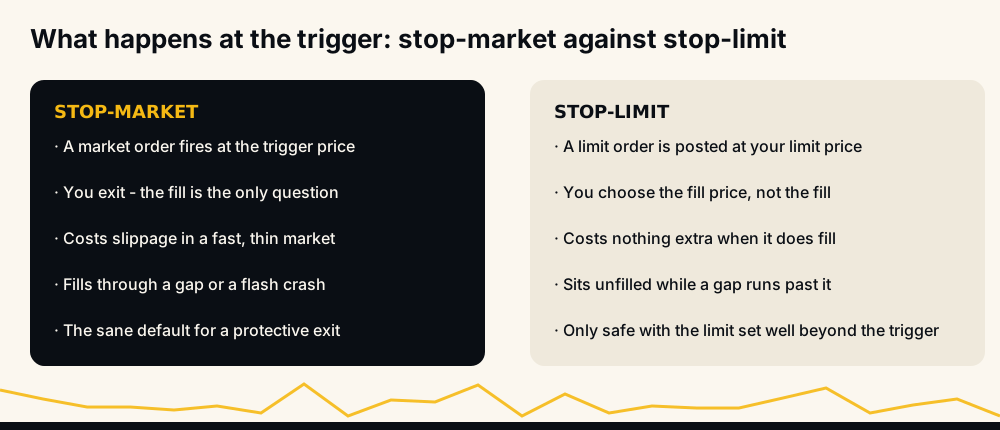
For a protective stop, default to stop-market. Slippage costs a little; an unfilled stop-limit in a flash crash can cost everything the stop existed to protect. If you must use a stop-limit (some venues offer nothing else), set the limit price meaningfully beyond the trigger so a fast market still fills you.
How to calculate stop loss and position size in crypto
This is the part most guides skip, and it's the actual answer to "how much should I risk": position size follows stop distance, never the other way around.
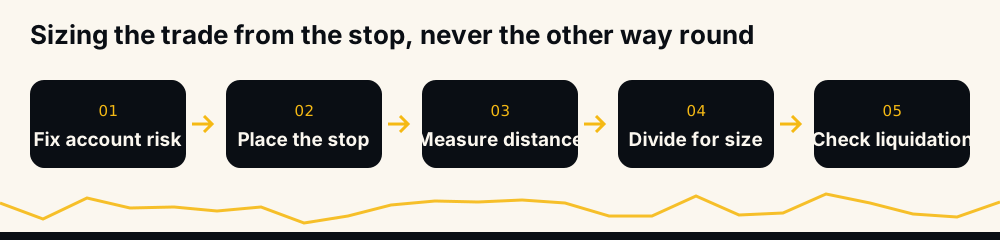
- Pick your account risk per trade. 1% is the classic; 2% is aggressive. On a 10,000 USDT account, 1% = 100 USDT.
- Measure the stop distance from your placement method — say the stop sits 4% below entry.
- Divide: 100 ÷ 0.04 = 2,500 USDT position. If the stop hits, you lose about 100 USDT. Planned, survivable, boring.
Run the same 100 USDT risk through different stop distances and you can see why wide stops force smaller positions:
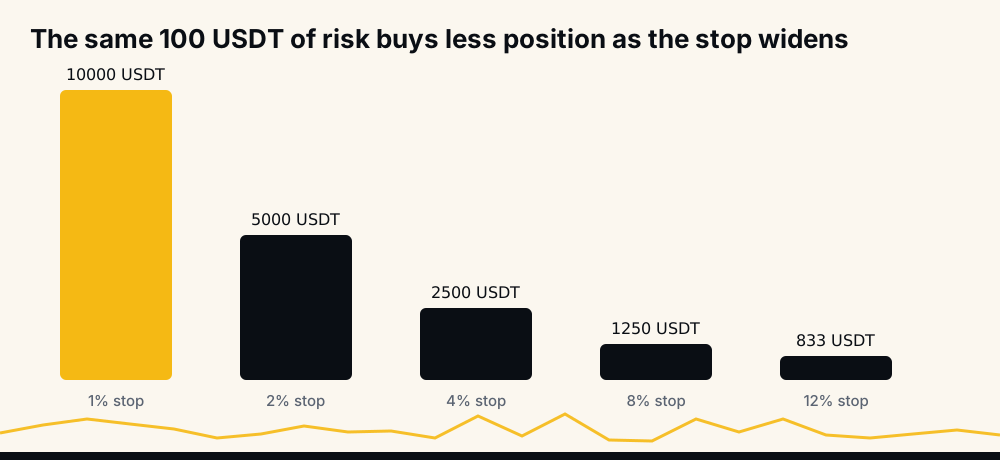
These are generic example numbers, not signals — but the arithmetic is universal. Sized this way, ten losing trades in a row costs about 10% of the account: painful, recoverable. Sized by vibes, one bad trade can end the story.
Does leverage change where your stop goes?
No — and misunderstanding this destroys more futures accounts than anything else. The chart decides where the stop belongs; leverage only changes how much margin you post for the same position size. A 2,500 USDT position risks the same 100 USDT at 4% whether you post 2,500 USDT at 1× or 250 USDT at 10×.
What leverage does add is a liquidation price — the level where the exchange force-closes you and takes the fee. Your stop loss must always sit inside your liquidation price, with room to spare. If it doesn't, your real stop is the liquidation engine, and that's the most expensive stop there is.
Roughly speaking, margin at 10× runs out about 10% from entry (less, once fees and the maintenance margin are counted), which is a much tighter corridor than most people picture:
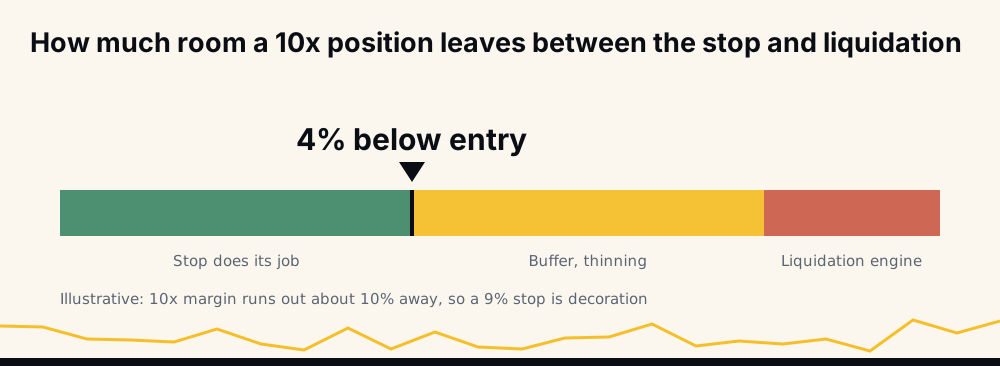
The lesson isn't "use a tighter stop." It's that the leverage has to be chosen last, after the stop distance is known — pick the multiple that leaves your stop comfortably inside the red band, not the one that makes the position feel big. The mechanics are worth understanding properly before you touch futures: see how leverage trading works in crypto.
What about trailing stops and take-profit targets?
A trailing stop follows price at a fixed distance — say 5% — and locks in gains as the trade moves your way, converting a stop loss into a ratcheting exit. It's a genuinely useful tool for trend trades, with the same caveat as every stop: trail too tight and normal wicks will take you out of a winner.
A take-profit defines the other side of the bracket. Setting both at entry fixes your risk-reward ratio before emotions get a vote: risking 100 to make 300 is a plan; "I'll see how it feels" is not. Most platforms let you attach both to a position in one step — use it.
The gap between the stop and the target also decides how often you have to be right. Break-even win rate is simply 1 ÷ (1 + reward-to-risk):
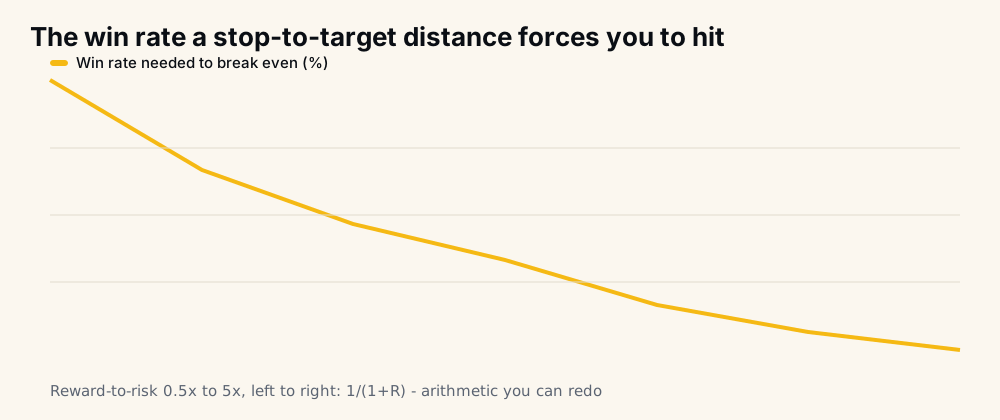
At 1:1 you need 50% of trades to work. At 3:1 you need 25%. That is why a slightly wider stop with a proportionally wider target is often the easier trade to hold: it lowers the accuracy the plan demands from you.
The hardest part: not moving your stop
Every trader eventually meets the voice that says "it's about to bounce — just move the stop a little lower." Do that once and the stop isn't a stop anymore; it's a decoration. Moving stops, revenge-sizing the next trade, cutting winners early — the whole family of self-sabotage is covered in our list of 15 common trading mistakes, and stop-moving is the most expensive member.
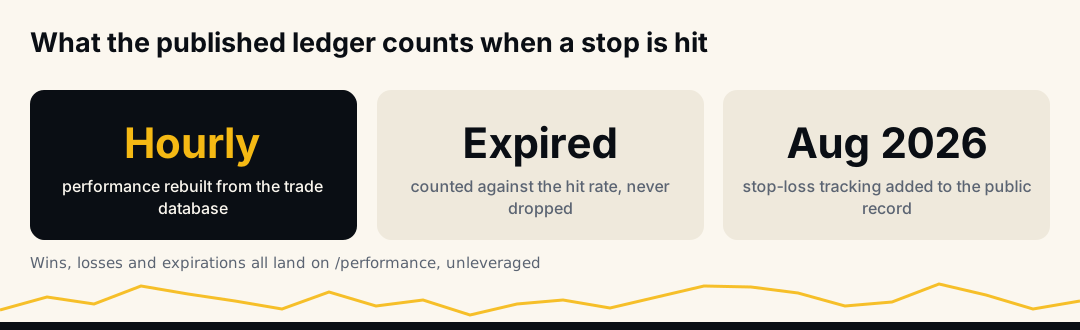
The most reliable fix is to take your hands off the exit entirely. Automated exits execute the plan you made when you were calm. That's the design principle behind HafizeBot: its model evaluates more than 240 indicators, formulas and components across 500+ Binance USDT-M perpetual pairs, and every broadcast signal carries an entry, a target and a maximum hold. The maximum hold is how the signal is scored, not an exit: nothing closes a member's position when it runs out. The exit that protects an account is the stop-loss each member sets with /setStoploss before any trade exists. On the live performance page, regenerated hourly from the trade database, a win means the target was hit, and the page shows Wins, Missed and Open. Broadcast signals carry a target and a maximum hold, not a stop, so every signal that does not reach its target in time counts as Missed and lowers the rate. PnL is shown unleveraged.
For autotrading, the bot trades on your own Binance account through an API key that needs no withdrawal permission, inside limits you set — minimum signal strength, position size, maximum simultaneous positions, coin filters. The limits are the point: automation without user-defined risk caps is just someone else's discretion.
FAQ
Can I put a stop loss on crypto? Yes. Every serious exchange supports stop-market and stop-limit orders on spot and futures, and most let you attach a take-profit and stop-loss when opening a position. Simplified broker apps may hide them under names like "trigger order" — or lack them, which is a reason to trade elsewhere.
What is a good stop loss percentage for crypto? There's no universal number. Short-term trades on majors often use 2–5%, volatile alts need more room. What should be fixed is account risk: size the position so a stop hit costs about 1–2% of your capital, wherever the chart says the stop belongs.
What is a stop limit in crypto? A stop-limit order places a limit order once price hits your trigger. It controls your fill price but can go unfilled if price gaps through the limit — so for protective exits, a stop-market order is usually the safer default.
What is a trailing stop loss in crypto? A stop that follows price at a set distance or percentage as the trade moves in your favor, locking in gains. It never moves against you. Trail it wider than normal volatility, or routine wicks will close your winners early.
How do I calculate a stop loss for crypto futures? Place the stop where the trade idea fails (beyond structure, padded by ATR), check it sits safely inside your liquidation price, then size the position as account risk ÷ stop distance. Leverage changes your margin, not where the stop belongs.
How do I stop losing money in crypto trading? You can't avoid losing trades — you can avoid losing big. Fixed fractional risk per trade, stops placed beyond the obvious levels, no moving stops once set, and judging any system (including ours) by its full published record rather than screenshots.
The record, not the promise
A stop loss doesn't make you profitable — it makes you durable, and durability is what gives any edge time to play out. Nothing here is investment advice: crypto futures can move against you faster than any stop can flatter the outcome, so only trade money you can afford to lose.
If you want to see what disciplined, pre-defined exits look like at scale, the evidence is public: the hourly performance ledger where every missed signal counts against the record, and 33 monthly spreadsheet reports covering 33,694 signals from June 2021 to February 2024, with a median monthly accuracy of 98.9% as reported in those sheets — downloadable, so you can check the math yourself. Watch the free signal channel for a few weeks before risking anything. The record is the argument.