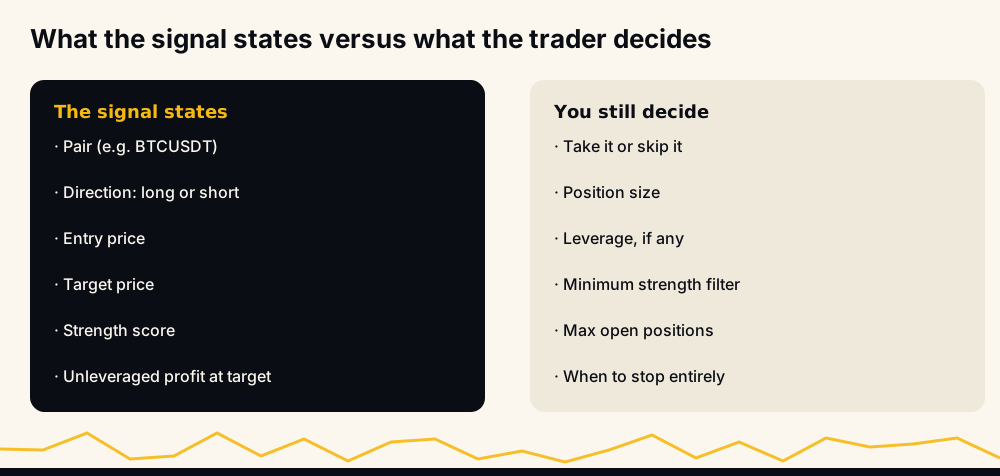
To read a crypto signal, find five things in the message: the pair (which market), the direction (long or short), the entry (the price the setup is valid at), the target (where the trade closes in profit), and the strength score (how much the provider's model rates the setup). Everything the signal does not say — position size, leverage, total risk — is your decision, and it matters more than the signal itself.
That's the 30-second version. The rest of this guide decodes each line using a real signal format as the worked example, walks through acting on a signal step by step, and answers the question behind the question: how do you know whether the signals you're reading are worth anything at all?
What are crypto trading signals?
A crypto signal is a structured trade idea, usually posted to a Telegram channel: a specific market, a direction, and the prices that define the trade. It's produced either by a human analyst or by a model scanning market data — we covered the category basics in what a crypto trading signal is, so here we'll focus on reading one correctly.
The key mental shift: a signal is information, not an instruction. It tells you what a model (or analyst) sees. It cannot know your account size, your open positions, or your risk tolerance. Reading a signal well means extracting what it states — and being deliberate about everything it leaves to you.
The anatomy of a signal, line by line
Almost every serious signal — whatever the channel — contains the same parts:
- Pair. The market, e.g. BTCUSDT perpetual futures on Binance. Check which exchange and which market type (spot vs futures) before anything else; the same coin behaves differently across them.
- Direction. Long profits if price rises, short if it falls. Futures signals go both ways; a channel that only ever posts longs isn't giving you a market view, it's giving you optimism.
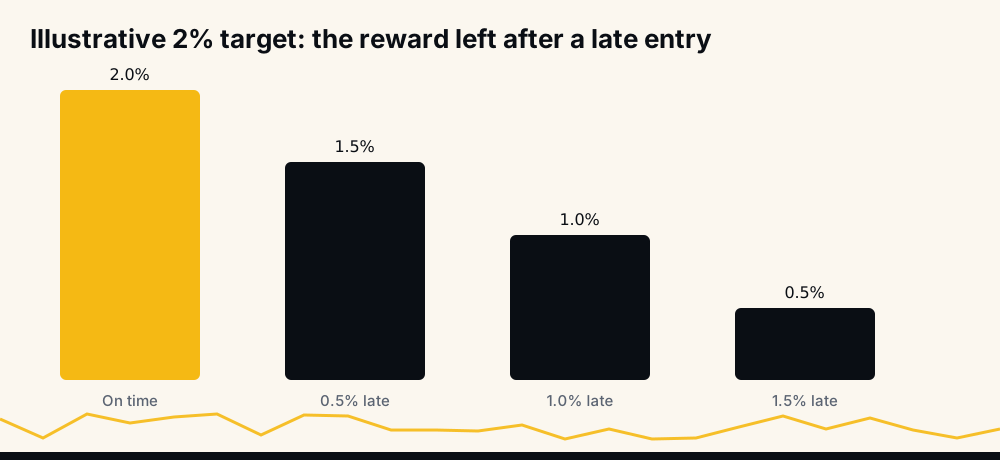
- Entry. The price at which the setup was identified. If the market has already run far past the entry by the time you see the message, the setup you'd be trading is not the setup that was signaled.
- Target. Where the position closes in profit. Entry-to-target distance is the trade's reward; compare it against where you would stop out.
- Strength or confidence score. How strongly the model rates the setup. This is the most ignored line and the most useful one — more below.
- Timeframe or expiry. How long the setup stays valid. A signal without any time bound can claim to be "right" forever, which makes it unfalsifiable.
If a channel's messages are missing several of these — no entry, no target, just "BTC looking bullish 🚀" — that's not a signal. That's a mood.
A worked example: reading a HafizeBot signal
HafizeBot's signal format makes a good dissection specimen because every field above appears in a fixed order. A signal message shows, in sequence: the element name, the coin and position direction, the entry price, the target price, and the profit percentage if the target is reached — calculated without leverage.
The element name is the strength label: HafizeBot's signals are grouped into 24 named elements, each tied to a strength rating. So one line tells you how strongly the model rates the setup.
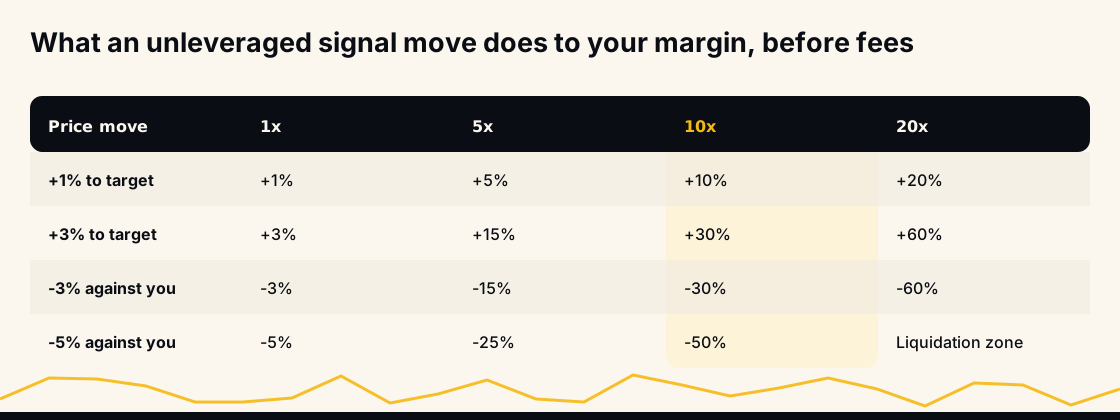
Two details worth underlining. The profit figure is unleveraged — if a target implies 3% and you trade at 10x, you're looking at ±30% swings on your margin, which changes the risk conversation entirely. And the signals come from a model evaluating more than 240 indicators, formulas and components across 500+ Binance USDT-M perpetual pairs, not from someone eyeballing a chart at 2 a.m.
What does the strength score mean — and how should you use it?
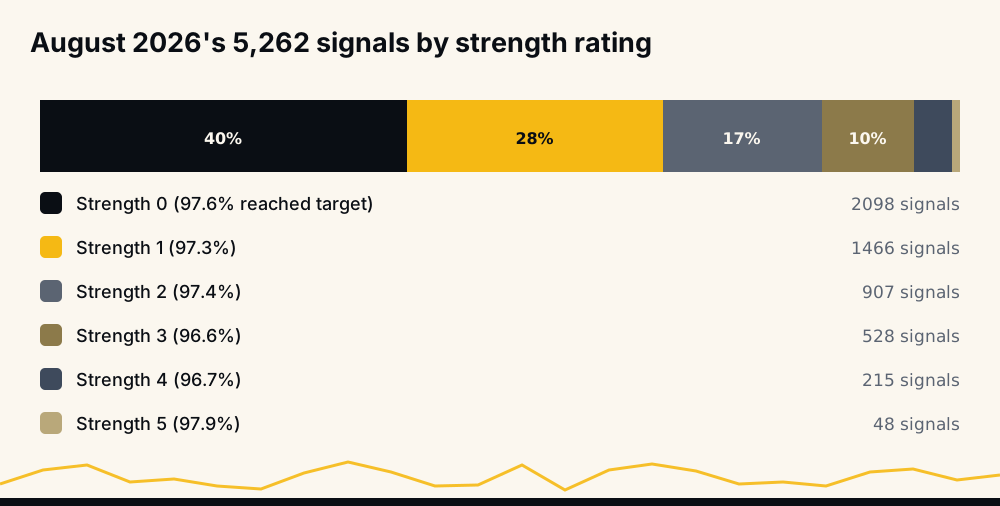
Strength is the model's own rating of the setup, from 0 to 5, and higher ratings are rarer: of the 5,262 signals broadcast in August 2026, 2,098 were rated 0 and 48 were rated 5. What each rating did is published as well, and it is less dramatic than people expect. That month every rating from 0 to 5 reached its target between 96.6% and 97.9% of the time, as the August 2026 results page shows, so a higher floor mostly changed how many signals got through. Only signals rated 3 and up go to the free channel; that month there were 790 of them.
The practical use: set a floor, not a ceiling. VIP users who enable autotrading can set a minimum strength, and the bot simply won't act on anything below it. Reading signals manually, you can apply the same discipline yourself: decide in advance which strength levels you act on, and let the rest scroll by. A strength score you don't filter on is decoration.
How do crypto signals work behind the scenes?
Legit signals come from one of two engines: a human analyst applying technical analysis, or a model scanning markets continuously. The model approach trades intuition for coverage and consistency — no human re-evaluates hundreds of pairs around the clock, and no model revenge-trades after a loss. We went deep on this trade-off in whether AI crypto trading bots actually work.
What matters when reading a signal is knowing which engine produced it, because that tells you what the strength score means (a model's consistent rating vs an analyst's gut feel) and whether the process behind signal #4,001 is the same one behind signal #1.
How to trade a crypto signal, step by step
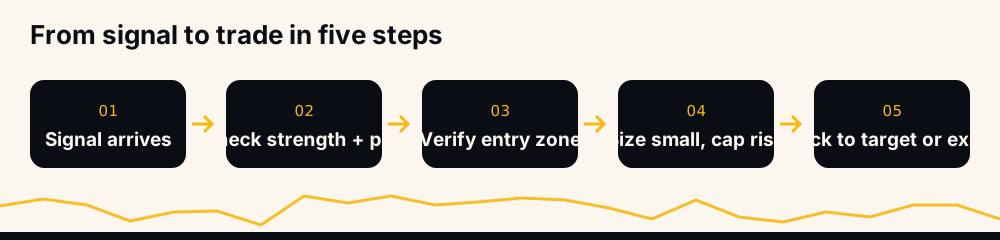
- Read the whole message first. Pair, direction, entry, target, strength. If any of those is missing, stop here.
- Check the current price against the entry. If price has already moved most of the way to the target, the reward that remains is smaller than the risk you'd take. Skipping a late signal is a winning trade.
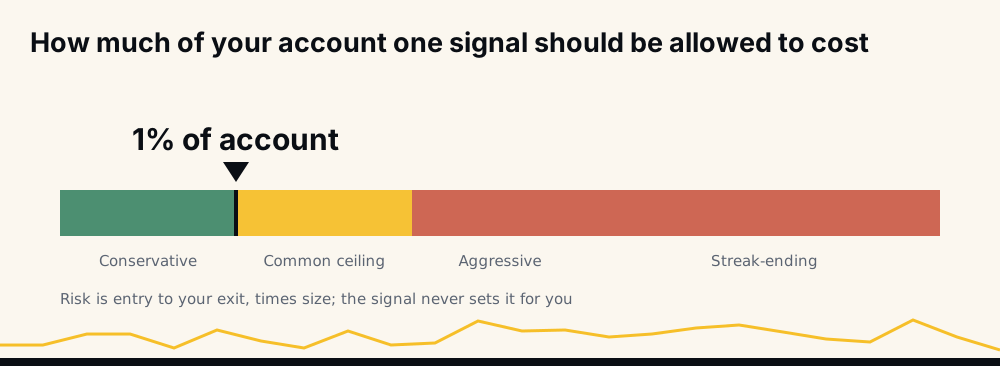
- Decide position size before opening. A common baseline is risking only a small, fixed percentage of your account per trade — the signal will never say this line, so you must.
- Know your exit on both sides. The target handles the good case. Decide before entry where you're wrong — a stop level or a time limit — and write it down.
- Place the trade and leave it alone. Moving stops and averaging into losers is how good signals become bad trades.
- Log the outcome — including skips and losses. Your own ledger is how you learn whether following this provider is actually working for you.
What happens after the signal: target reached or missed
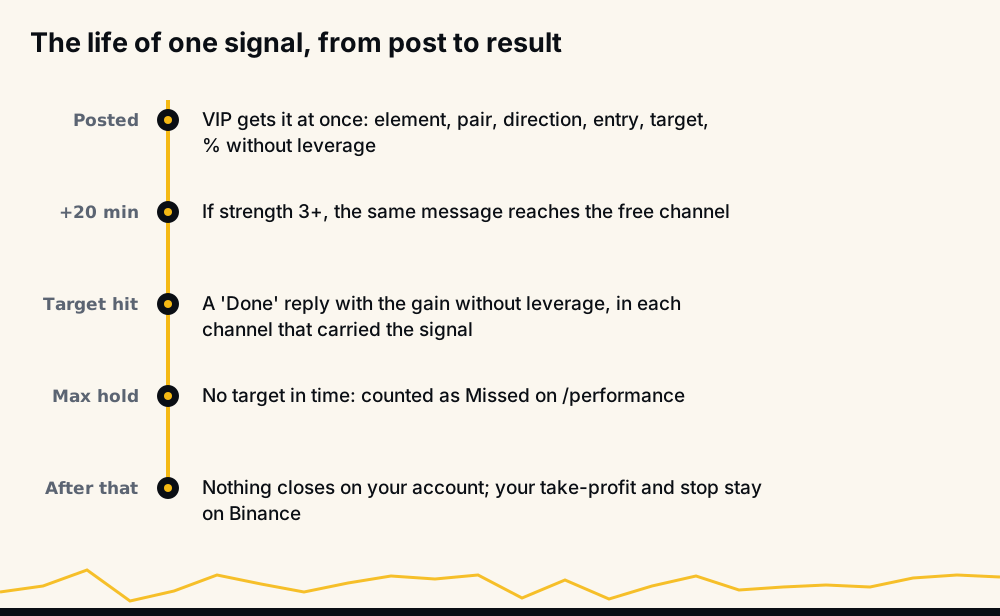
A signal does not end when you read it, and knowing how it ends tells you how to read its record. When the target is reached, a short "Done" reply appears under the signal with the gain without leverage. VIP members see it first; the free channel gets it, for the signals it carries, on the same 20-minute delay as the signal itself.
If the target is not reached within the signal's maximum hold, the signal counts as Missed on the live performance page, and it lowers the hit rate even if the price reaches the target later. The maximum hold is the same for every signal and is not published.
What the record does and what your account does are separate things. Nothing on your account closes when a signal is counted as missed: if you autotrade, the position, its take-profit and any stop-loss you set stay on Binance until they fill or you close them. The position can still reach its target afterwards, or keep going the wrong way. That is why the stop is your decision and never the signal's, and why what happens when a crypto signal expires is worth reading before your first autotraded month.
Manual trading vs autotrading a signal
There are two ways to act on the same message. Manually: you read, decide, and place the order yourself — full control, but you're awake for some signals and asleep for others, and discipline gets tested on every trade.
Autotrading executes the signal for you within limits you set: minimum strength, position size, maximum simultaneous positions, and coin filters. Done right, it's the reading rules above, enforced by software. HafizeBot's autotrading never needs withdrawal permission on the Binance API key — funds stay on your own Binance account the entire time. Whether automation is worth it for your situation is its own question; we weighed the costs against the record in whether crypto trading bots are worth it.
Are crypto signals legit?
The format is legit; a large share of the sellers are not. Reading the provider is as important as reading the signal:
- Pump signals are not signals. "Buy X in 5 minutes, we pump together" is coordinated manipulation — you are the exit liquidity. Legit signals cover liquid pairs where no Telegram group can move the price.
- Winners-only screenshots are marketing, not evidence. Anyone can post their hits and delete their misses.
- Guaranteed returns end the conversation. Real records contain losses; a promise of daily profit is a Ponzi pitch wearing a chart.
- Unfalsifiable calls don't count. No entry, no target, no timeframe means no way to ever be wrong — which means no track record.
The one question that filters the field: can I see every signal you've ever posted, including the losers? If the answer involves excuses, you've finished your evaluation.
How to evaluate a signal provider before paying
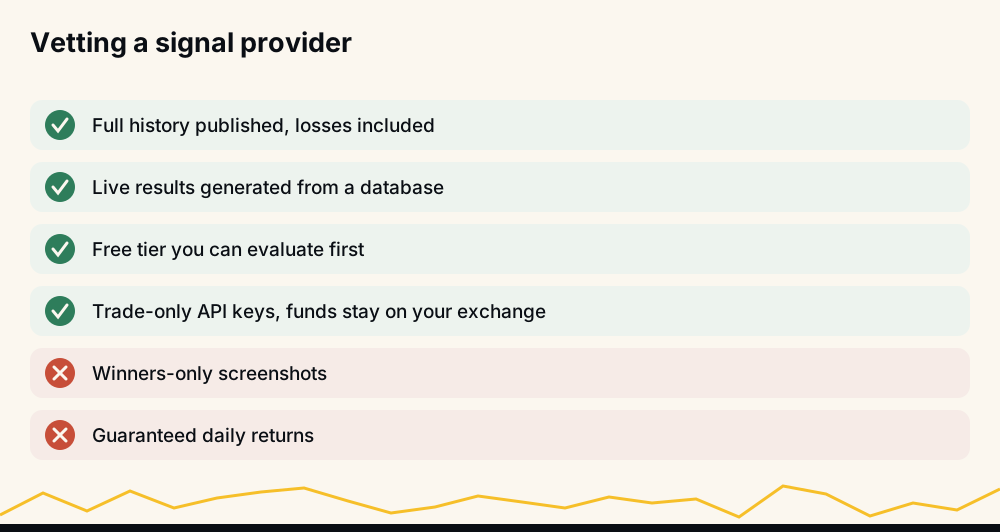
Apply the ledger test. HafizeBot publishes 33 monthly spreadsheet reports covering June 2021 to February 2024 — 33,694 signals — with a median monthly accuracy of 98.9% as reported in those sheets, downloadable from the reports page so you can check the math yourself.
Numbers that strong deserve skepticism, which is why the current record is stricter: since June 2026 the live performance page regenerates hourly straight from the trade database. A win only counts when the target was hit, and the page shows Wins, Missed and Open. Broadcast signals carry a target and a maximum hold, not a stop, so every signal that does not reach its target in time counts as Missed and lowers the rate. PnL is shown unleveraged, and losing months appear when they happen. That's the standard to hold any provider to — including this one.
Where to get crypto signals for free
Start where evaluation costs nothing. HafizeBot's free Telegram channel (~3,980 members as of August 2026) carries the stronger signals VIP members receive, strength 3 and up, delayed by 20 minutes. The delay matters for live entries, but it's ideal for learning to read: follow along for a few weeks, decode each message with the anatomy above, paper-trade your decisions, and compare what you saw against the performance page's strength 3 and up rows.
That habit — free channel plus public ledger — is the entire skill of reading crypto signals compressed into a routine. Only after weeks of watching should real money enter the picture, and never money you can't afford to lose. Signals are information, not investment advice.
FAQ
How do crypto signals work? A model or analyst scans markets and publishes structured trade ideas — pair, direction, entry, target, and usually a confidence rating — typically to Telegram. HafizeBot's model evaluates 240+ indicators and components across 500+ Binance USDT-M pairs and grades each signal by strength.
Are crypto signals legit? The category is; many providers aren't. Demand a complete published history with losses included, ignore winners-only screenshots, and treat guaranteed returns or pump invitations as immediate disqualifiers.
How can I get crypto signals for free? Reputable providers run free channels — HafizeBot's free channel posts the stronger VIP signals, strength 3 and up, with a 20-minute delay. Free tiers exist so you can verify before paying; use them exactly that way.
Which crypto signal is best? The one whose full record you can audit. Compare providers on published history, not follower counts or testimonials — a smaller channel with a downloadable ledger beats a huge one with screenshots.
What is a crypto pump signal? A coordinated buy call on an illiquid coin, designed so organizers sell into the spike that followers create. It's market manipulation, not analysis — avoid any group that announces "pumps."
Can ChatGPT give crypto signals? It can generate text shaped like a signal, but it has no live market feed, no tested model behind the call, and no track record. Use purpose-built systems with published results.
Read the record before you read another signal
Reading a signal takes ten seconds once you know the anatomy. Reading a provider takes a few weeks — and that's the reading that protects your money. Watch the free signals with this guide open, check each message against the live performance ledger, and let the record, not the pitch, decide what you do next.