HafizeBot is a real, operating service you can check before paying: every signal broadcast since June 2026 is scored on a public performance page, rebuilt hourly with expired signals counted against the rate; the free Telegram channel carries those of strength 3 and up 20 minutes later; and autotrading never needs withdrawal permission on your Binance key. What it does not have: a third-party audit or Trustpilot reviews. Whether it will make you money, no one can promise, us included.
This page exists because "is HafizeBot legit" is the query people type before paying for anything, and the useful version of that page is not a sales pitch with the word "transparent" in it. So below you will find what is checkable, what the two published records disagree about, what we do not have, and what could still go wrong for you specifically.
What "legit" actually means when you are about to pay
The word gets used for two different questions, and blurring them is how people get hurt.
The first is whether the service is a fraud: does it exist, does it deliver what it sells, can it take your money. That question has factual answers and this page answers it.
The second is whether it will make you money. That one has no answer in advance, for us or for anyone else, and a service that pretends otherwise has already told you what it is. Treat every published number as a description of the past, never as a forecast of your account.
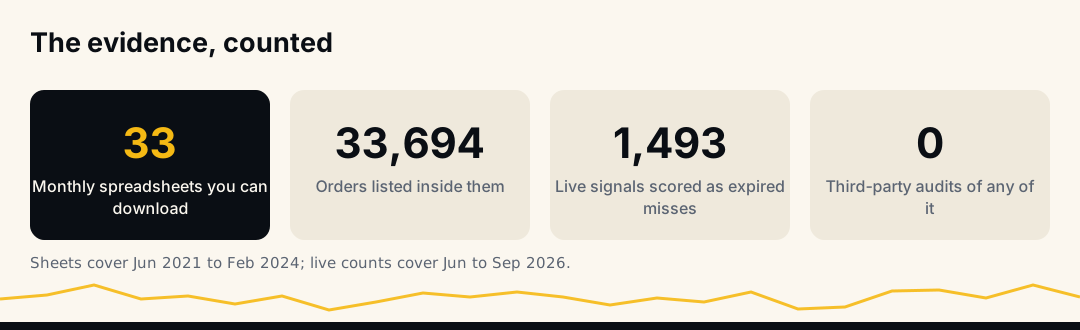
The first record: 33 spreadsheets and 33,694 orders
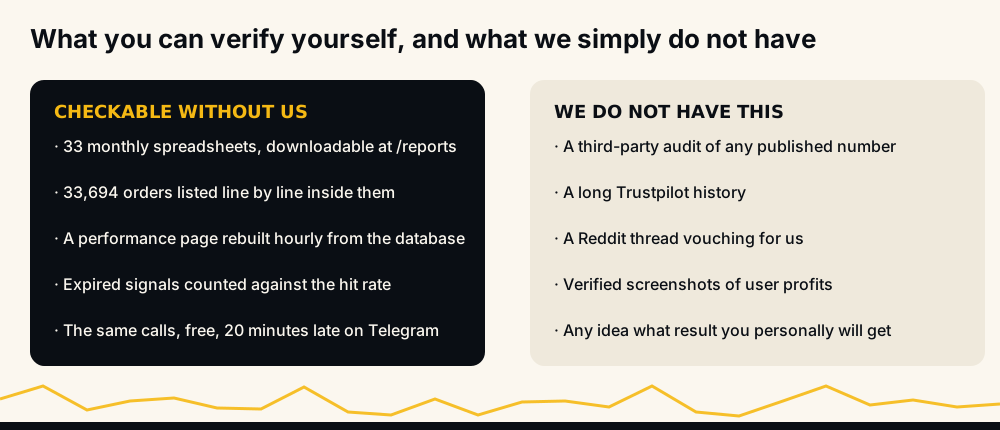
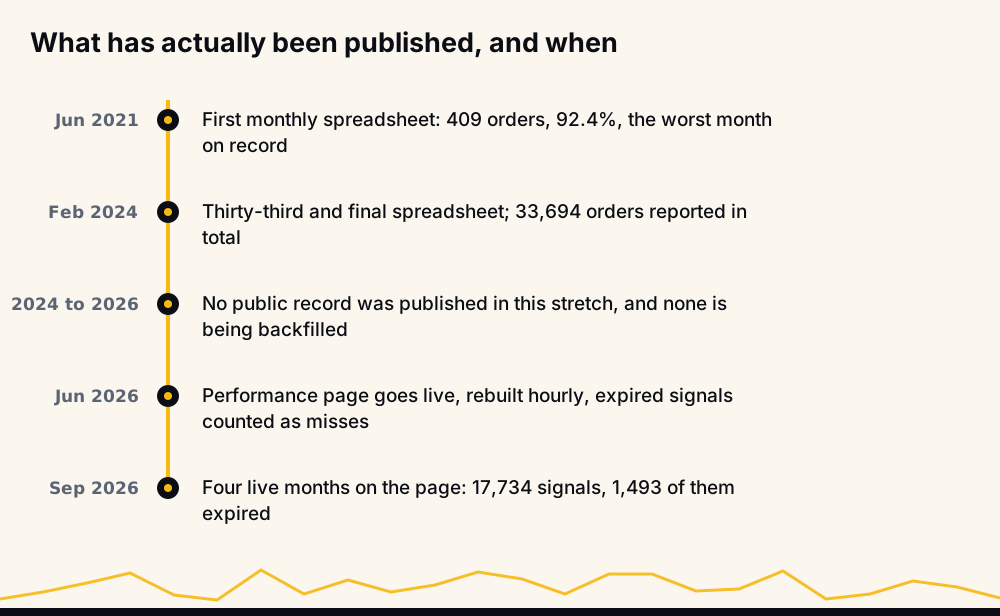
Between June 2021 and February 2024 we published a monthly report as a spreadsheet. There are 33 of them and they are still downloadable from the reports page. Together they list 33,694 orders: 33,081 that reached their target inside their month and 613 still open when their month's sheet was cut (none was stopped out).
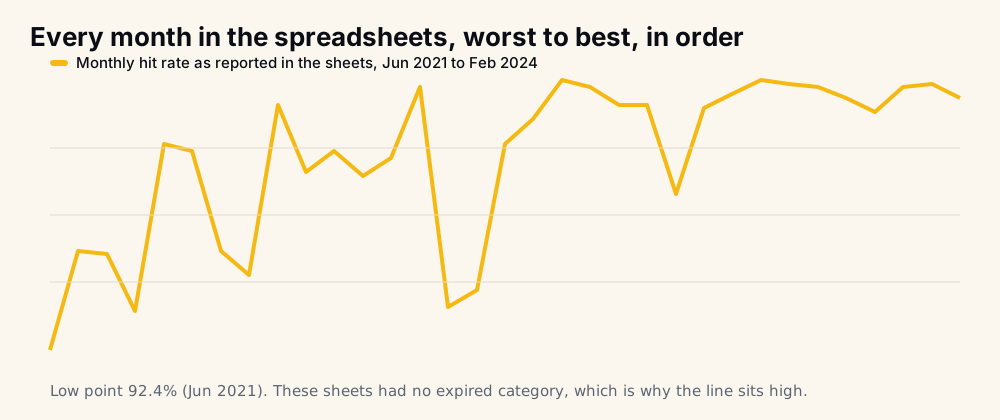
Median monthly accuracy across those 33 months is 98.9% as reported in those sheets. The range matters more than the median: the best months read 100.0%, the worst is June 2021 at 92.4%, followed by September 2021 at 93.4%, August 2022 at 93.6%, July 2021 at 93.9% and September 2022 at 94.1%. Seven of the 33 months read under 95%, all of them in 2021 and 2022.
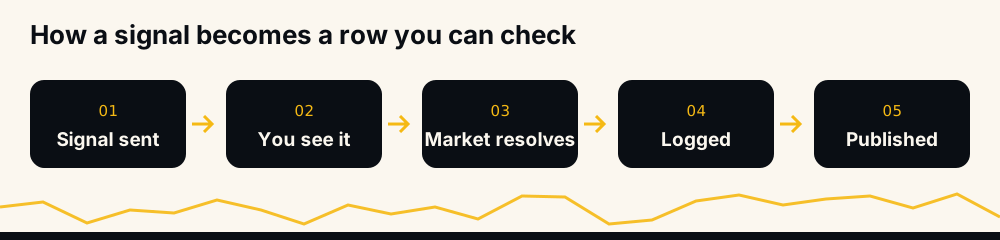
You do not have to accept the median we calculated. The sheets have no win or loss column: each row is one order with its entry, PnL and, once it reached its target, a close time. A row without a close time was still open at the cut. Count the rows with one, divide by all the rows in the month, and you have your own number. That is the point of publishing the files rather than a graphic.
The second record: a performance page rebuilt hourly
Since June 2026, the performance page has been regenerated hourly straight from the trade database. Its definitions are printed on the page: a win is a target hit, and a signal that reaches its maximum hold without hitting the target is counted as missed.
Missed signals count against the rate. The published figure is wins divided by wins plus missed, which is a harsher denominator than most services use. PnL is shown unleveraged, and only signals actually broadcast to members are counted — informational reports and internal experiments are excluded.
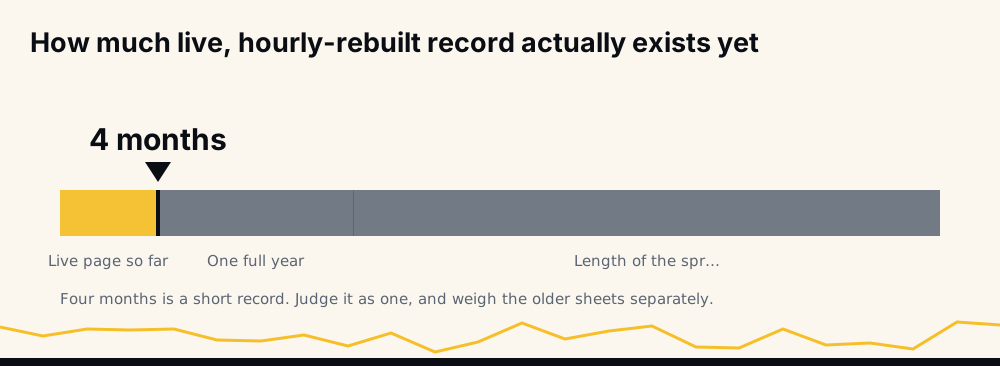
Three months have settled: June 2026 at 98.4%, July at 97.2% and August at 97.3%. September is still settling, because its newest signals still have time to reach their target; the page marks it and shows the share reached so far. From 3 October 2026 signals have longer to reach their target before they count as expired, and on 4 October 2026 every earlier month was scored again under the same hold, so all months follow one rule. Under the shorter hold used before, June to August had read 94.3%, 88.3% and 91.0%. The page also shows each month's average move per settled signal, unleveraged, with wins and missed signals counted alike; it is not an account return. Four months is not a long record, and you should judge it as the short one it is.
The two records do not agree, and here is why
A careful reader will notice that the spreadsheet median of 98.9% as reported in those sheets and the live months' 97.2% to 98.4% still do not describe the same thing. They are two different measurements and the difference is entirely in the accounting.
The spreadsheets have no expired category at all. Every order in them either reached its target or was still open at the cut, which is why the figure sits so high. The live page adds a third outcome and scores it as a miss. Move the 2026 numbers onto the older method and they would look better; move the older numbers onto the current method and they would look worse.
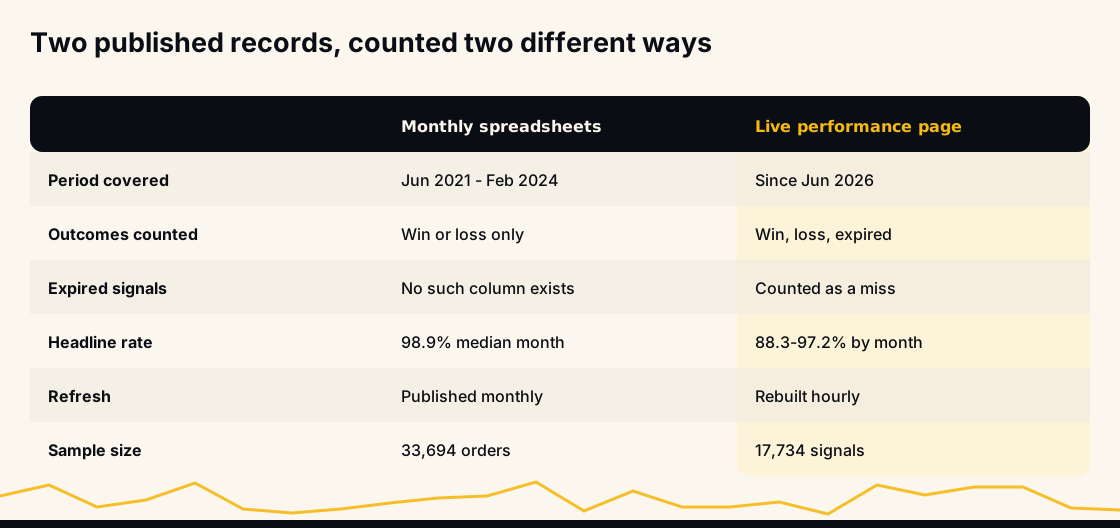
This matters beyond our own pages. When you compare our spreadsheet median to a competitor's advertised 95%, you are almost certainly comparing different accounting rather than different performance, and the comparison is meaningless until you know how each one treats trades that simply drifted sideways and closed. The same problem runs through the whole category, as our look at whether AI crypto trading bots actually work sets out.
What the live table shows that we would rather it did not
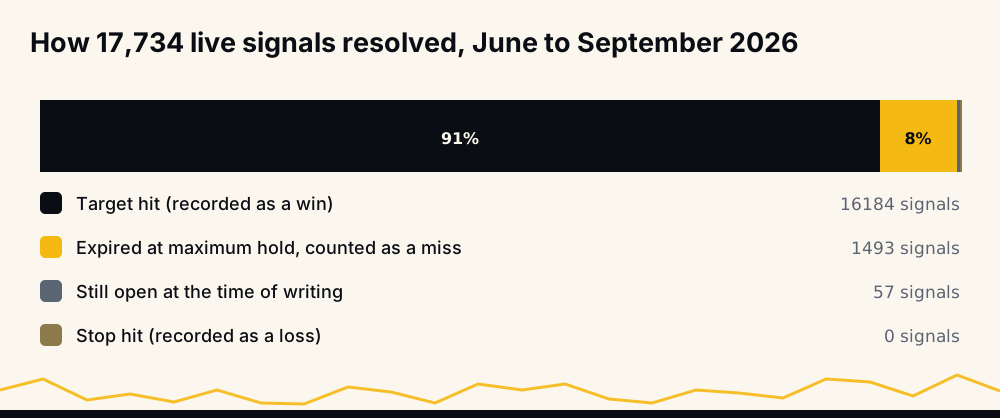
The live table has columns for wins, missed and open signals, and none for stopped trades. That is the first thing a sceptical reader should push on, so here is the blunt answer: the signals we broadcast do not carry a stop price at all. Every one of them ends either at its target or at maximum hold. A stop can never be hit because there is no stop attached, so a missed signal is one that timed out, however far it went the wrong way, and reading the absence of losses as an achievement would be reading it wrong.
That is a design choice with a real cost, and it belongs on this page rather than in a footnote. It means the published record cannot tell you how far a losing position travelled before it timed out, and it means the exit discipline is yours: you decide where to cut, and nothing in our numbers decides it for you.
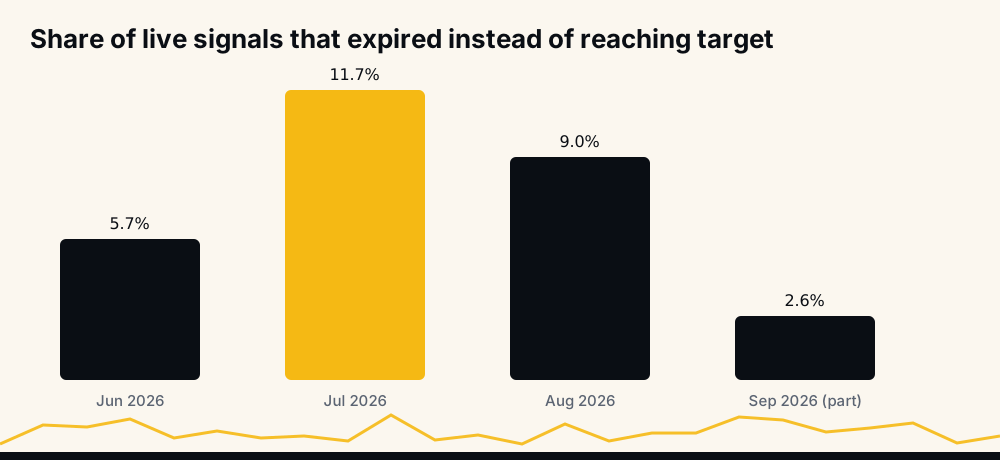
So read the Missed column as the losses. Across the three settled months, June to August 2026, there were 17,014 signals: 16,623 hit target and 391 expired, none still open. July is the weakest of them, with 150 of its 5,448 signals (2.8%) expiring, which is exactly why its published rate is 97.2% and not 100%.
What we do not have: no audit, no Trustpilot, no Reddit thread
Being straight about the gaps is more useful than filling them with something invented.
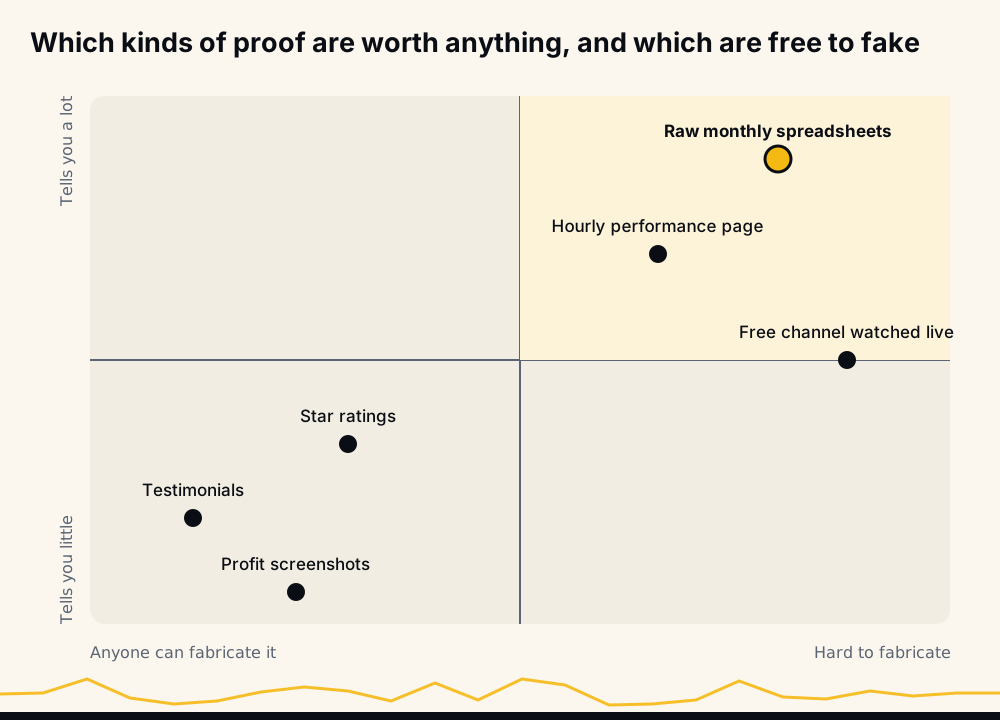
- There is no third-party audit. Nobody independent has verified the spreadsheets or the database behind the performance page. We publish the underlying files instead, which is a weaker guarantee than an audit and a stronger one than a screenshot.
- There is no long review history. We do not have years of Trustpilot entries, and we are not going to manufacture any.
- There is no Reddit thread vouching for us. If you find one, we did not write it.
- There are no testimonials, ratings or user counts on this page. The only member figure we will quote is the free channel's, because Telegram displays it publicly and you can read it yourself.
- There is a gap in the record. The spreadsheets stop in February 2024 and the live page starts in June 2026. Nothing was published in between and we are not backfilling it.
Watch it before you pay anything
The cheapest way to test a signal service is to watch it operate in real time and grade it yourself, before any money is involved.
The free channel at t.me/getbinancefutures carries the paid tier's signals of strength 3 and up on a 20-minute delay. It had 3,940 members when this was written. VIP gets every signal at once; the free calls are not cherry-picked.
Twenty minutes is long enough to change the entry price, so the free channel is a way to audit the signals, not to trade them profitably. Log a fortnight of calls, mark each one, and compare your tally with the performance page's strength 3 and up rows. If the two disagree badly, you have learned something no marketing page could have told you. Our walkthrough on how to read crypto signals covers what each field in a call means.
Can HafizeBot take your money?
No. Optional autotrading needs a Binance API key with futures trading only. It never needs withdrawal permission or calls a withdrawal, and it warns you if a key you add allows one. Your funds stay in your own Binance account the entire time; the bot places and closes orders there and moves nothing out.
That is the property to check on any service, not just ours: a key without withdrawal permission cannot be used to drain an account even if the provider is compromised or turns out to be dishonest. The money you trade with never passes through us: no wallet of ours sits between you and the exchange, the only payment to us is the plan you choose, and nothing needs recovering if you decide to leave — you just delete the key at the exchange. Connecting a trading bot to a Binance API key safely goes through the permission screen step by step, and the same test appears in our piece on telling legitimate Telegram trading bots from scams.
What you control, and how the pricing works
Autotrading is opt-in and constrained by settings you choose, and you can change every default: you set the minimum signal strength the bot will act on, the position size, the maximum number of simultaneous positions and which coins to exclude. Commands such as /setRisk and /setPositionSide LONGONLY|SHORTONLY|BOTH adjust that behaviour from Telegram.
Pricing is in USDT and there is no card on file. Nothing renews unless you switch on /subscribe, which renews from the USDT balance you have already deposited with us; otherwise access ends rather than quietly continuing to bill you. That model has an obvious downside for us and it is deliberate: a service that has to be re-bought has to keep being worth buying.
How to audit us in an afternoon
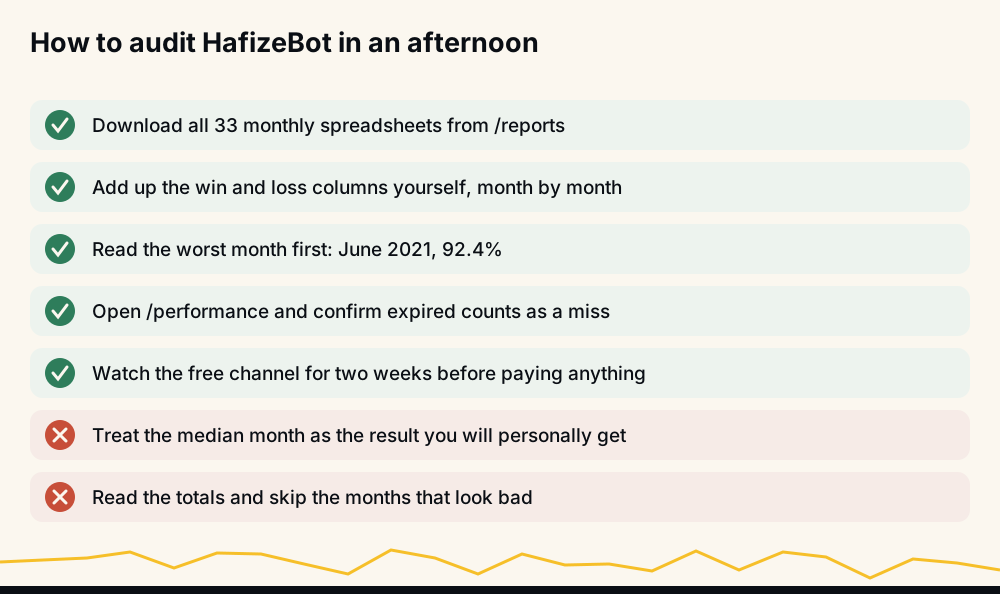
Work through this in order. Steps one to five are the audit; the last two are what people do instead, and both are mistakes.
- Download all 33 spreadsheets from /reports and open them.
- Count closed rows against all rows yourself rather than reading our summary.
- Read the worst month first — June 2021, 409 orders, 92.4% — and the other six sub-95% months.
- Open /performance and confirm the Missed column is included in the denominator.
- Watch the free channel for two weeks and grade the calls yourself.
- Do not treat the median month as the result you will get.
- Do not read the totals while skipping the months that look bad.
The honest limits of every number on this page
Five caveats, none of which we can engineer away.
Your result will differ from any published number. Published outcomes assume the signal was taken at the stated entry, at consistent size, with the exits obeyed. Your entry price, your sizing, your leverage, your fees and the trades you skip will all move your figure away from ours, usually downward.
Past periods do not carry forward. The 2021 to 2024 record covers market conditions that no longer exist. The live months cover 2026 conditions, which will also stop existing.
Two records, two methods. Do not average them, and do not quote the higher one at a competitor without saying which method produced it.
Four months is a small live sample. Enough to detect an outright fraud, not enough to characterise a strategy.
Leverage is yours, not ours. The PnL on the performance page is unleveraged. What you do with leverage multiplies both directions of the outcome, as our explainer on leverage sets out.
Where HafizeBot fits, and what it will not tell you
HafizeBot is a Telegram signal service for Binance USDT-M perpetual futures, with optional autotrading. Signals are AI-generated from a model that evaluates 240+ indicators, formulas and components across 500+ pairs, and each call carries a strength rating so you can filter by it.
What we will not publish is the recipe. No honest provider does, and anyone who hands over their scoring logic either has none worth protecting or is not actually running it. The proof we offer instead is the record, in raw form, including the parts that do not flatter us. If that trade seems unreasonable, our broader piece on whether crypto trading bots are worth it makes the case for and against the whole category rather than for us.
None of this is investment advice, and a published hit rate is not a promise about your account. Futures trading can cost you more than you planned to risk, so start at the smallest size your exchange allows, keep the position limits set before you switch anything on, and trade only what you can afford to lose.
Frequently asked questions
Is HafizeBot a scam? No, and the checkable facts are these: funds stay in your own Binance account, autotrading never needs withdrawal rights, there is no deposit to us, and the full historical record is downloadable rather than summarised. What we cannot prove in advance is that you will make money, and no service can.
Why is the spreadsheet figure so much higher than the live one? Different accounting, not different performance. The 2021 to 2024 spreadsheets had no maximum hold: a signal stayed open until it reached its target, and any still open when its month's sheet was cut counted against the month. The live page gives every signal a maximum hold and counts each expiry as a miss, which is why its settled months read 97.2% to 98.4% rather than 100%.
Has anyone independently audited the results? No. There is no third-party audit of either record. What exists instead is the raw material: 33 spreadsheets listing 33,694 orders, and a performance page rebuilt hourly from the trade database, so you can recompute the figures rather than trust ours.
Can I test HafizeBot without paying? Yes. The free channel at t.me/getbinancefutures carries the calls of strength 3 and up with a 20-minute delay, which makes it poor for trading and good for auditing: log two weeks, grade each call, and compare your tally with the strength 3 and up rows on /performance.
Why does the live table show no losses? Because the signals we broadcast carry no stop price, so none can end as a stop hit: a signal that fails to reach its target is counted as missed when its maximum hold runs out. The Missed column is counted against the hit rate — 391 of 17,014 signals across the three settled months.
Does HafizeBot charge a recurring subscription?
No. Pricing is in USDT with no card on file, and nothing renews unless you switch on /subscribe, which only draws on balance you deposited yourself; without it, access ends rather than billing you silently. That also means renewing is a decision you make again each time rather than one you have to remember to cancel.