Crypto trading bots are worth it for traders who verify the record before paying, keep funds on their own exchange, and cap their risk — and a waste of money for everyone else. They are legal in most places, safe when connected the right way, and profitable only when the model behind them is real. Every one of those conditions is checkable in advance, and this article shows you how to check each one.
This is the verdict companion to our pillar guide on whether AI crypto trading bots actually work. That article explains the technology; this one answers the buying question: worth it for whom, at what cost, with the legal, safety and profitability questions taken one at a time.
Are crypto trading bots worth it? The short verdict
Worth it is a cost-benefit question, so start with what a bot actually buys you: coverage (hundreds of pairs scanned continuously), discipline (rules executed without fear or revenge-trading), and speed (orders placed in seconds, around the clock). Those are real, durable advantages — the same ones institutions pay for. If you're new to the category, start with what a crypto bot is and does.
What a bot does not buy you is a guaranteed edge. A bot amplifies the quality of the model it runs. Good model, disciplined execution: the advantages compound. Bad model: you've automated losing.
So the verdict splits cleanly:
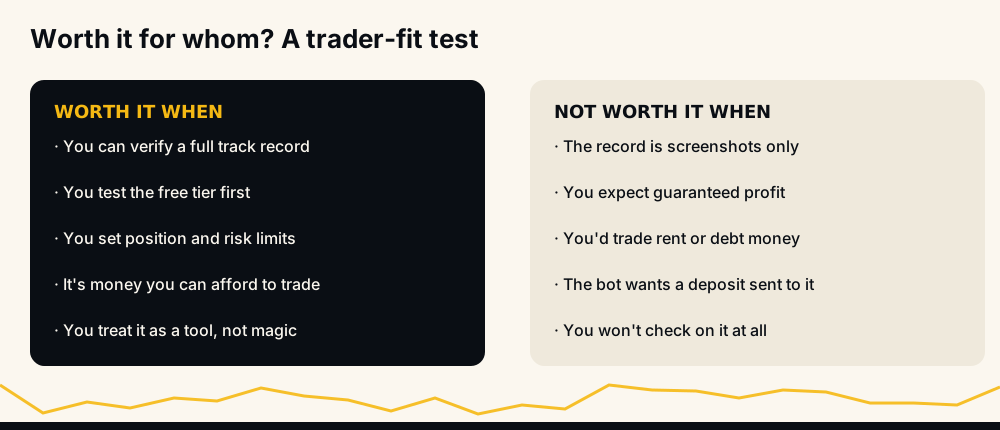
- Worth it if the bot's complete history is published and verifiable, your money never leaves your own exchange account, you control the risk limits, and you can evaluate it free before paying.
- Not worth it if the "track record" is screenshots, the bot needs a deposit sent to it, or you're trading money you can't afford to lose. No price is low enough for that.
The rest of this article works through each condition.
Are crypto trading bots legal?
In most jurisdictions, yes. A trading bot is automated order placement on your own exchange account — the same orders you could place by hand, sent through an API the exchange publishes precisely for this purpose. Binance, like every major exchange, documents its API openly and expects automated trading on it. Nothing about using a bot is inherently illegal for a retail trader.
What is illegal, in crypto as everywhere else, is market manipulation: coordinated pump-and-dump schemes, wash trading, spoofing. Some "signal groups" are exactly that — a coordinator buys a thin-market coin, calls it as a "gem", and dumps on the followers. A bot trading liquid Binance USDT-M futures pairs on model-generated signals is a different activity in kind, not just in degree.
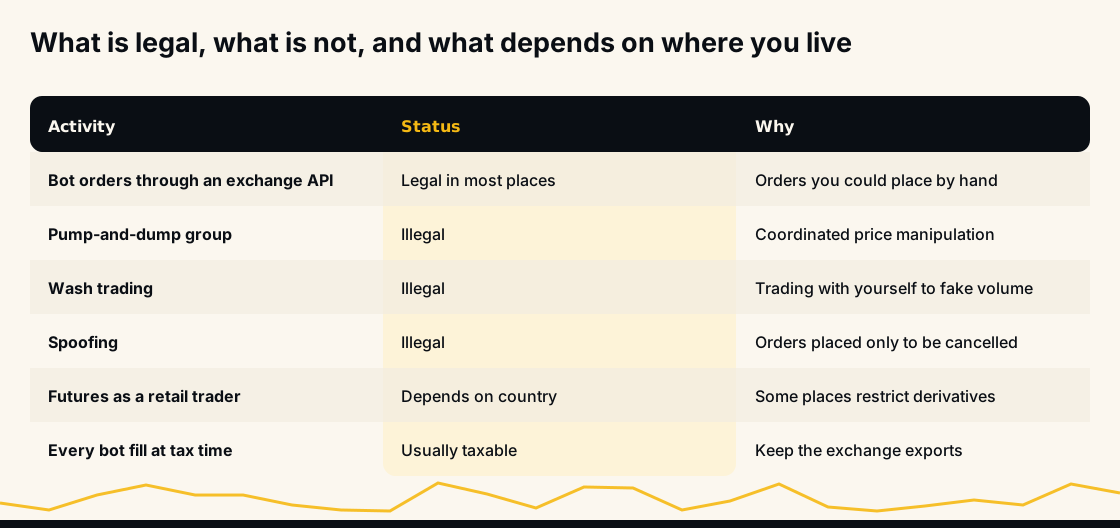
Two practical notes. First, your local rules on crypto trading still apply — some countries restrict futures products for retail users, and that restriction doesn't disappear because a bot places the order. Second, taxes: bot trades are taxable events like manual ones, and a bot can generate a lot of them. Keep your export files.
Are crypto trading bots safe?
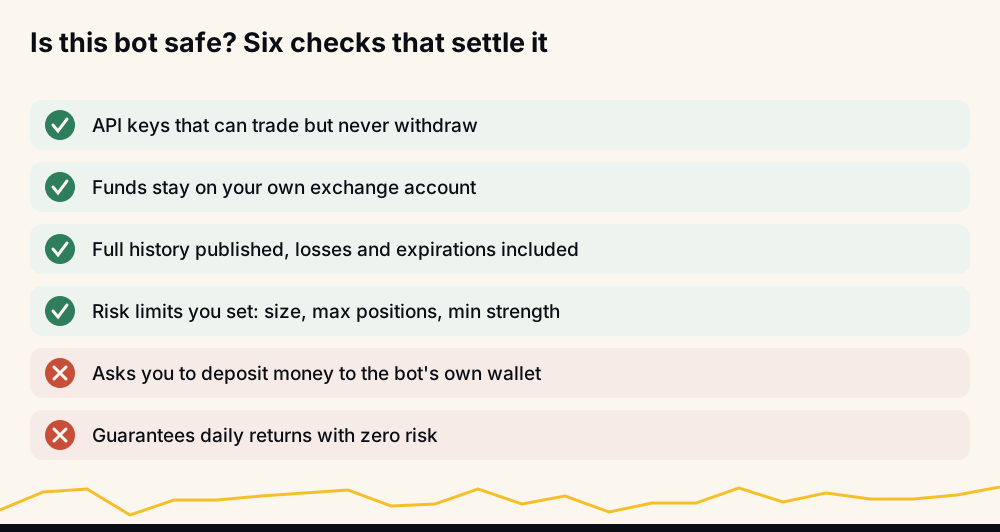
They can be — safety is mostly about how the bot connects to your money, and that's under your control. The safe architecture looks like this:
- The bot connects through an exchange API key that can trade but cannot withdraw. HafizeBot asks for exactly that: a key with futures trading permission only. It never needs withdrawal rights, warns you if a key you add has them, and you can revoke the key at any moment.
- Your funds stay on your own Binance account the entire time. You can log in and see every position the bot has opened, live.
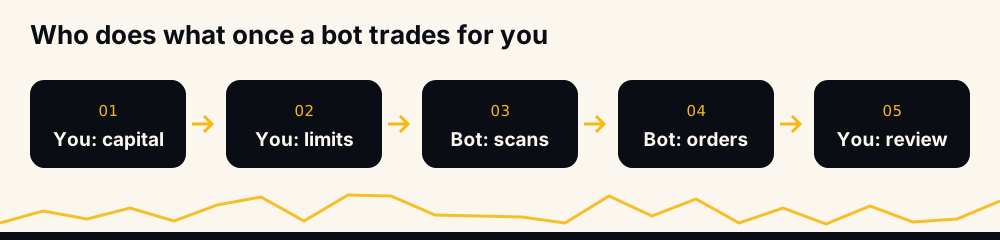
- You set the limits the bot must respect: minimum signal strength before it may act, position size, maximum simultaneous positions, and per-coin filters.
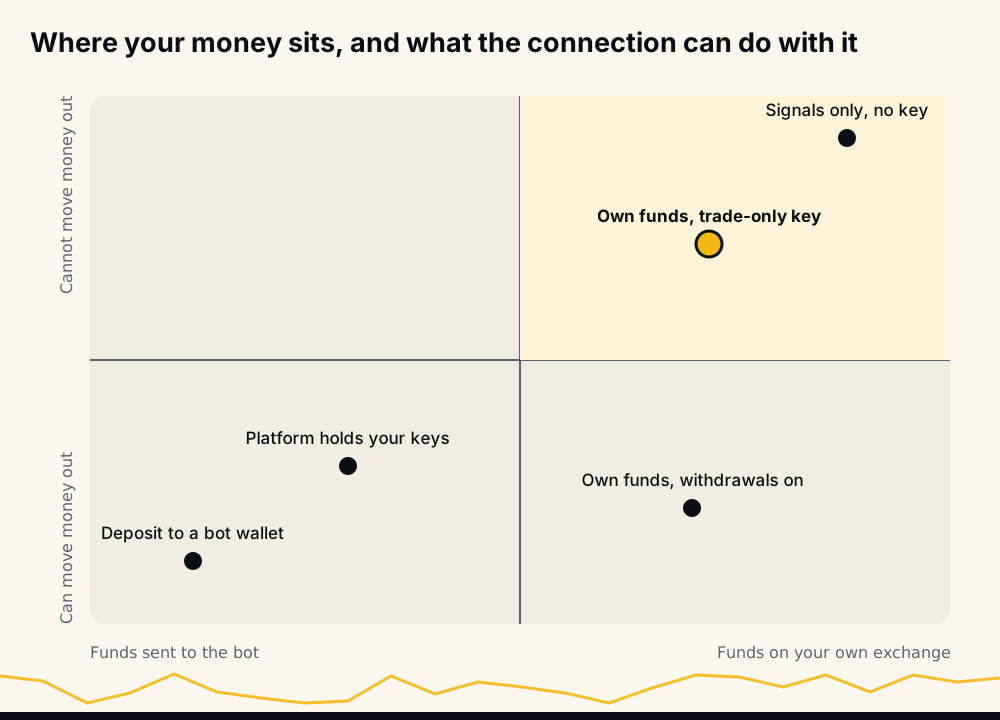
The unsafe architecture is just as recognizable: a bot that asks you to deposit funds to it, a "cracked APK" download, a platform that holds your keys, or a product with no risk limits at all. Money you send to a bot's wallet is money you've already lost control of.
One more safety layer that costs nothing: start with signals only. A signal channel needs no API key and touches no funds. Autotrading is an upgrade you enable after trust is earned, not a precondition.
Are crypto trading bots legit, or mostly scams?
Both statements are true: the category is legitimate, and a large share of the products in it are not. The base rate of junk is high because the pitch is easy to fake — anyone can screenshot three winning trades and open a Telegram channel.
The filter that works is simple: legit bots publish everything; scams publish highlights. A real operation can show you every signal it ever issued — the wins, the losses, and the ones that went nowhere. HafizeBot's version of that is concrete: 33 monthly spreadsheet reports covering June 2021 to February 2024, 33,694 signals listed order by order, downloadable so you can check the math yourself. Since June 2026 the record is stricter still — a live performance page regenerated hourly from the trade database, where every missed signal counts against the hit rate and losing months appear when they happen.
You don't have to trust that description; that's the point. The test for any bot, ours included, is whether such a ledger exists and whether you're allowed to inspect it. "Legit" is not a vibe — it's a property of the published record.
Are crypto trading bots profitable?
Sometimes, for some users, in some market regimes — and any vendor who answers this question without those qualifiers is selling something. Profitability depends on three multiplied factors: the model's edge, your risk settings, and market conditions. A weak setting in any one of them can erase the other two.
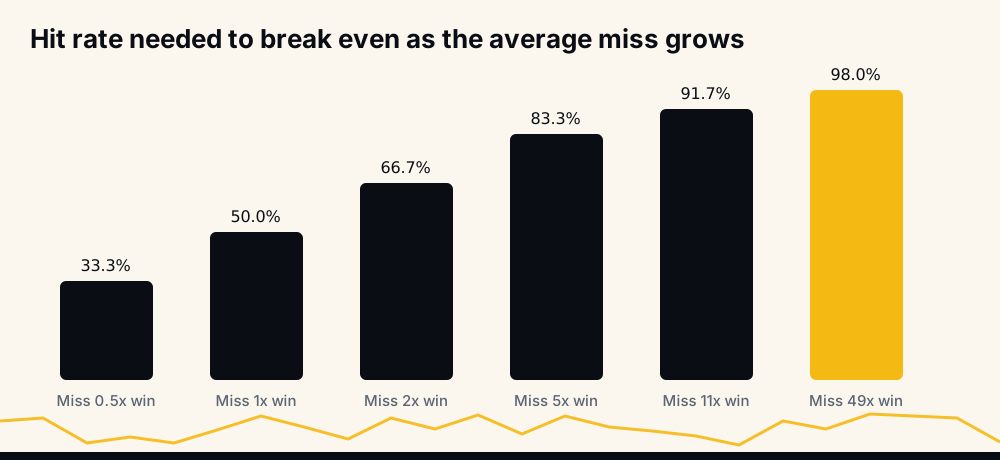
What evidence can honestly be shown is the signal record. Across HafizeBot's 33 published monthly reports (June 2021 – February 2024), the median monthly accuracy was 98.9% as reported in those spreadsheets — a number that deserves your skepticism, which is exactly why the reports are downloadable and why the current live performance page is generated from the database with Wins, Missed and Open all shown, every missed signal counted against the rate, and PnL shown unleveraged.
Note what that number is not: it is not your return. Accuracy of signals and profitability of your account differ because of leverage, position sizing, fees, entry timing and which signals your filters let through. That's why honest bots publish signal-level data and let you draw the account-level conclusion yourself.
Do crypto trading bots make money? How much is realistic
"How much do crypto trading bots make" is one of the most-searched questions in this category, and the only honest answer is: there is no standard number, and anyone quoting one is guessing or lying. Returns are a function of your capital, your leverage, your limits and the month's market — none of which a vendor knows.
What can be said with confidence:
- A bot's edge shows up over many trades, not one. Judge months of data, not a lucky week.
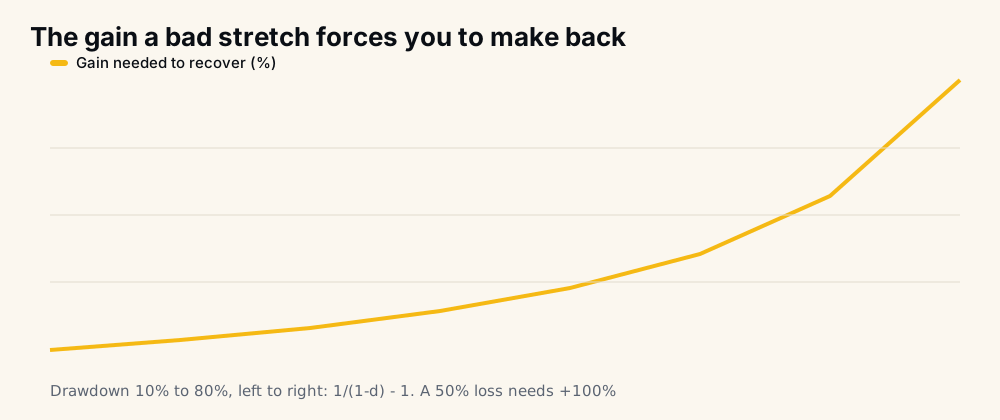
- Losing periods are part of every real record. A bot that has never had a bad stretch has a short or curated history.
- Risk settings dominate outcomes. Two users on identical signals can end the same month up and down, purely on sizing and max-position choices.
- Unleveraged numbers are the comparable ones. Leverage multiplies both directions; that's why the performance page reports PnL unleveraged.
If a bot's marketing quotes "average monthly profit" without showing the underlying trades, treat it as fiction until the trades appear.
What do crypto trading bots cost — and what should you pay for?
Costs come in three forms: subscription fees, trading fees (you pay the exchange either way), and — the expensive one — losses from a bad model. The subscription is the smallest of the three, which is why choosing on price is backwards: a free bot with a fake record costs far more than a paid bot with a real one.
Pricing structure tells you about incentives. Flat pricing means the bot profits when you stay subscribed, which requires the record to keep earning your trust. "Percent of profits" schemes incentivize overtrading; auto-renewing card subscriptions incentivize making cancellation hard. HafizeBot charges flat pricing in USDT with no card on file, and nothing renews unless you switch on /subscribe, which renews from the USDT balance you deposited.
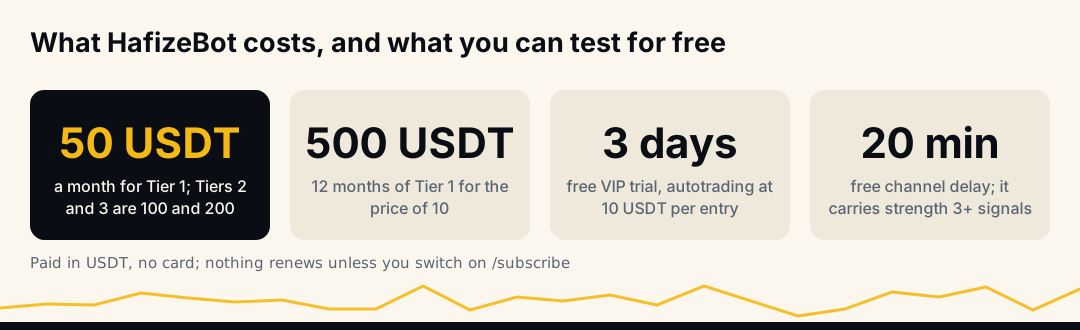
And you should never pay to find out whether a bot is any good. The free Telegram channel carries the stronger signals VIP members get, strength 3 and up, delayed 20 minutes — around 3,980 members use it as of August 2026. The delay costs you entry timing but costs the evaluation nothing: watch, paper-trade, compare against the live record's strength 3 and up rows, then decide.
Manual trading vs a bot: what you're actually buying
The fair comparison isn't "bot vs perfect trader" — it's bot vs you, at 3 a.m., after two losses. Manual trading gives you judgment and context; it also gives you fatigue, FOMO, revenge trades and a hard limit on how many charts you can watch. A bot inverts the trade-off: no judgment beyond its model, but flawless consistency across 500+ Binance USDT-M perpetual pairs, evaluated continuously against a model built on more than 240 indicators, formulas and components.
The practical answer for most people is not either/or. Use the bot for what machines do well — scanning, timing, discipline, executing the plan — and keep for yourself what humans do well: deciding how much capital to allocate, which limits to set, and when to sit out entirely. The benefits of algorithmic trading are real, but they're benefits of execution, not a substitute for your own risk decisions.
How to find out if a bot is worth it — without risking money
You can answer "worth it?" for any specific bot in about a month, for free:
- Read the record first. Full history or walk away. For HafizeBot that's the 2021–2024 reports and the hourly performance page.
- Watch the free signals for 2–4 weeks. No API key, no payment. Track them in a spreadsheet as if you had traded.
- Compare your tracking against the published record. They should tell the same story.
- Only then connect — a Binance API key with withdrawals disabled, conservative limits, small size.
- Judge the first paid month on the ledger, not on the best trade in it. Scale only what the data has earned.
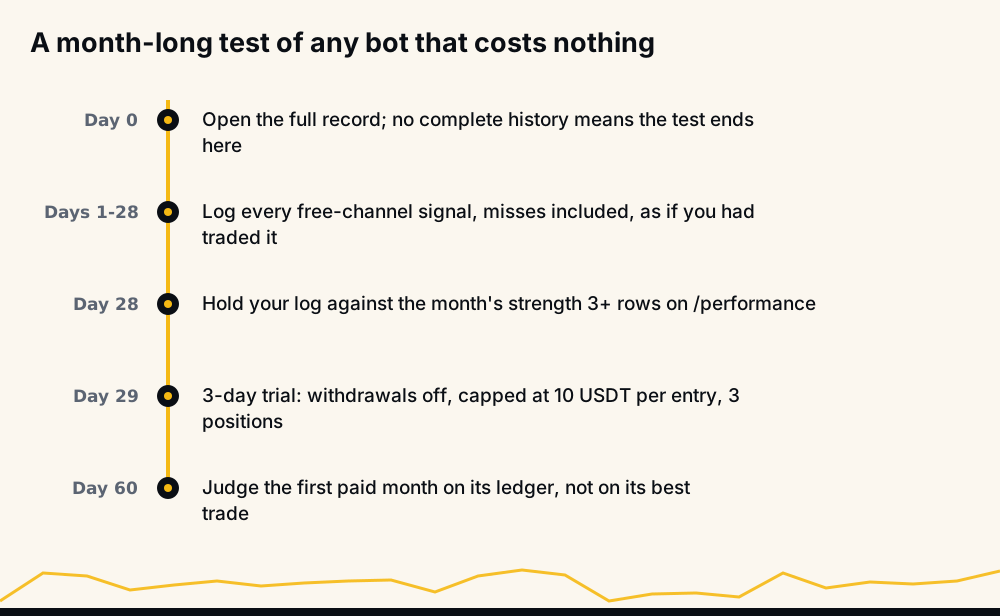
If a bot fails at step 1, the evaluation is over and it cost you nothing. That's the cheapest "no" in crypto.
FAQ
Are crypto trading bots illegal? No — in most jurisdictions, running a bot on your own exchange account is ordinary automated order placement through an official API. What's illegal is manipulation (pump-and-dumps, wash trading), with or without a bot. Local restrictions on futures trading still apply to you either way.
Can crypto trading bots make money? They can, and they can also lose money — often within the same year. The determining factors are the model's real edge, your risk limits, and market conditions. Demand a complete published record before believing either outcome is typical.
How much do crypto trading bots make? There is no honest universal number. Returns depend on your capital, leverage, and settings. Judge a bot on its full signal history — like the live record of wins, missed and open signals — and treat any quoted "average monthly profit" without underlying trades as marketing.
Are crypto trading bots real, or is it all hype? The software is real and widely used; exchanges publish APIs specifically for it. The hype problem is real too: many products fake their results. The category being real doesn't make any individual bot trustworthy — its published record does.
Which crypto exchanges have trading bots? Most major exchanges support bots through their APIs, and some offer built-in ones. HafizeBot works with Binance USDT-M futures and needs only trading permission on your API key, so your funds remain on your own Binance account.
The verdict, in one paragraph
A crypto trading bot is worth it when — and only when — you can verify the record, keep custody of your funds, cap your risk, and test before paying. Those four checks take a few weeks and cost nothing, and they filter out most of the market. Whatever you decide, trade only money you can afford to lose: no bot, and no human, wins every month, and nothing here is investment advice. Start where the evidence is: the live performance page, the downloadable reports, and the free signal channel. If the record convinces you, the bot has earned the next step; if it doesn't, you just saved yourself the subscription.