An expired crypto signal is one that reached its maximum hold time without price touching either the target or the stop. It did not win and it did not lose; it went nowhere for long enough that the trade was closed by time rather than by price. On the live performance page every expired signal is counted against the target-hit rate — it sits in the denominator with the losses — because a signal that never got where it said it would go is not a success, whatever the exit price was. Most published win rates quietly leave these out, which is why they look better than they are.
This is the outcome nobody puts in the marketing. It is also the outcome that tells you the most about a provider, because how they count it reveals whether they are measuring the signals or measuring themselves.
Every signal ends in one of four states
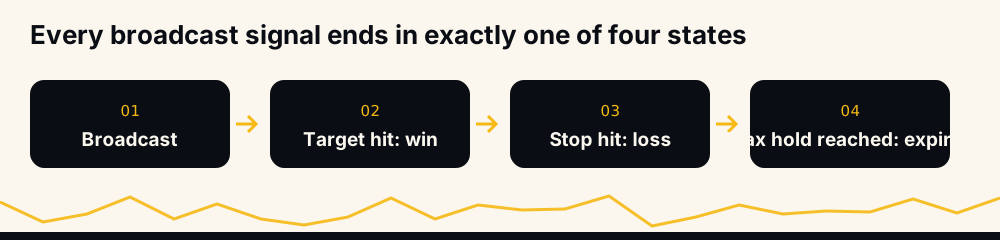
A broadcast signal carries an entry, a target, and a maximum hold. From the moment it is sent, only four things can happen:
- Win. Price reaches the target.
- Loss. Price reaches the stop.
- Expired. The maximum hold passes with neither touched.
- Open. None of the above yet.
There is no fifth state and no "partial". A signal that got halfway to target and then reversed to the entry is not "half a win"; it either reached the target inside the hold window or it did not.
How each outcome is counted
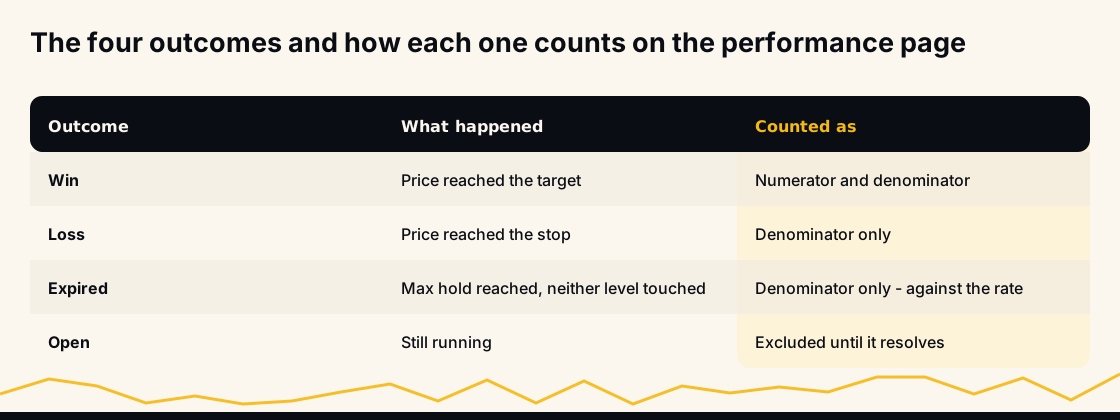
The live performance page is regenerated hourly from the same table the bot writes when it sends a signal. Its target-hit rate is:
wins ÷ (wins + losses + expired)
Wins are the numerator. Losses and expiries are in the denominator only. Open signals are excluded entirely until they resolve — counting them either way would be guessing.
So an expired signal lowers the rate exactly as much as a loss does. That is the whole design decision, and it is worth being clear that it was a choice. The page could have dropped expiries. It counts them because a signal that never arrived is a signal that did not work.
What August 2026 actually looked like
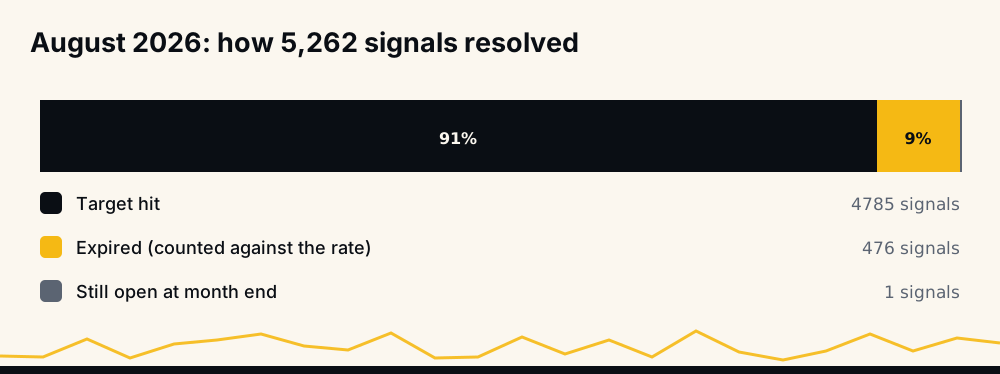
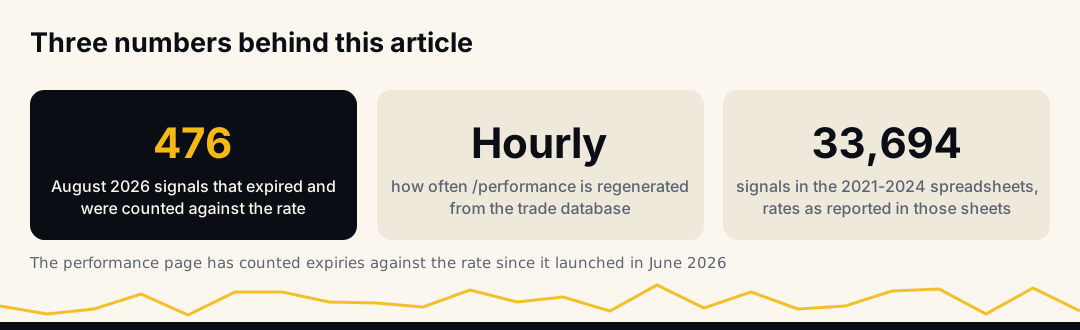
Real numbers, from the published page. In August 2026 the bot broadcast 5,262 element signals. 4,785 hit their target. 476 expired. One was still open at month end.
Target-hit rate: 4,785 ÷ (4,785 + 0 + 476) = 91.0%.
Two things to notice. First, 476 expiries is about 9% of the month — not a rounding error, a real share of outcomes. Second, the loss column reads zero, and it does not mean no signal went against us. Stop-loss tracking on this database began in late August 2026; before that, a signal that moved the wrong way simply ran to its max hold and expired. The zero is a gap in tracking, stated on the page itself, not a claim of perfection. From late August onward the loss column means what it says.
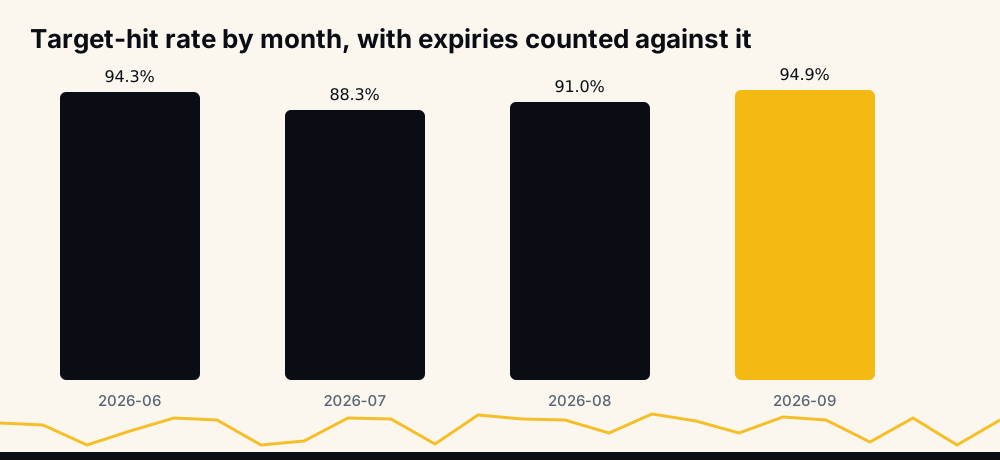
The monthly rates — 94.3% in June, 88.3% in July, 91.0% in August, 94.9% for September so far — move because the expiry share moves. A choppy month produces more signals that go nowhere. A rate that never moved would be a rate that was not counting.
Same signals, two ways of counting
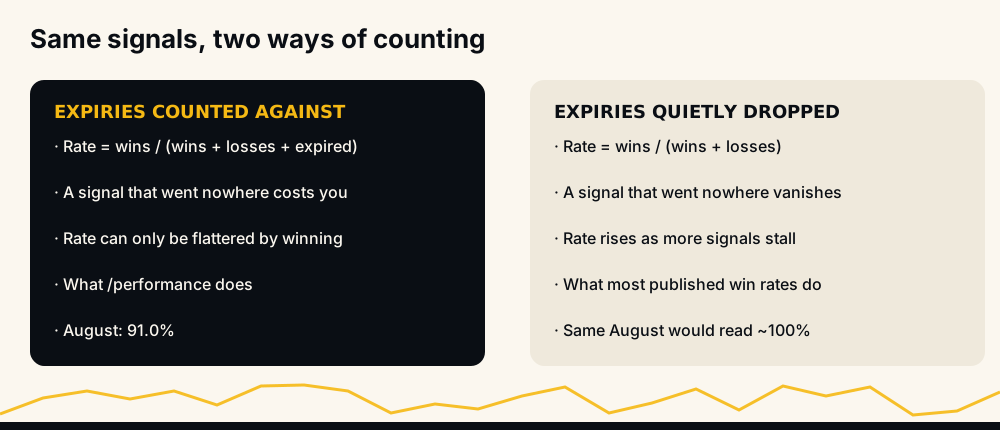
Take the same August and count it the way most providers do: wins ÷ (wins + losses), expiries dropped. 4,785 ÷ (4,785 + 0) = 100%.
Same signals. Same month. Nine points of difference, produced entirely by deciding that 476 trades did not happen.
This is not a hypothetical. It is the standard way a published win rate is built, and it is why so many providers show numbers in the high nineties. They are not lying about the trades they count. They are choosing which trades to count.
How dropping expiries inflates a rate over time
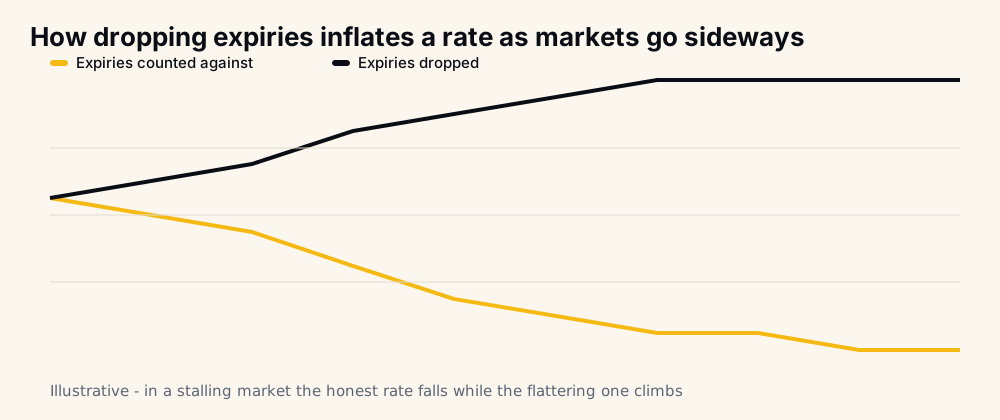
The worst part is the direction of the error. In a trending market, few signals expire and the two methods agree. In a sideways market, more and more signals stall — and the dropped-expiry rate rises as the honest rate falls, because every stalled trade vanishes from the denominator while the few that did reach target remain.
So the flattering method is most flattering exactly when the signals are performing worst. A provider using it will look best in the months you would most want a warning.
What share of signals expire
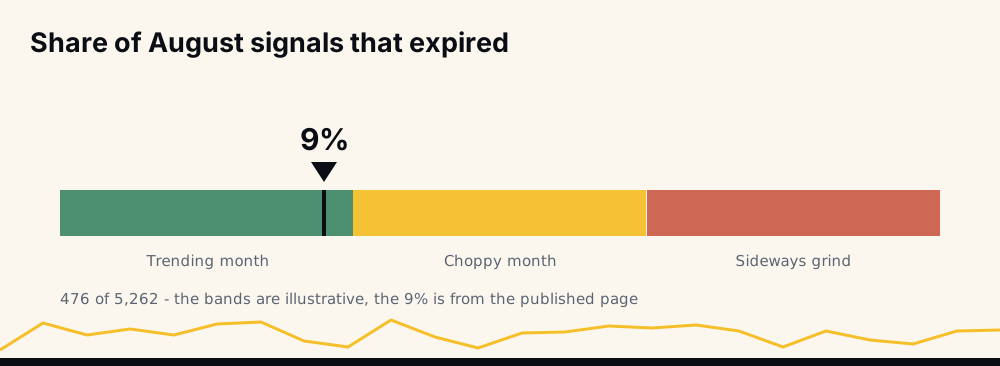
August's 9% is a real figure; the bands around it are illustrative. The honest expectation is that the share moves with the market. A trending month might see a few percent expire. A sideways grind can push it much higher. If a provider reports a flat expiry share — or no expiry share at all — the question is not whether their signals are better; it is whether they are measuring.
Why a maximum hold exists at all
A signal without a maximum hold is a signal that can never lose on paper. Hold it long enough and price will, eventually, cross almost any level. That is why "open" cannot be allowed to mean "still might win" forever: it turns every stalled trade into a future win that has simply not happened yet, and it turns the win rate into a function of patience rather than signal quality.
The maximum hold closes that loophole. When it is reached, the trade is over and the outcome is recorded. The specific duration is a parameter of the system rather than something published; what matters for reading the record is that it is fixed, applied to every signal, and that reaching it counts as a failure to arrive.
For the autotrader this is also the practical exit: a bot-opened position that reaches neither target nor stop is closed at max hold, which is what frees the margin for the next signal.
Expiry versus a stop: two different failures
Both count against the rate, but they are not the same event, and confusing them hides information.
A stop is the thesis being wrong quickly. Price went the other way far enough to hit a level, and the trade ended by price. That is a signal that was actively incorrect about direction.
An expiry is the thesis never playing out. Price did not go far enough either way inside the window. The direction may even have been right and simply slow — or the market may have gone flat and nothing happened at all. That is a signal that was not wrong so much as not resolved.
A month heavy in stops and a month heavy in expiries can show the same rate and describe different markets. The first is a trending market where the model picked the wrong side too often. The second is a sideways market where there was no side to pick. If you only see one number, you cannot tell them apart, which is why the performance page shows the counts and not only the percentage.
What to do when a signal you followed manually expires
If you are trading from the free channel by hand, the provider's maximum hold does not close your position. Nothing does, unless you do. That is the practical difference between following a record and being in it.
So decide your own hold before you enter, and write it down. The simplest version is to mirror the provider's discipline: if the trade has not reached target in the window you set, close it at market and record the outcome as an expiry in your own ledger. Do not extend it because it is "almost there". Almost there is what every expiry looked like at some point.
Then count it honestly. An expiry you closed at a small gain is still an expiry — the signal did not deliver what it said. If your own ledger drops those, your rate will drift upward for the same reason a provider's does, and you will be measuring your patience rather than the signals.
Questions to ask any provider about signals that go nowhere
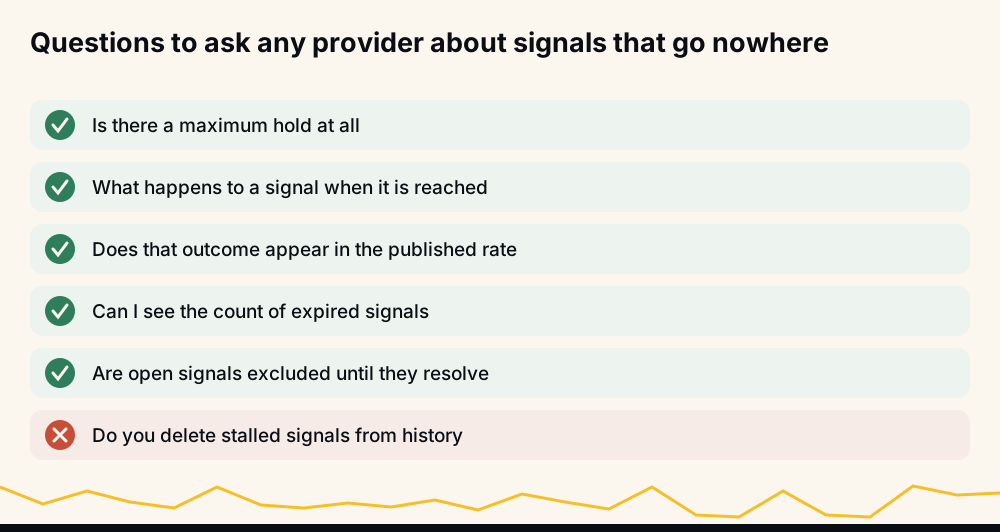
You can apply this to any signal service, including this one:
- Is there a maximum hold at all?
- What happens to a signal when it is reached?
- Does that outcome appear in the published rate, and on which side of the division?
- Can I see the count of expired signals, not just the percentage?
- Are open signals excluded until they resolve?
- Do stalled signals ever get deleted from history?
A provider who answers the first five clearly and the sixth with "no" is measuring the signals. Any other pattern is measuring something else. The method in how to verify a crypto signal win rate turns these into a spreadsheet you can fill in yourself.
What a provider shows against what it counts
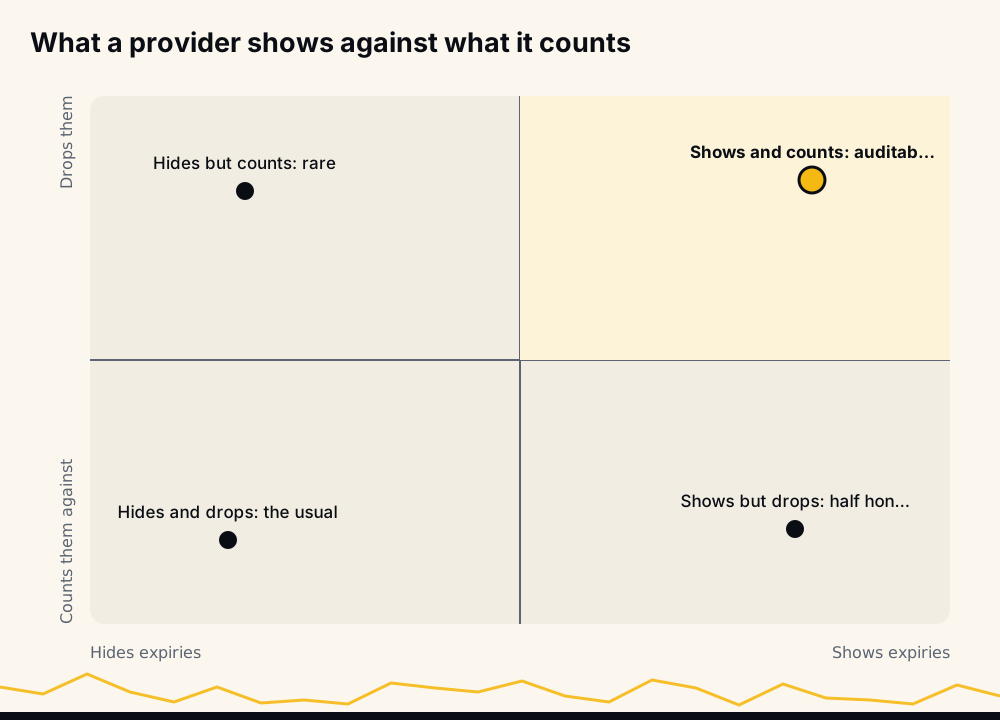
There are four kinds of provider. The auditable kind shows expiries and counts them against the rate. The half-honest kind shows them but drops them from the arithmetic, so the number and the table disagree. The rare kind counts them but never shows them, which is honest but unverifiable. And the usual kind neither shows nor counts.
You can place a provider in this matrix in about two minutes by looking for the word "expired" anywhere in their published results.
Where the expiry rule comes from
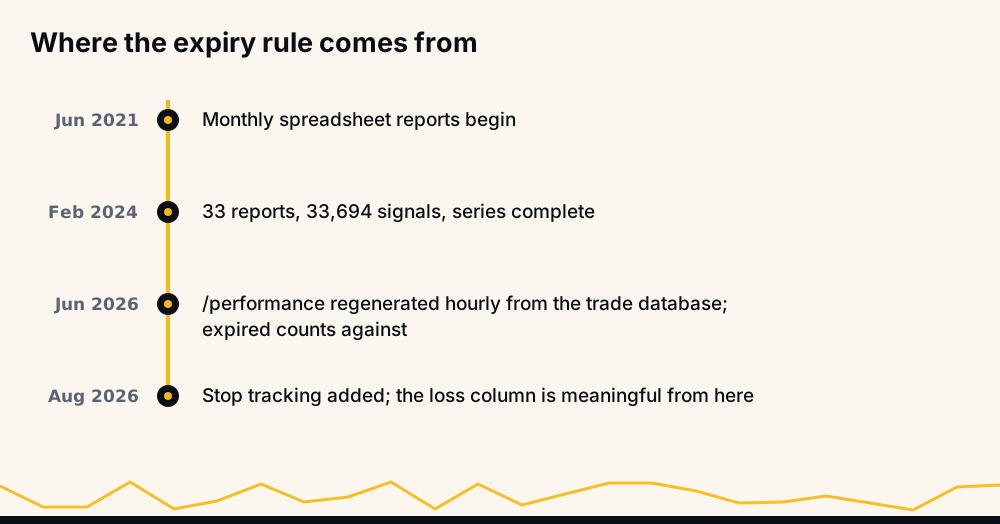
The rule is not new. The 33 monthly spreadsheet reports covering June 2021 to February 2024 — 33,694 signals, downloadable at /reports — record every order, and the rates in them are as reported in those sheets. Since June 2026 the performance page has done the same thing hourly from the live database, with expiries counted against from day one. Stop tracking was added in late August 2026, which is why the loss column becomes meaningful from that point.
The story of why every signal is published, losers included, is in we published every signal for three years.
Reading a signal so you know what expiry would mean for you
If you follow signals manually from the free channel at t.me/getbinancefutures, expiry is your problem as much as the provider's: a signal you entered that reaches neither level is a position you are holding for no reason. Decide before you enter what your own maximum hold is. The guide to how to read crypto signals covers what each field means; the hold is the field most people never set for themselves.
And if you run the autotrader, remember that an outage does not change any of this: the exits rest on the exchange, and a signal that expires while the bot is down expires the same way.
Frequently asked questions
What does it mean when a crypto signal expires? The signal reached its maximum hold time without price touching the target or the stop. It neither won nor lost by price; it was closed by time. On the performance page it counts against the target-hit rate.
Does an expired signal count as a loss? In the rate, yes: it sits in the denominator alongside losses. The formula is wins divided by wins plus losses plus expired. It is not counted as a loss in the sense of hitting a stop, but it lowers the rate exactly as much as one.
Why do most win rates not mention expired signals? Because dropping them makes the rate higher. Wins divided by wins plus losses, with stalled trades removed, produces numbers in the high nineties even in months where many signals went nowhere.
How many signals expire in a typical month? It moves with the market. In August 2026, 476 of 5,262 broadcast signals expired, about 9%. Trending months see fewer; sideways months see more.
Why does the performance page show zero losses for some months? Because stop-loss tracking began in late August 2026. Before that, a signal moving the wrong way ran to its maximum hold and was recorded as expired. The zero is a tracking gap, stated on the page, not a claim that nothing went wrong.
What is the maximum hold time? A fixed parameter applied to every signal; the specific duration is part of the system rather than a published figure. What matters for reading the record is that it is the same for every signal and that reaching it counts as a failure to arrive.
Closing note
An expired signal is the honest fourth outcome. How a provider handles it — shows it, counts it, or makes it disappear — tells you more than the headline rate ever will.
None of this is investment advice. Cryptocurrency futures carry a high risk of loss; trade only with money you can afford to lose.