The difference between copy trading and crypto signals is who decides the size and the leverage. With copy trading, a leader decides both and your account mirrors them proportionally. With signals, someone proposes a trade and you decide how much of your account it is worth. Copy trading asks for less effort and takes away your main risk control; signals ask for a decision on every call and leave that control with you.
Which is better depends on something specific about you: whether the risk you are most likely to be destroyed by is your own impulsiveness or somebody else's. Below is what each model actually does, how each one fails, and what both cost once the fees are counted properly.
Where each decision gets made
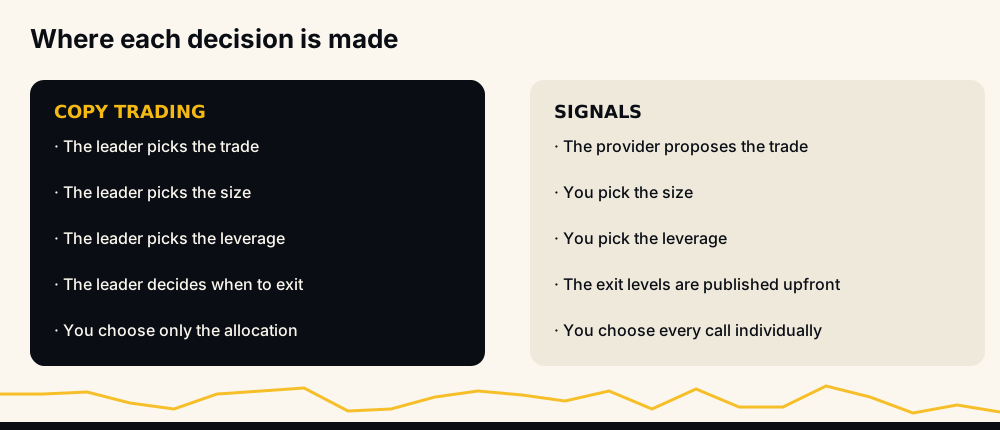
Read the middle rows. Size and leverage are the two variables that decide whether a losing run is survivable, and copy trading hands both to a stranger whose incentives are not identical to yours. That is not automatically wrong — it is the trade you are making, and it should be a conscious one.
How copy trading actually works
A leader trades their own account on a platform. You allocate capital to follow them, and the platform opens a proportional position in your account whenever they open one. If they commit 4% of their equity to a trade, roughly 4% of your allocation goes in too.
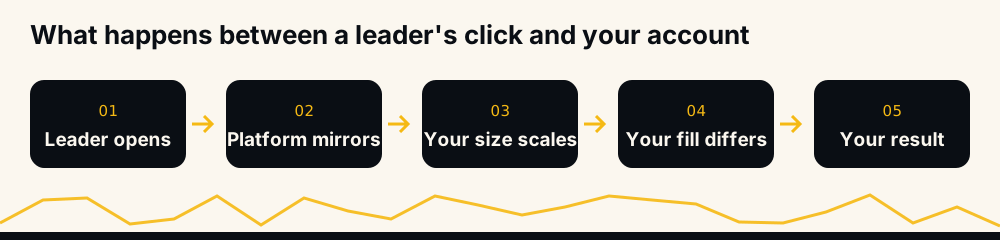
Two things happen in that chain that people do not expect. Your fill is not their fill — the mirroring takes time and your order hits a slightly different price, which matters more on thin pairs and fast moves. And your proportion is theirs, not yours: if the leader is comfortable with a 20% drawdown, you are going to experience a 20% drawdown, whatever your own tolerance is.
How signals actually work
A provider publishes a trade idea: pair, direction, entry, target, and usually an invalidation level and a strength rating. You decide whether to take it, at what size, with what leverage, and you place the order — or configure software to place it under limits you set.
The published levels are the important structural difference. They exist before the outcome, which means a signal can be scored: it either reached the target before the stop or it did not. A copied trade cannot be scored in advance because there is nothing published to score. Reading a signal properly covers what each line commits you to, and the ability to evaluate a call before acting on it is the main thing the model buys you.
Side by side
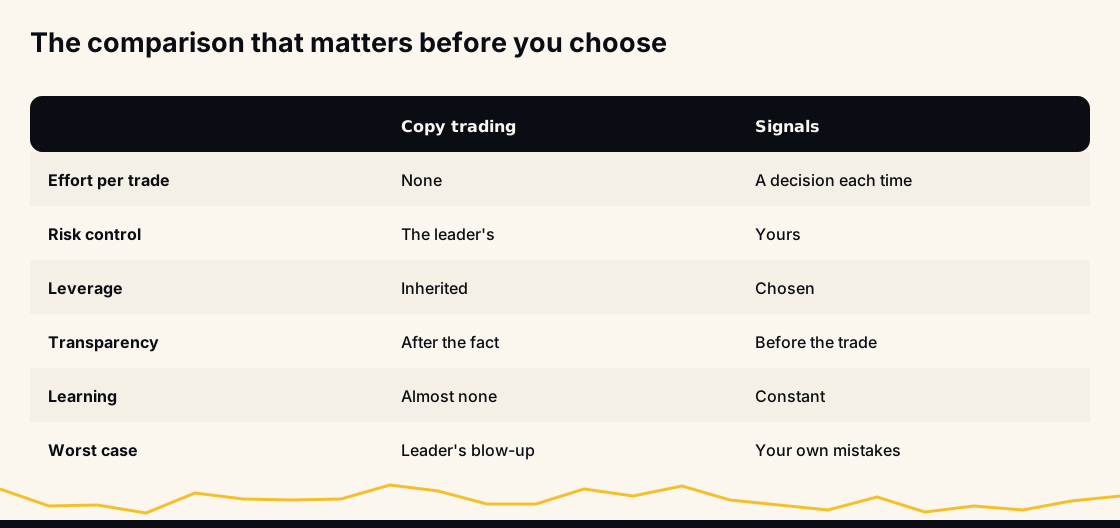
The "learning" row is worth more than it looks. Copy trading produces almost none, because nothing asks you to form a view. After a year of it you know whether one leader worked; after a year of trading signals you can evaluate the next provider yourself. That difference compounds.
The risk you inherit: the leader's leverage
This is the specific mechanism that hurts copy traders, and it is arithmetic rather than misfortune.
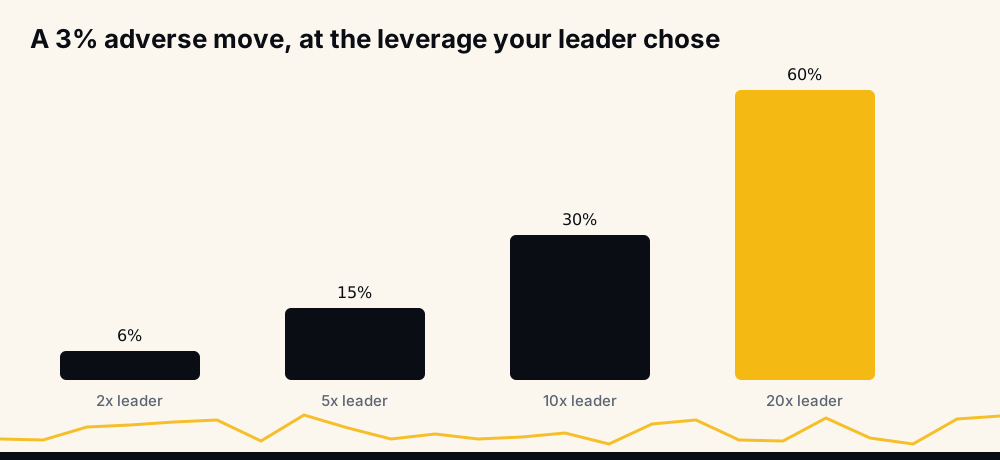
A 3% adverse move is an ordinary crypto afternoon. Behind 20x leverage it removes most of the capital you allocated. You did not choose that leverage, you may not know what it is, and it can change between one trade and the next without any announcement. If the relationship between leverage and how close liquidation sits is not yet intuitive, how leverage trading works is the prerequisite for evaluating any leader at all.
With signals, that number is yours. You can take exactly the same call at 2x that someone else takes at 20x, and end the month in a completely different place on identical analysis.
How a good leader turns into a bad one
The failure mode in copy trading is rarely a leader who was always bad. It is usually a leader who was good, and then the incentives changed.
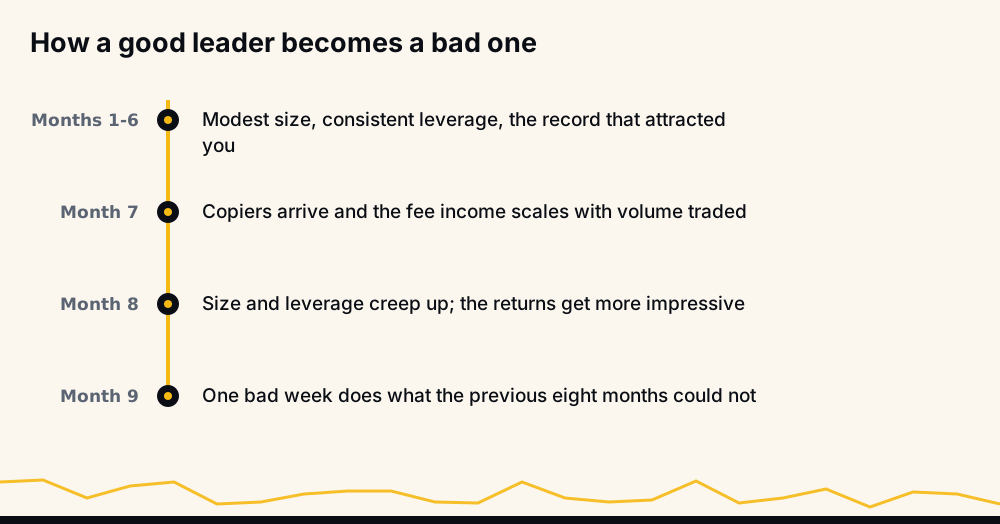
Most copy platforms pay leaders on performance or on copied volume. Both reward larger, more aggressive trading, and neither penalises a blow-up as heavily as it costs the copiers — the leader loses their own stake and their income stream, while copiers lose their allocation. That asymmetry does not make leaders dishonest. It means the strategy that attracted you and the strategy you end up copying can differ, and the record you evaluated describes the earlier one.
What copy trading costs
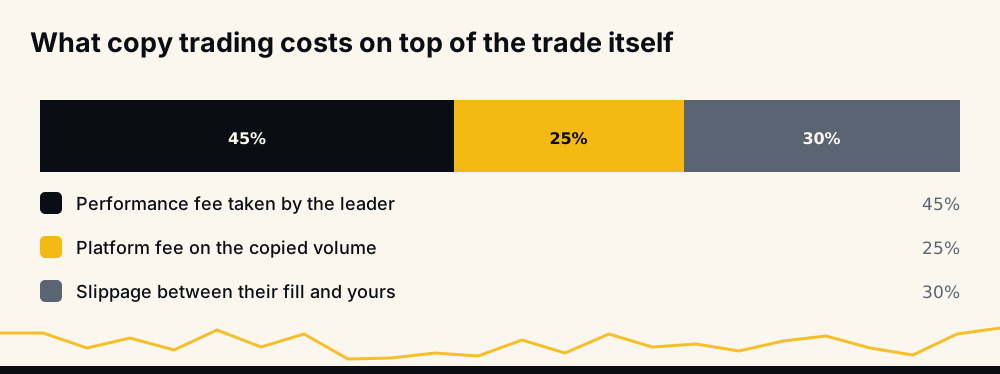
Performance fees deserve scrutiny because of how they interact with drawdowns. A leader who makes 30% and then loses 30% has returned you to roughly where you started, but you may have paid a performance fee on the way up and received nothing back on the way down. Across a volatile year of round trips, that ratchet can cost more than a flat subscription would have.
Signals cost either nothing (a delayed free channel) or a flat fee. Ours is priced in USDT with no card and no auto-renewing subscription, which also means there is no fee that scales with how much you traded.
Transparency compared
With copy trading you see performance statistics the platform chose to display, after the fact. With signals you see the call itself, before the outcome, and can keep your own record of every one.
That is why the verification methods differ so much. To evaluate a signal provider you can audit their published record and recompute the win rate under a strict definition. To evaluate a leader you are largely restricted to the platform's summary — which is why the maximum drawdown figure matters far more than the return figure, and why a leader with a record covering only a rising market has not been tested.
Before you copy anyone
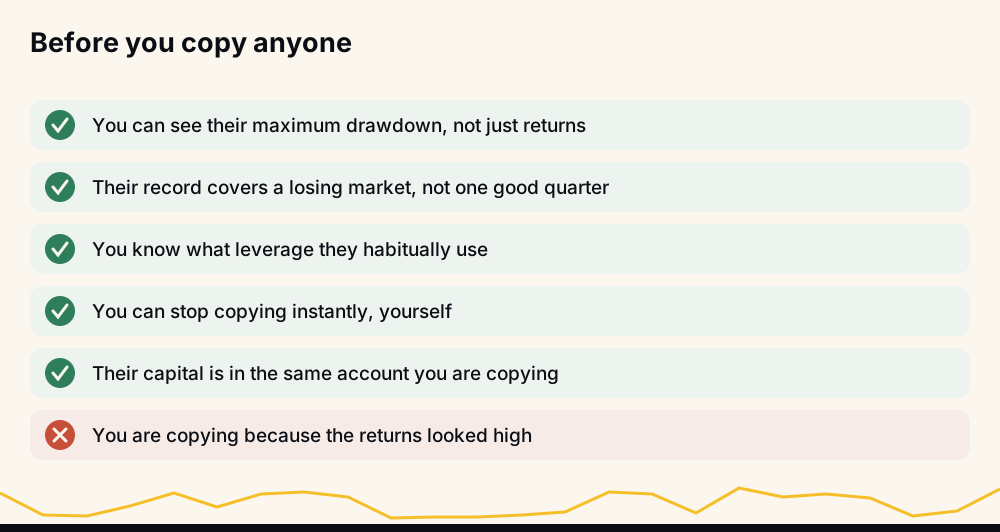
The crossed item is how most people choose, and it selects for exactly the wrong thing. The leaderboard is sorted by return, high returns come from high risk, and the leader at the top of it after a good quarter is disproportionately likely to be the one taking risks that have not yet gone wrong.
The "own capital in the same account" check is the one people skip. A leader trading a small account they can afford to lose, while earning fees on a much larger copied volume, is not exposed to the same downside you are.
How much control each model leaves you
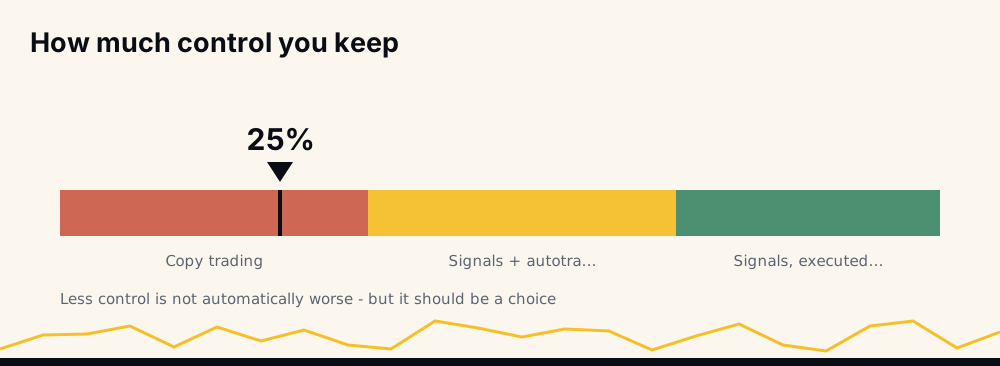
Less control is not automatically worse. Someone whose real problem is over-trading may genuinely do better with decisions taken away from them. The point is that it should be a choice made deliberately, not the accidental result of picking the option with the least friction.
The middle option: signals with automated execution
There is an arrangement between the two that people often miss. You keep the risk decisions and automate only the execution.
With HafizeBot's autotrading, the model produces signals and software places the trades — but the constraints are yours: a minimum signal strength, a position size, a cap on simultaneous positions, and coin filters. It runs on API keys with withdrawal permission disabled, so funds stay on your own Binance account rather than being allocated to anyone. The mechanics of issuing such a key are in connecting a bot to your Binance API key safely.
That combination gives you copy trading's main benefit — you do not have to be awake — without inheriting a stranger's leverage. The trade-off is that you have to set the limits yourself, which requires understanding what they do. Whether a bot or manual execution suits you covers that decision in more depth.
Stopping, and what stopping does not undo
Both models need an exit, and the exits are not equivalent.
Stopping a signal subscription is trivial: you stop taking the calls. Nothing is open on your behalf that you did not open yourself, and if autotrading is running you switch it off and revoke the API key at the exchange. The only thing left to manage is whatever positions already exist, which were yours to begin with.
Stopping copy trading is more involved, and the detail people discover too late is that ending the copy relationship does not always close the copied positions. Depending on the platform, you may be left holding open leveraged trades that a stranger opened, on pairs you did not choose, at a size you did not set — and now nobody is managing them, because the person whose plan they were part of is no longer connected to your account. That is arguably the worst state to be in, and it is the default on some platforms.
So before allocating anything, find the answer to one specific question: when I stop copying, does the platform close the open positions, leave them open, or let me choose? Then find out where that setting lives, before you need it.
There is a related version of this with any automated system, including autotrading: turning off new entries is not the same as closing what is already in the market. Whatever you use, keep a stop loss on every position so that an open trade has a defined worst case even when nothing is actively watching it.
Which fits which person
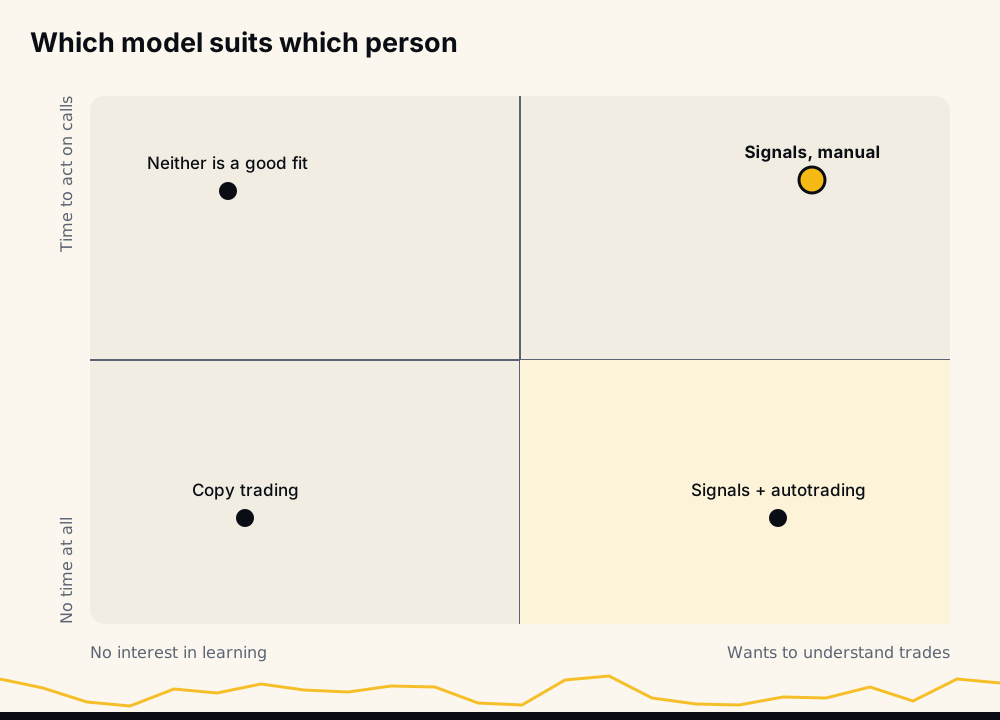
The awkward quadrant is the top-left: time available but no interest in understanding the trades. Neither model serves that combination well, because copy trading wastes the time you have and signals require the understanding you do not want to build.
What both share
Whichever you choose, the same things remain true. Your funds should stay on your own exchange account behind keys that cannot withdraw. Nobody controls the market, and any record — a leader's or a provider's — describes the past. And the size of the position is what decides whether a bad run is a setback or the end.
For our own record: /reports holds 33 monthly spreadsheets covering June 2021 to February 2024, 33,694 signals, at a median monthly accuracy of 98.9% as reported in those sheets; /performance regenerates hourly from the trade database, counting expirations against the hit rate and showing losing months as they occur. The signals come from a model evaluating 240+ indicators, formulas and components across 500+ Binance USDT-M perpetual pairs — what it weighs is proprietary, so the published outcomes are the argument.
This is information, not investment advice. Both models can lose money quickly, particularly with leverage. Trade only what you can afford to lose.
FAQ
Is copy trading better than crypto signals? Neither is better in general; they differ in who controls size and leverage. Copy trading requires no decisions and hands your main risk control to a leader. Signals require a decision per call and keep that control with you, which suits people whose bigger risk is somebody else's aggression rather than their own.
Does copy trading actually work in crypto? It can, but the outcome depends heavily on the leader's risk-taking rather than their skill at picking trades. Fee structures reward volume and aggression, so evaluate maximum drawdown and habitual leverage rather than headline returns, and prefer leaders with a record covering a falling market.
Is copy trading safer than trading signals? No. It feels safer because you make fewer decisions, but you inherit the leader's leverage and position sizing — the two variables that decide whether a losing streak is survivable. Signals leave those with you, which is riskier if you are undisciplined and safer if you are not.
What are the fees for copy trading? Typically a performance fee to the leader plus a platform fee on copied volume, on top of ordinary trading fees. Performance fees can ratchet: you may pay on the way up and receive nothing back on the way down, which over a volatile year can exceed a flat subscription.
Can I lose more than I allocate to copy trading? On leveraged futures a position can be liquidated, so an allocation can be substantially or entirely lost. Whether losses can exceed the allocation depends on the platform's margin arrangement — check that specific term before allocating, rather than assuming the allocation is a hard cap.
Can I use signals and copy trading together? You can, but understand that you are then running two risk profiles at once, one of which you do not control. If the appeal of copy trading is not having to be awake, automated execution of signals under your own limits achieves that without inheriting anyone's leverage.