A crypto trading bot beats manual trading at coverage and consistency — it watches every pair around the clock and executes the same way every time. A human beats a bot at context and judgement — knowing the exchange is having an outage, that the news has changed, or that today is a day to sit out. Neither wins outright, because they are good at different things, and the honest comparison is not bot versus human but rules versus improvisation.
That last point is the one that decides most outcomes. A bot running rules you never tested will lose money faster than you would by hand, and a disciplined manual trader with a written system beats an automated version of no system at all.
What each side actually is
A "trading bot" in this context is not a strategy. It is an execution layer: something receives a signal, checks it against limits you set, and places the order. The decision about what to trade comes from whatever produces the signals — a model, an indicator script, a person.
Manual trading means you are the execution layer. You see the same information and place the order yourself, applying whatever judgement you have at that moment.
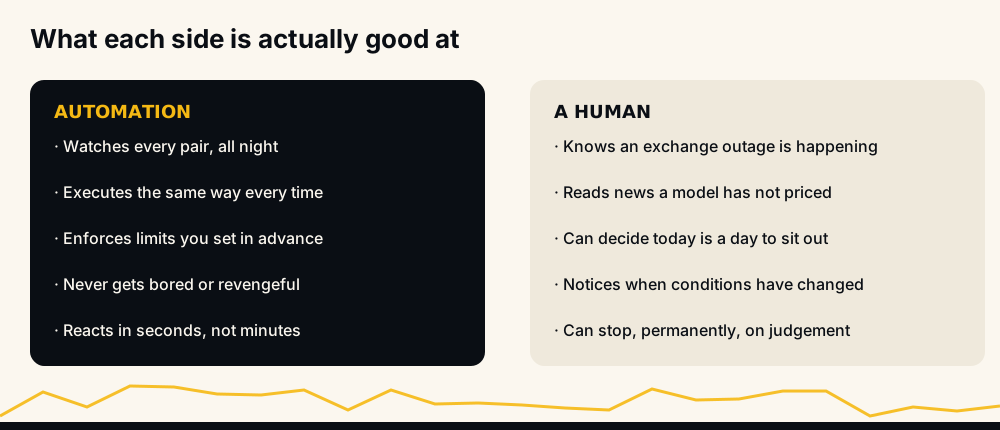
Framed that way, "which is better" becomes answerable: it depends on whether the thing you would automate is worth repeating.
Where automation genuinely wins: coverage
Crypto trades continuously. You do not.
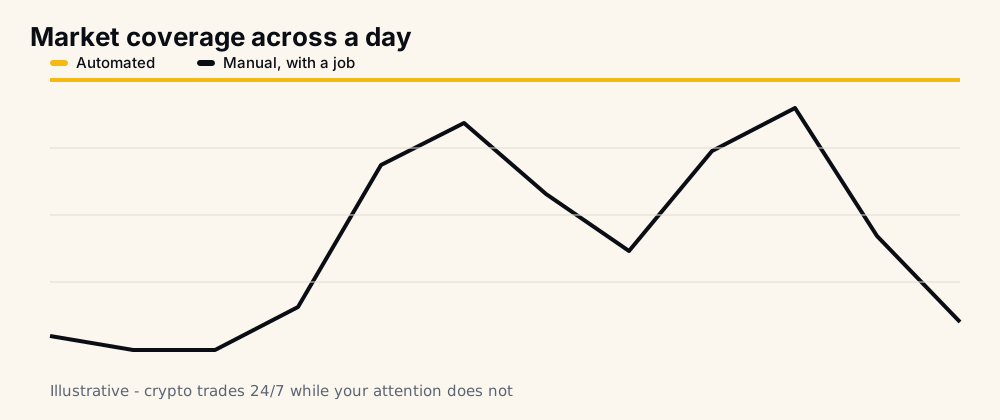
This is the least arguable advantage. A model scanning 500+ Binance USDT-M perpetual pairs produces setups at hours that do not care about your calendar, and the trades you sleep through are invisible in your results — they never became trades, so nothing in your log records what they would have been.
Coverage also means breadth. Watching five pairs closely is realistic for a person; watching several hundred is not. Whether that breadth helps depends on the quality of what is finding the setups, but the capacity difference is not in question.
Where automation genuinely wins: doing the same thing twice
The second real advantage is boring and matters more than the first: a bot places the trade the same way at 3am on a Tuesday as at noon on a Friday.
Human execution drifts. Position sizes creep up after wins and shrink after losses. Stops get moved. A trade gets skipped because the last three looked like it and failed. Each of those is individually defensible and collectively they mean your actual results have very little to do with the system you believe you are running.
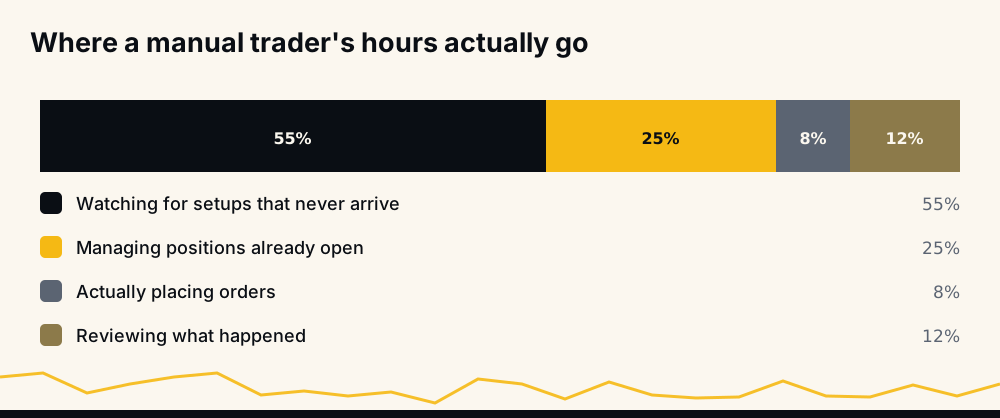
Notice how little of a manual trader's time is spent on the part that requires a human. Most of it is waiting — the activity automation is genuinely best at.
Where a human genuinely wins: context
A model prices what is in the market data. It does not know that the exchange is degraded, that a listing announcement is thirty seconds old, or that liquidity has evaporated because of something happening outside the chart.
A person reading the news has information the model has not been given. That is a real edge in specific, occasional situations — and it is worth much less than most discretionary traders believe, because the cases where it applies are rare and the cases where people think it applies are constant.
Where a human genuinely wins: deciding to stop
The most valuable human capability in trading is not finding trades. It is the decision to stop.
A bot given a rule set will keep applying it into a market regime the rules were never suited to. It has no concept that conditions have changed; it has a condition list, and the conditions still evaluate. A person can look at four weeks of results, conclude something is off, and switch everything off while they work out what.
This is the argument for supervision rather than for manual trading, and it is why "set it and forget it" is the phrase that precedes most automation disasters. We have written about that expectation gap before in whether crypto trading is really passive income — automation moves the work, it does not remove it.
Each approach fails in its own way
Comparing strengths is less useful than comparing failures, because failures are what you will actually live through.
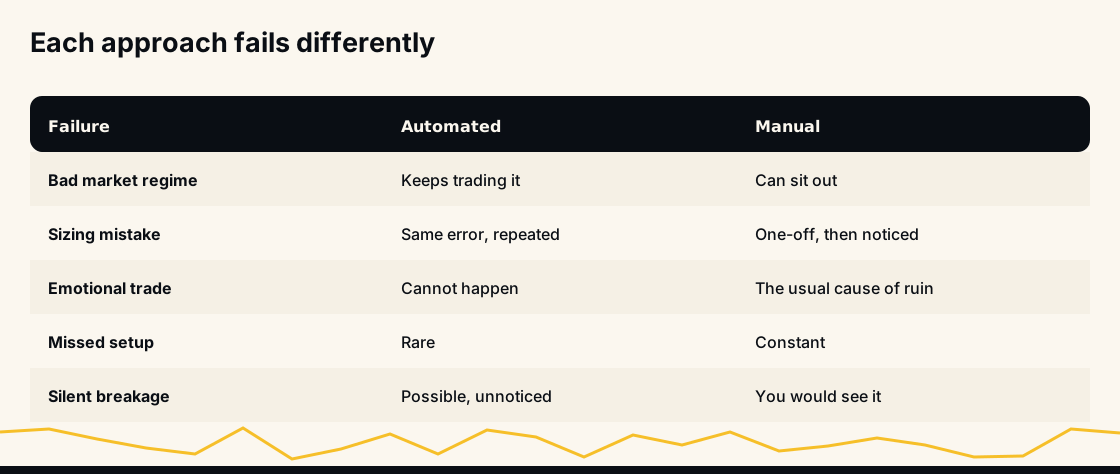
The row that catches people out is the last one. A bot can break quietly — a connection drops, an order is rejected, a position sits unmanaged — and nothing announces it. Manual trading has no equivalent, because you were there. Anyone automating needs a habit of checking that the thing is actually running, which is not the same as checking that it is profitable.
The other important row is the first. In a market regime that suits the rules, automation is a multiplier. In one that does not, it is the same multiplier pointed the other way.
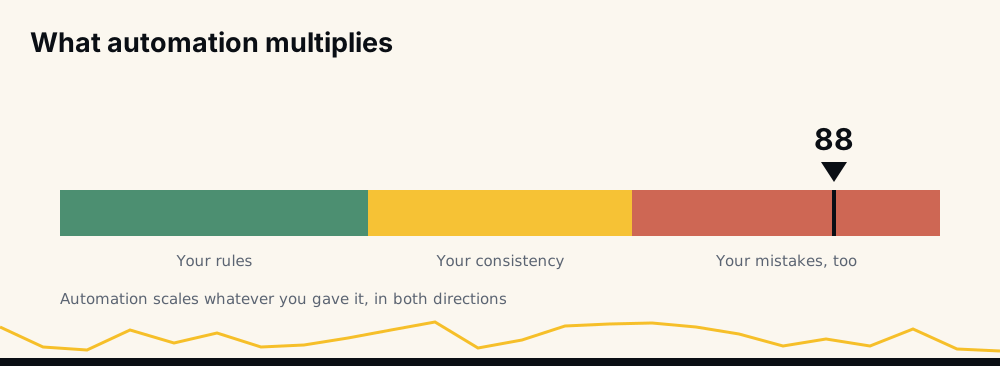
What automation does to your risk
Automation does not reduce risk. It changes who is responsible for it and when.
With manual trading, every position is a decision you made at the time, and your risk is capped by how much attention you had. With automation, your risk is set in advance by the limits you configured — and then applied at machine speed, to as many positions as your settings allow, whether or not you are watching.
That makes the configuration the whole game. The limits worth setting before anything goes live:
- Minimum signal strength, so weak setups never reach the exchange.
- Position size, fixed in advance rather than chosen in the moment.
- Maximum simultaneous positions, which caps your correlated exposure when the whole market moves together.
- Coin filters, excluding pairs you do not want automated at all.
HafizeBot's autotrading exposes exactly those, and it runs on API keys with withdrawal permission disabled so funds stay on your own Binance account. The mechanics of issuing such a key are in connecting a trading bot to your Binance API key safely — and the withdrawal question is not a preference, it is the line between automation and handing someone your money.
None of those settings help if leverage is doing the real damage. If that is not yet second nature, how leverage trading works is worth reading before automating anything, because a bot will apply your leverage choice with perfect consistency to a trade that was wrong.
What has to be true before you automate
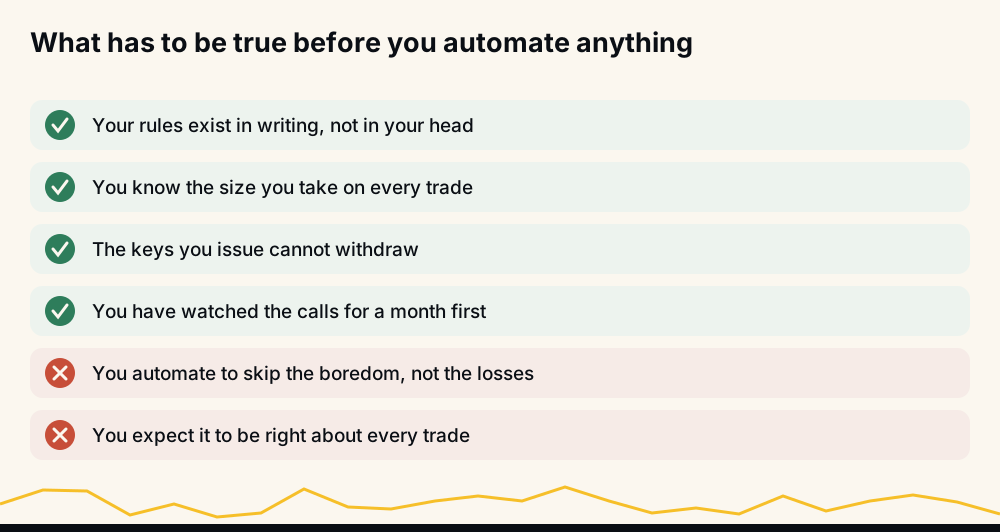
The two crossed items are the common motives and both are mistakes. Automating to escape losses just makes the losses arrive without you present. Expecting a bot to be right about every trade misunderstands what any signal source is — reading a signal properly makes clear how much a signal does not claim.
The arrangement most people actually settle on
In practice the answer is rarely one or the other.
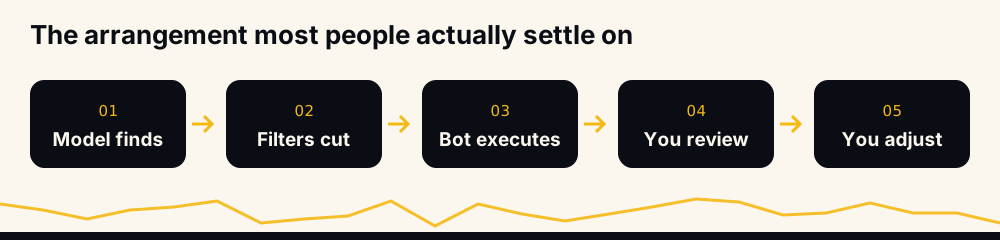
Automation handles finding and executing; the human handles the filters and the periodic decision about whether to keep going. The review step is the part that gets skipped, and it is the one that makes the arrangement safe — it is where you notice a losing stretch is longer than anything in the record, or that your settings are producing more simultaneous positions than you intended.
What each one costs
The cost comparison is usually made badly, because only one side has an invoice.
Automation costs a subscription and, more importantly, trading fees on a higher volume of trades. A bot that takes every qualifying setup will trade considerably more often than you would by hand, and every one of those trades pays the exchange. Before comparing win rates, work out what your fee bill looks like at the bot's trade frequency rather than at yours — for active settings this is frequently the largest single cost in the whole arrangement.
Manual trading costs time and the trades you miss. Both are real and neither appears on a statement. If you spend two hours a night watching for setups, that is the price, and it is worth asking what those hours would otherwise be worth to you. The missed trades are harder still to price, because you have no record of them.
There is also a cost that belongs to neither column and gets attributed to both: slippage. The gap between the price you wanted and the price you got exists whoever places the order. Automation usually reduces it, since it acts in seconds rather than minutes, but it does not remove it, and in thin markets on small pairs it can exceed the fee comfortably.
The practical conclusion: compare the two on total cost per month at the trade frequency each one actually produces, not on the subscription price. A free manual approach that trades ten times a month may well be cheaper than a paid automated one that trades two hundred — or far more expensive, if those two hundred include the ones you would have slept through.
Which one fits your situation
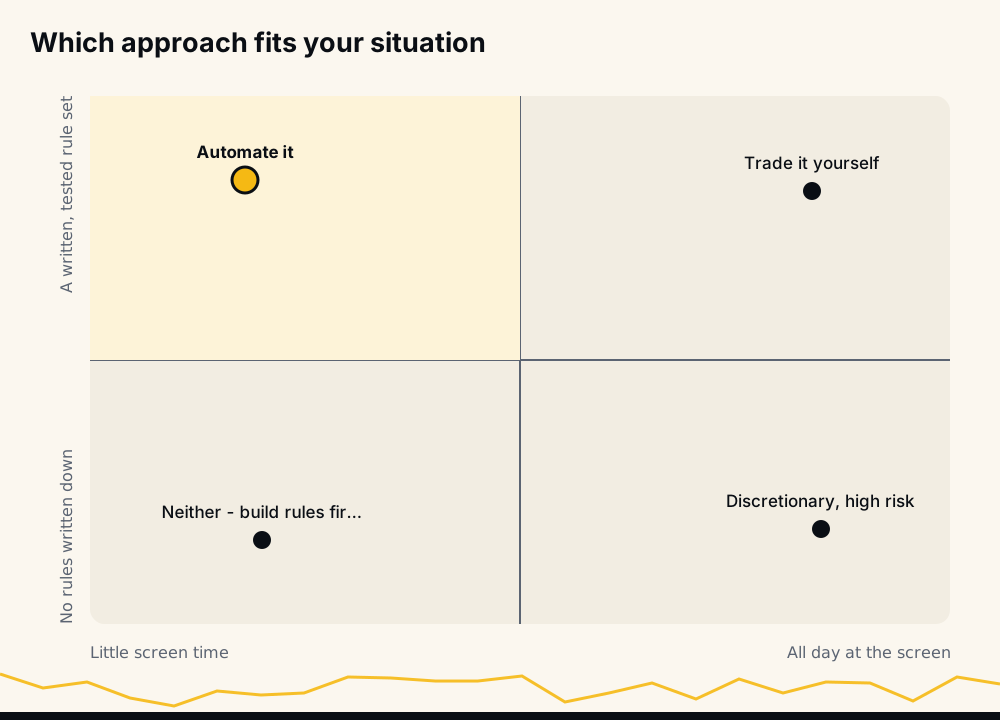
Read the bottom half first. Without rules written down, automation is not premature — it is dangerous, because it removes the one thing that was limiting your losses, which was how little of the market you could reach.
If you have rules and no time, automation is what it is for. If you have rules and time, manual execution is perfectly rational and keeps the judgement layer where it is strongest. What does not work is improvisation at scale.
Switching over without a surprise
If you are moving from manual to automated, do it in a way that produces evidence.
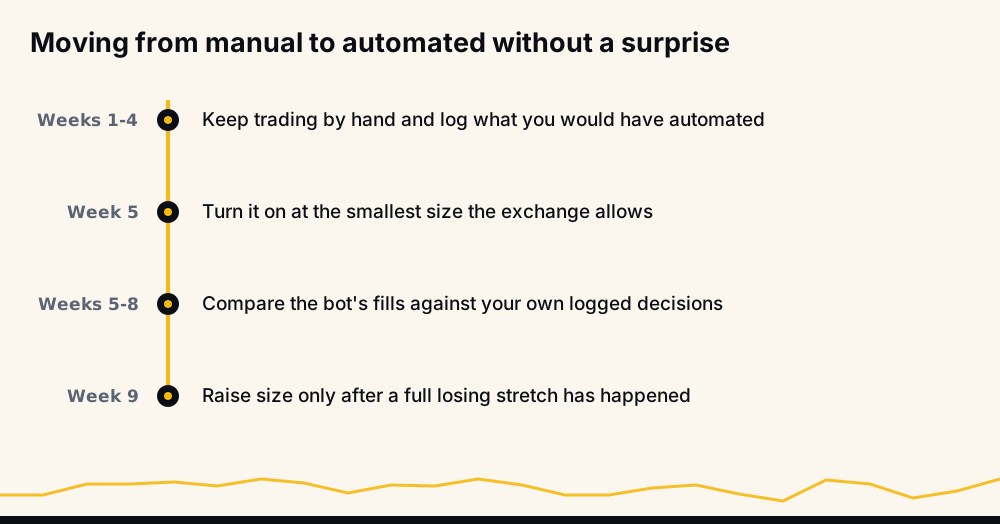
The final step matters most. Everyone raises size after a good run, which is precisely when the evidence is weakest. Raising it only after you have lived through a losing stretch means you are sizing against something you have actually experienced rather than against optimism.
For a sense of what the underlying signals have historically done, /reports holds 33 monthly spreadsheets covering June 2021 to February 2024, 33,694 signals, at a median monthly accuracy of 98.9% as reported in those sheets, and /performance has regenerated hourly from the trade database since June 2026 — counting expirations against the hit rate and showing losing months when they happen. What the model weighs to produce a signal is proprietary; what it produced is published.
This is information, not investment advice. Automation makes execution consistent, not safe: trade only what you can afford to lose, and assume any individual call can be wrong regardless of who or what placed it.
FAQ
Do crypto trading bots actually work? As execution layers, yes — they place orders faster and more consistently than a person. Whether they make money depends entirely on the signals and limits you give them, because a bot does not have a strategy of its own. A bot running untested rules loses money more efficiently than a human would.
Is manual trading better than using a bot? Better at judgement, worse at coverage and consistency. A disciplined manual trader with a written, tested system will outperform an automated version of no system. If you have rules and no time to apply them, automation is the stronger option.
Are crypto trading bots profitable? Some are for some people, and nobody can promise it for you. Profitability comes from the quality of the signals, your position sizing and your leverage — the automation only determines how consistently those get applied. Judge any provider on a published record you can audit rather than on a claimed return.
What are the risks of automated crypto trading? Silent breakage, correlated positions opening at once, and rules that keep firing in a market regime they do not suit. All three are managed with configuration rather than hope: cap simultaneous positions, set size in advance, and check regularly that the thing is still actually running.
Can a trading bot lose all my money? Yes — particularly with leverage, which can liquidate a position long before a target is reached. Funds should stay on your own exchange account behind API keys that cannot withdraw, and size should be set so that a run of losses is survivable rather than terminal.
Should beginners use a crypto trading bot? Not first. Watch the signals for a month without trading them, learn what each part of a signal commits you to, and write down your rules. Automating before that stage removes the natural limit on how much damage inexperience can do.