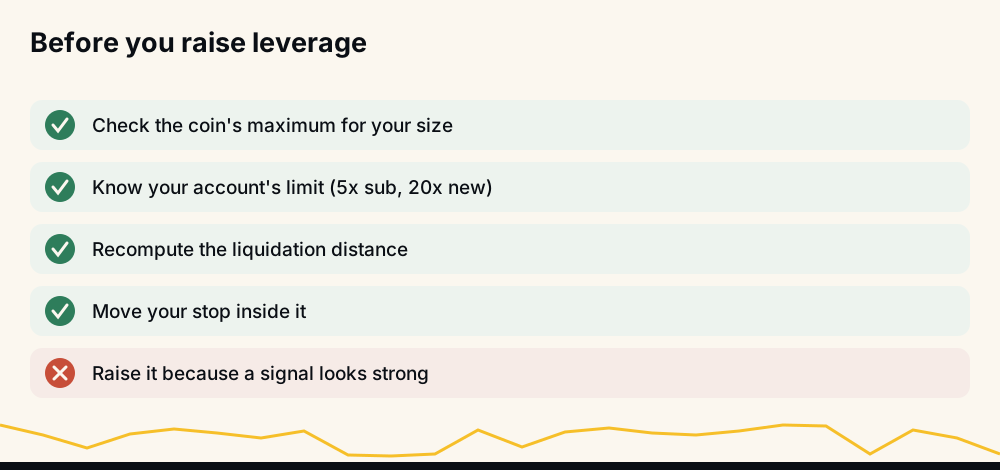
Your maximum leverage on Binance Futures is set by four things, and the lowest one wins: the coin and your position size (larger positions get lower maximum leverage, in brackets), your account (sub-accounts of regular users are limited to 5x, and new futures accounts to 20x for their first 30 days), your open positions (lowering leverage on an isolated position is refused), and the size you are about to add at that leverage. Each limit has its own error code.
The errors and what each one means
Binance's USDⓈ-M Futures API documents most of them; the fix differs for each:
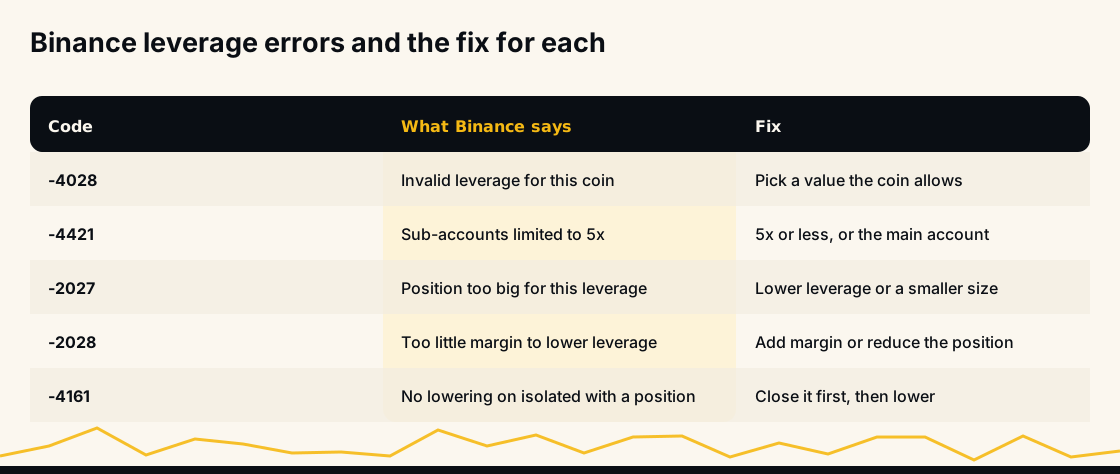
- -4028, "Invalid leverage": the leverage you asked for is not allowed for this coin, usually because it is above the coin's maximum.
- -4421, "Subaccounts are restricted from using leverage greater than 5x": a sub-account limit. This one is not in Binance's public error list, but it is the exact message Binance returns, and its FAQ states the rule behind it.
- -2027, "Exceeded the maximum allowable position at current leverage": the position would pass the size limit of your leverage bracket.
- -2028, "Leverage is smaller than permitted: insufficient margin balance": you tried to lower leverage on a position that the remaining margin could not then support.
- -4161, "Leverage reduction is not supported in Isolated Margin Mode with open positions": on isolated margin, leverage can only go down once the position is closed.
Leverage brackets: bigger positions, lower maximum
Binance's FAQ puts the principle in one sentence: "The maximum amount of leverage available depends on the notional value of your position — larger positions allow for lower leverage." Every contract has a ladder of tiers. Each tier covers a range of position value, has its own maximum leverage and its own maintenance margin rate, and the maximum falls as the position grows.
Two details catch people out. The limits apply to long and short together: Binance's FAQ says the position notional limits "are calculated together in absolute value". And the ladder is different for every coin: a large coin's top tier allows far more leverage than a small coin's.
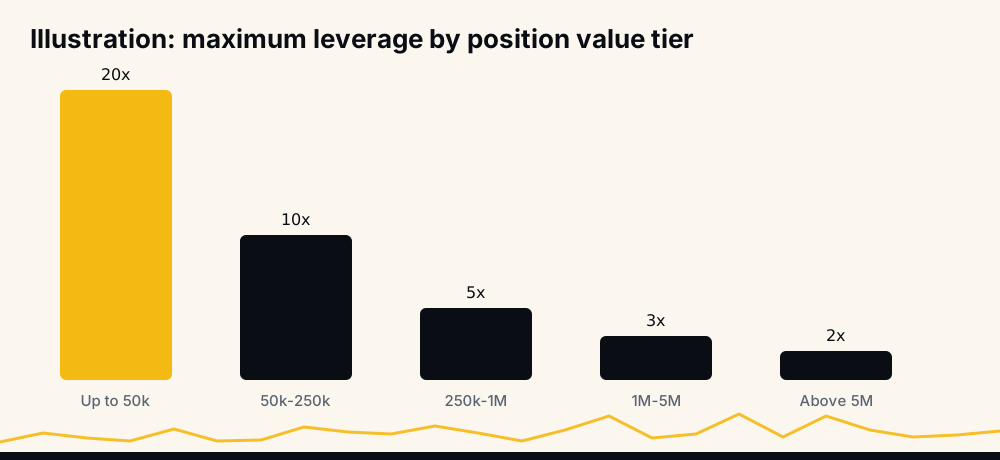
The numbers in the chart are an illustration. The real ladder for each contract is on Binance's Leverage and Margin table, and through the API at GET /fapi/v1/leverageBracket, which returns each tier's initialLeverage, notionalFloor, notionalCap and maintMarginRatio.
The 5x limit on sub-accounts
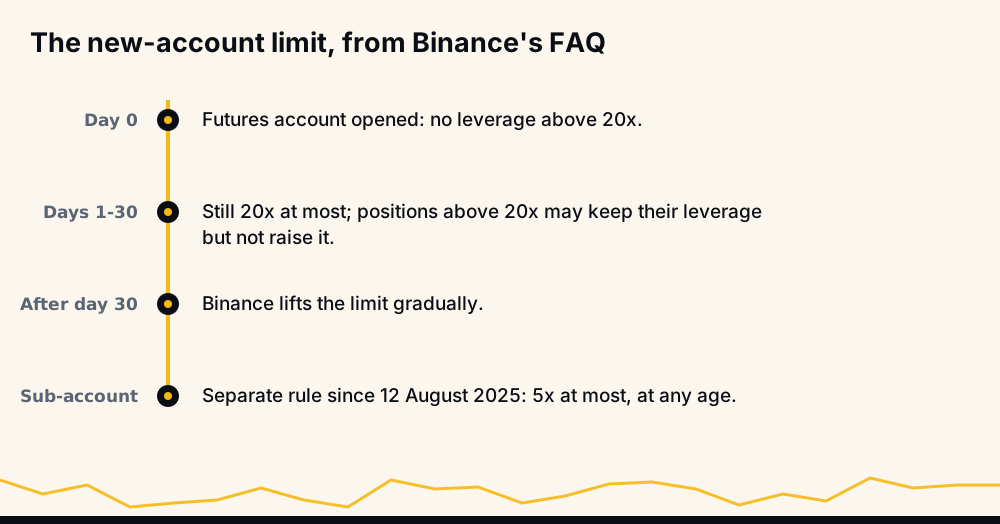
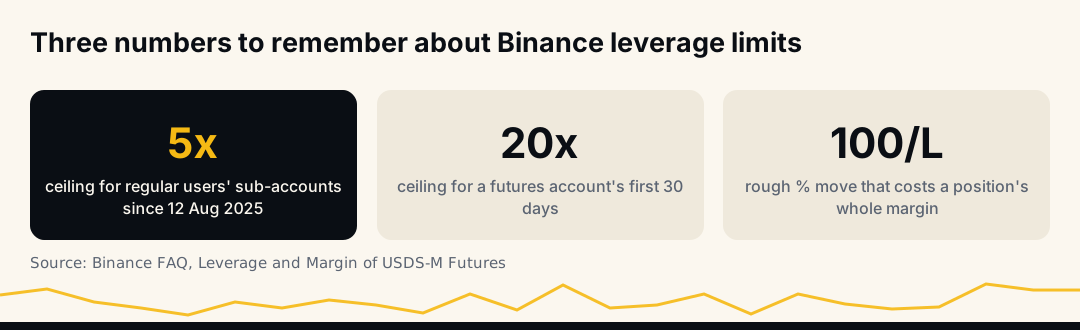
From Binance's FAQ: "Starting from 12 August 2025, leverage levels over 5x are not available to Futures Accounts created by regular users' sub-accounts." If you trade through a sub-account, often set up to keep a bot apart from manual trading, 5x is your ceiling whatever the coin allows. Asking for more returns -4421.
If you need higher leverage, it has to be on the main account. Weigh that before moving: a sub-account is a clean way to cap what a bot can touch, and 5x is a safer place to run one anyway.
The 20x limit on new accounts
Also from the FAQ: "Starting from 7 December 2025, leverage levels of over 20x will not be available to Futures Accounts within the first 30 days of opening." Binance applies it to accounts opened in the previous 30 days too, lets existing positions above 20x keep their leverage without increasing it, and lifts the limit gradually after the 30 days.
Changing leverage on an open position
Raising and lowering are not symmetric.
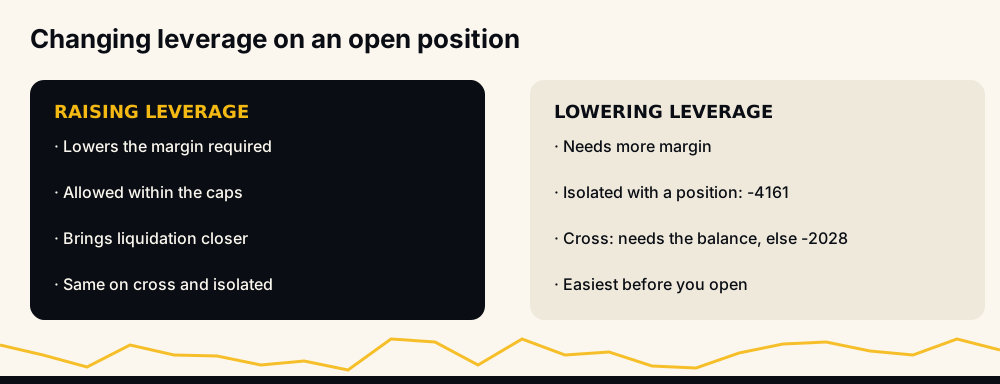
- Raising leverage lowers the margin the position requires, and Binance generally allows it within the coin's and the account's maximum.
- Lowering leverage needs more margin. On isolated margin it is refused while a position is open (-4161). On cross margin it works only if your balance can cover the extra margin; otherwise -2028.
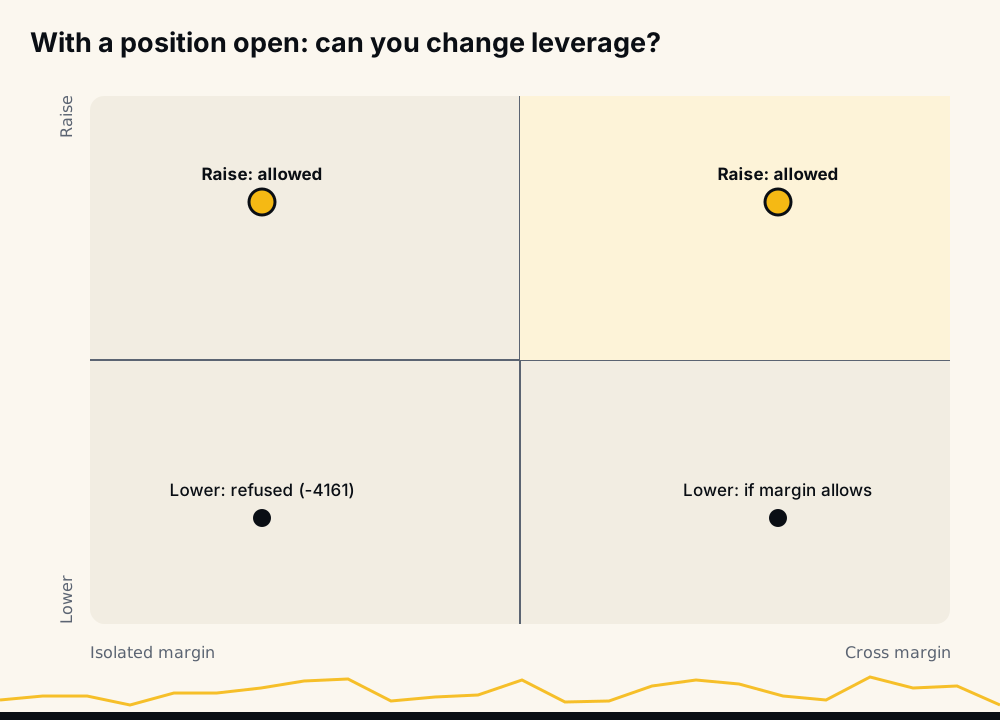
The practical rule: choose leverage before you open, and treat lowering it later as something you may not be able to do.
What each leverage costs and risks
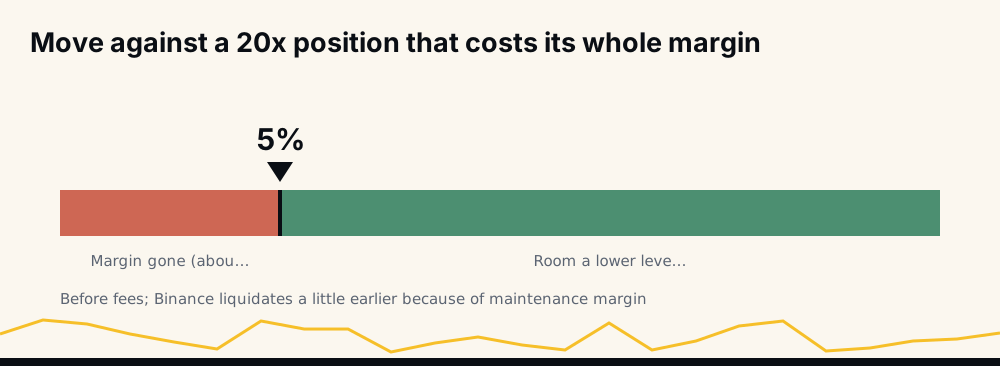
The same 1,000 USDT position looks very different at different leverage. Margin is position value divided by leverage; the move that costs the whole margin is roughly 100 divided by leverage, before fees and a little less in practice because Binance liquidates at the maintenance margin.
| Leverage | Margin for 1,000 USDT | Move that costs the margin | Widest stop that still works on isolated |
|---|---|---|---|
| 3x | 333 USDT | about 33% | about 23% |
| 5x | 200 USDT | about 20% | about 14% |
| 10x | 100 USDT | about 10% | about 7% |
| 20x | 50 USDT | about 5% | about 3.5% |
The last column uses a safety margin of 70% of the liquidation distance, the rule HafizeBot applies before it accepts a stop on isolated margin, so that the stop triggers before Binance's liquidation does. Higher leverage frees margin for more positions; it also leaves each one a much narrower path.
Isolated and cross: how the limits play out
The caps are the same on both margin types, but their consequences differ. On isolated margin each position carries its own margin, the liquidation distance in the table applies per position, and lowering leverage later is blocked while the position is open. On cross margin the whole futures balance stands behind every position, so a position can survive a move past its own margin, at the cost of drawing on everything else; lowering leverage works if the balance can cover it.
That is why a leverage limit and a stop belong together. On isolated margin the stop has to sit inside the position's own liquidation distance. On cross margin a stop beyond that distance still triggers, but only after the loss has eaten into the rest of the account.
How to see your real maximum
In the app or on the website, the leverage control on a contract's order panel only offers values allowed for that contract, together with the largest position each one permits. Moving it up shrinks that maximum position; that is the bracket ladder at work.
Through the API, GET /fapi/v1/leverageBracket gives the ladder for each symbol, and POST /fapi/v1/leverage sets leverage and returns maxNotionalValue, the largest position allowed at that leverage. Reading both before sizing an order saves a script from learning the limits through -4028 and -2027.
A worked example
Suppose a contract allows 20x only up to 50,000 USDT of position value and 10x above that, and you want a 60,000 USDT position at 20x.
- At 20x the order passes the first tier's cap, so Binance refuses it with -2027.
- At 10x the same 60,000 USDT position fits, and needs 6,000 USDT of initial margin instead of 3,000.
- On a sub-account, neither works as planned: the cap is 5x, so the position needs 12,000 USDT of margin, and asking for 10x returns -4421.
The tier numbers are invented for the example; the arithmetic, margin = position value ÷ leverage, is not.
Is 5x enough for a bot on a sub-account?
For most automated trading, yes. A sub-account is the cleanest way to keep a bot apart from your manual trades: it has its own balance, its own API key and its own positions, so a bot can never touch more than you moved there. The 5x ceiling then works as a second limit you did not have to set yourself.
At 5x a position loses its margin on a move of about 20%, which leaves room for a stop of up to about 14% on isolated margin, wide enough for the normal swings of most coins. The cost is margin: each position needs a fifth of its value, so the same balance supports fewer or smaller positions than at 10x. If that feels tight, the honest fix is a smaller position size or a lower cap on open positions, not a main account with more leverage.
Common mistakes
- Treating the maximum as a target. The cap tells you what Binance will accept, not what the position can survive.
- Assuming one maximum per account. It is per coin and per position size; the same leverage can be fine on one contract and refused on another.
- Forgetting that longs and shorts share the bracket. Both directions on one contract count towards the same tier.
- Planning to lower leverage later. On isolated margin that is refused while the position is open.
- Running a bot set to 10x on a sub-account. Every order needs the 5x ceiling; a bot that does not adapt sees -4421 on each one.
How a trading bot should handle the limits
A bot that sends one leverage for every coin will meet all of these errors. The sound pattern is to use the lowest of three numbers: the member's chosen leverage, the coin's maximum, and any account limit Binance has reported.
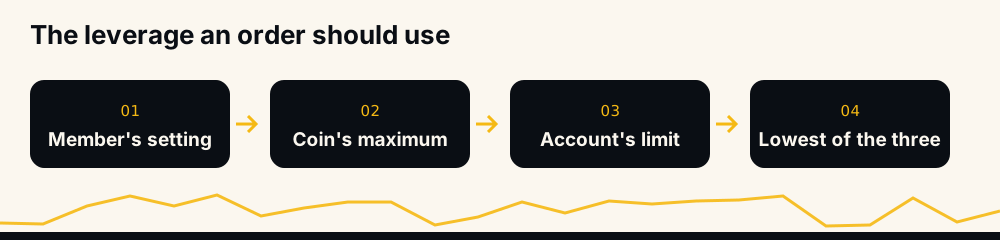
That is what HafizeBot does. It reads each coin's maximum, remembers a sub-account limit once Binance reports it, and opens the trade at the lowest of the three instead of letting it be refused; /lastsignals notes when a trade was capped below your setting. A capped trade uses less leverage than you chose, never more.
Should you use the maximum at all?
The cap is a ceiling, not a recommendation. A position loses its whole margin on a move of roughly 100 ÷ leverage percent against it, before fees: about 5% at 20x, 2% at 50x. How leverage trading works walks through the arithmetic, and how to set a stop-loss in crypto explains why a stop has to sit well inside that distance.
Lower leverage also means more margin per position, which is the other side of margin is insufficient (-2019). And if your account is in Multi-Assets mode, every position is on cross margin, so a high-leverage loss can reach the whole pool.
Frequently asked questions
What is the maximum leverage on Binance Futures? It depends on the contract and on your position's size: each contract has bracket tiers, and the maximum falls as the position grows. Sub-accounts of regular users are limited to 5x, and new futures accounts to 20x for their first 30 days.
Why can't I use more than 5x on Binance? If you trade through a sub-account, Binance has limited it to 5x since 12 August 2025. Higher leverage is only available on the main account, within the coin's own limits.
What does Binance error -4028 mean?
"Invalid leverage": the leverage you asked for is not allowed for that contract, usually because it is above the coin's maximum. Use a value the order panel offers, or read the coin's brackets with GET /fapi/v1/leverageBracket.
Can I change leverage on an open position on Binance? You can raise it within the limits. Lowering it is refused on isolated margin while the position is open (-4161), and on cross margin it needs enough balance to cover the extra margin (-2028 otherwise).
What is a leverage bracket on Binance? A tier of position value with its own maximum leverage and maintenance margin rate. Bigger positions sit in higher tiers with lower maximum leverage, and long and short positions count together.
Why is my leverage limited to 20x on a new account? Since 7 December 2025 Binance limits futures accounts to 20x for their first 30 days, and lifts the limit gradually after that.
The short version
Your usable leverage is the lowest of the coin's bracket maximum for your position size, your account's limit (5x for sub-accounts, 20x for new accounts' first month), and what your open positions allow. Read the limits before ordering, choose leverage before opening, and remember that the maximum is a ceiling, not a target.
Every signal HafizeBot sends is published with its result on the performance page, misses included, and the same signals reach the free Telegram channel 20 minutes after VIP. This is information, not investment advice: leveraged futures can lose more than you expect, so trade only what you can afford to lose.