A legitimate trading bot never holds your money, so a Telegram bot that took your deposit and now asks for a "fee", "tax", "unlock" or "VIP upgrade" before you can withdraw shows the classic advance-fee scam pattern: stop paying. Every payment you make to release a balance only proves you will pay again, and the next request is usually larger than the last. Keep your records, report the account, and ignore anyone who offers to get the money back for a fee.
That is the short answer to "how do I withdraw from this Telegram bot?" when the bot keeps finding reasons why you cannot. The rest of this page explains the patterns, what to do in the next hour, where to report it, the second scam that usually follows, and how a trading bot that cannot hold your money works instead.
Why "pay a fee to withdraw" is the giveaway
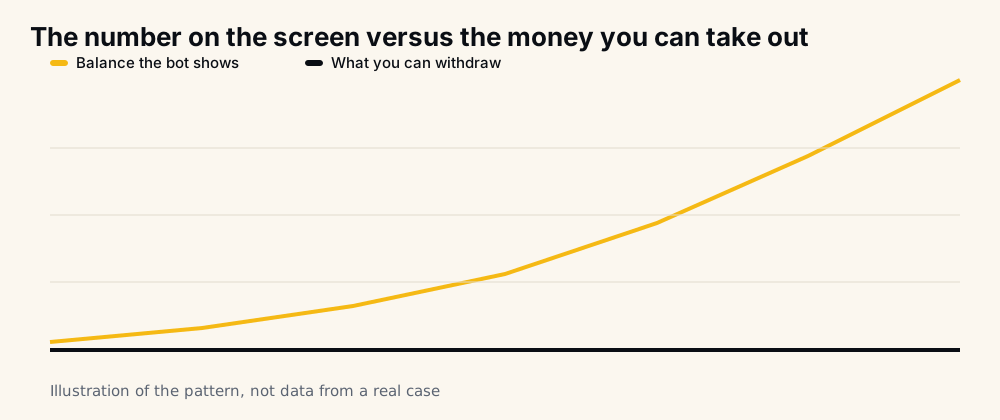
Real platforms take their fees out of the money you already have. When you withdraw from an exchange, the network fee is deducted from the amount you send; you never wire fresh money in to unlock old money. A request for a new payment before a withdrawal is the reverse of how a real ledger works, and it only makes sense if the balance you are trying to withdraw does not exist.
That is the core of the advance-fee pattern: you are shown something valuable (a growing balance) and asked to pay a small amount up front to receive it. The thing never arrives, because it was never there. The payment is the product.
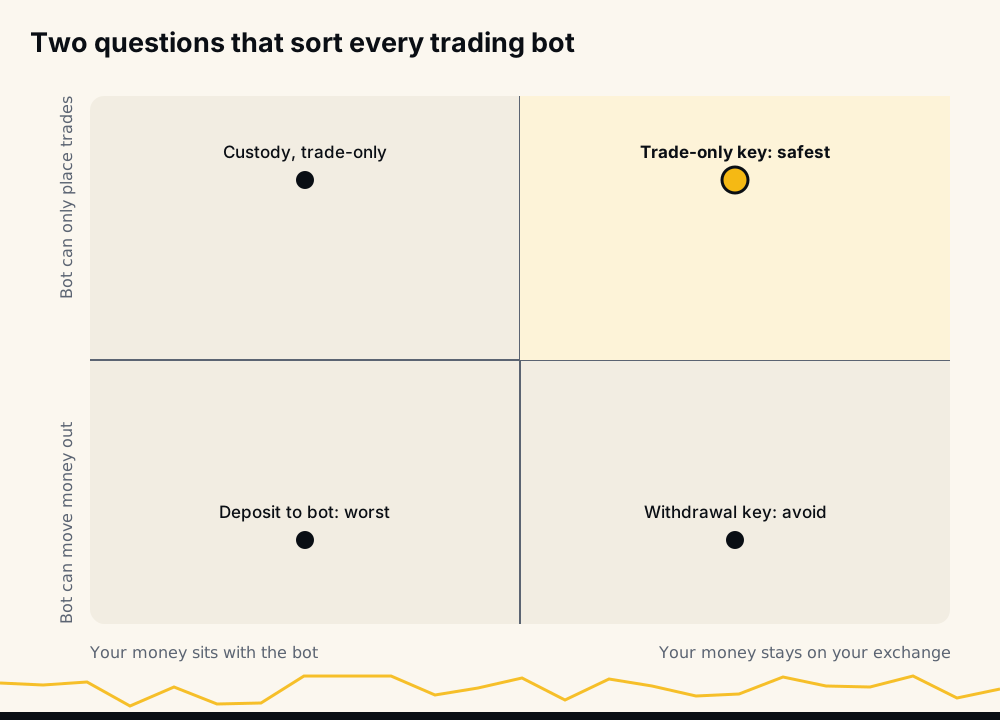
Two questions sort almost every trading bot you will meet. Where does your money sit: in a wallet the bot controls, or on an exchange account in your name? And what can the bot do with it: move it out, or only place trades? A bot that holds your deposit sits in the worst corner of that map before it ever trades, because your exit depends entirely on its goodwill.
How the "can't withdraw" bot works: five patterns
The details change from one bot to the next. The structure rarely does.
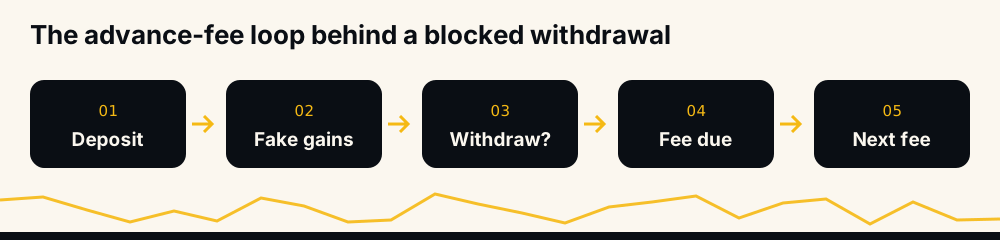
- Deposit to the bot's own wallet. You are given an address and told to send USDT, often a small first amount. From that moment, the money is theirs.
- A dashboard balance that only goes up. The bot or its mini app shows daily gains, a "profit" counter or a tier badge. Nothing on that screen is checked against any exchange; it is a number in their database.
- A fee appears at the withdrawal step. It is called a tax, a release fee, an unlock fee, gas, an anti-money-laundering check or a "verification deposit". The amount is often a percentage of the fake balance, so the bigger the illusion, the bigger the ask.
- A "minimum withdrawal" or VIP gate. Your balance is just below the minimum, or only a higher tier can withdraw. Upgrading costs a deposit.
- Pressure and silence. A countdown, a warning that your account will be frozen, or a support agent who stops answering once you refuse.
The UK Financial Conduct Authority describes the same mechanics for crypto investment scams in general: professional-looking sites where fraudsters "manipulate software to fake prices and investment returns", with the warning that "you may not even realise you've invested in a scam until you try to sell your investment" (FCA, crypto investment scams).
What the fee is called, and what it is
Whatever the name, the payment does the same job.
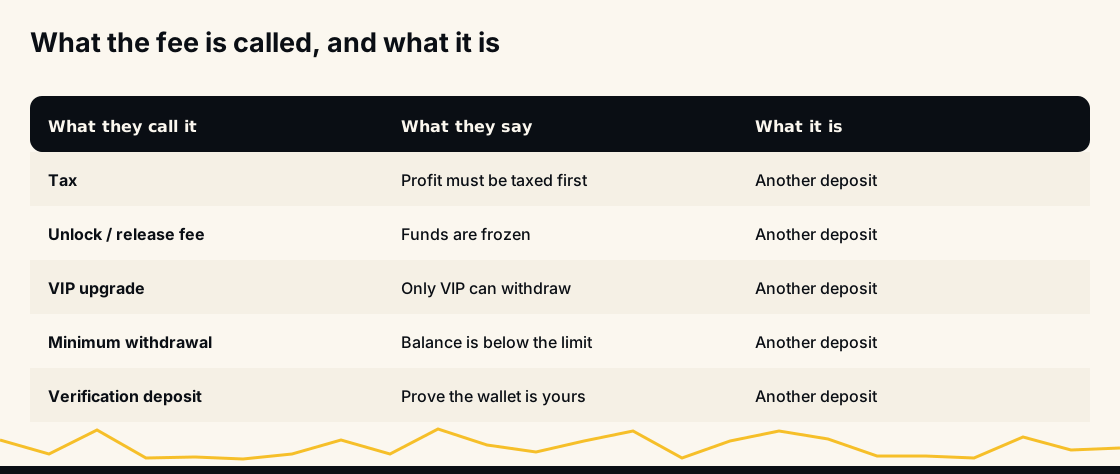
A real tax is owed to a tax authority, calculated by you or your accountant, and paid to that authority. No trading platform collects your income tax in USDT through a Telegram chat before releasing your funds. A real "verification" checks your identity with documents; it does not ask you to send coins to prove a wallet is yours.
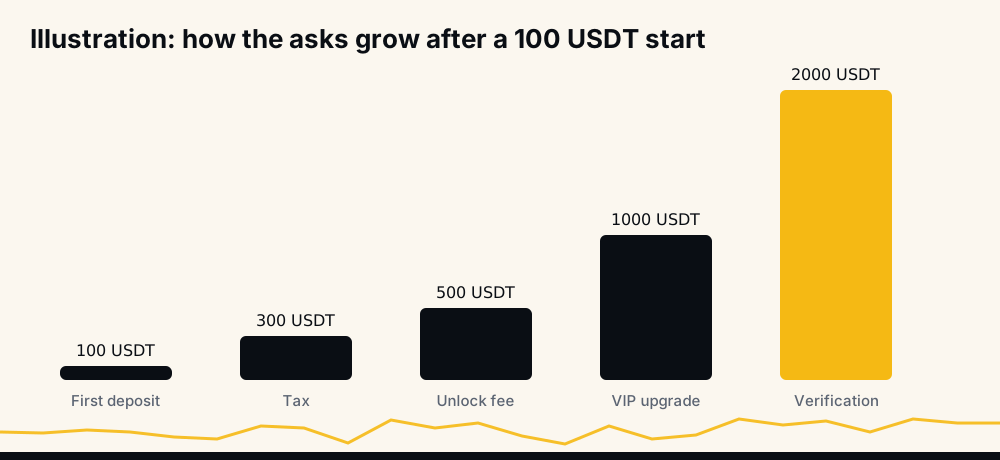
The figures in that chart are an illustration, not data from a real case, but the shape is the one victims describe: each request is bigger than the last, because each payment shows you are still willing.
The "10$ becomes 100$" offers
A common variant skips the trading story altogether. The bot or channel advertises fixed plans: send 10 and receive 100, send 100 and receive 300, often "within 24 hours" and "guaranteed by our AI". People search for exactly these numbers when the payout does not arrive.
No trading strategy produces fixed multiples on a schedule. Markets do not know your deposit size or your deadline. A plan that promises a set return on a set day has told you it is not trading at all; the "returns" can only come from later depositors, and they stop when new money does. The first small payout some people receive is the hook that sells the bigger deposit.
Could it be a genuine delay?
It is fair to ask, because real platforms do sometimes hold withdrawals. An exchange may pause a network during maintenance, ask for identity documents, or review a large or unusual transfer. Here is how to tell the difference:
- A genuine hold costs you nothing extra. You are asked for documents or patience, not a payment.
- A genuine fee is deducted, not deposited. It comes out of the amount being withdrawn.
- A genuine platform is a company you can look up, with a registered name, terms, and support that is not a single Telegram account.
- A genuine delay has an end. It does not turn into a second fee once the first is paid.
If what you are facing fails any of these, treat it as the scam pattern, whatever the support account says.
What to do right now
Work through these in order. None of them costs anything.
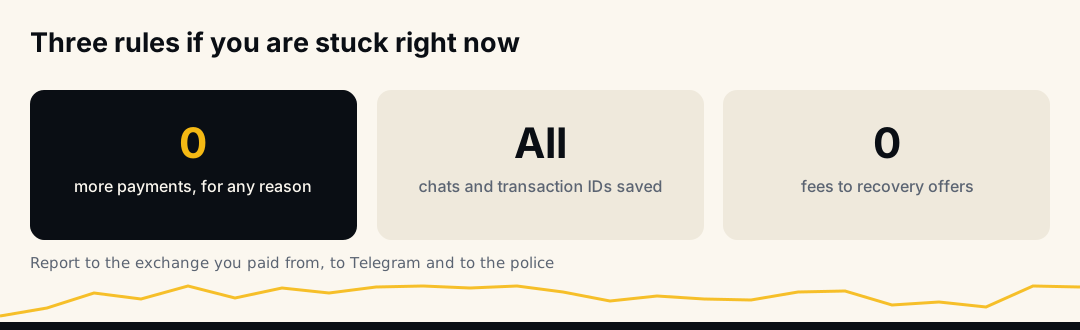
- Stop paying. Not a smaller amount, not "one last fee". This is the only step that limits your loss.
- Save everything. Screenshots of the chat, the bot's username and its numeric link (t.me/...), every wallet address you paid to, every transaction ID (TXID) and the date of each payment.
- Do not delete the chat or block yet. Keep it until your records are saved; investigators need what is in it.
- Secure your accounts. If you gave the bot an exchange API key, delete it on the exchange now. If you shared a seed phrase or a password, move your remaining funds to a new wallet and change the password.
- Tell the exchange you paid from. Give them the TXIDs and the receiving addresses. They cannot reverse a confirmed blockchain transfer, but reports help them flag the addresses.
- Report the bot and the people behind it (next section).
Where to report it
Report in more than one place; each one sees a different part of the problem.
- Telegram. Every Telegram app has a Report option on messages: tap or press and hold the message on a phone, right-click it on desktop, and choose a reason. Telegram's FAQ also lists [email protected] for takedown requests, with links to the content, and @NoToScam for accounts impersonating you.
- Police or your national fraud centre. In the United States, the FBI's Internet Crime Complaint Center takes online fraud reports, and the FTC collects them at ReportFraud.ftc.gov. Elsewhere, your local police or national cybercrime unit is the place to start.
- Your financial regulator. In the UK, the FCA takes scam reports and keeps a warning list. Most countries have an equivalent body.
A report rarely brings money back quickly. It does create the record that lets addresses be traced and accounts closed, and it is what a real investigator will ask you for.
Beware the recovery scam that follows
Once you have lost money, you become a target again. Someone contacts you, often after you posted about the bot in a group or a review, and offers to recover your crypto. They may claim to work with the police, a regulator, a law firm or the exchange. Then a fee is due before anything can happen.
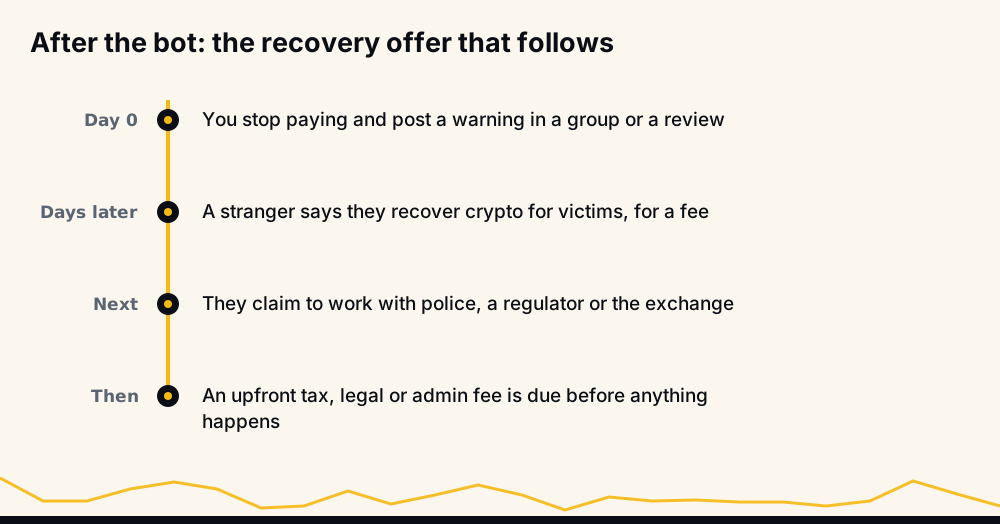
The FCA's guidance on recovery room scams describes exactly this: upfront charges "described as a tax, solicitor or administrative fees", and the warning that the people behind the original scam may run the recovery offer themselves. The FBI's IC3 states on its home page that it does not work with any non-law-enforcement entity, such as law firms or crypto services, to recover lost funds, and will never contact you directly for information or money. If a "recovery agent" asks for a fee, you are being scammed a second time.
Can you get your money back?
Be realistic. Crypto sent to a scammer's wallet cannot be reversed by you, the exchange or a recovery service. Money is recovered in some cases, when law enforcement seizes funds held at an exchange that freezes the addresses, but that happens through official channels, never through a stranger who wants paying first.
What you can still control: no further losses, a complete report, and a safer setup for any bot you use next.
How a non-custodial trading bot works instead
The structural fix is simple: use a bot that never holds your money in the first place. A non-custodial bot trades on an exchange account that belongs to you, through an API key you create, with permission to trade and nothing more.
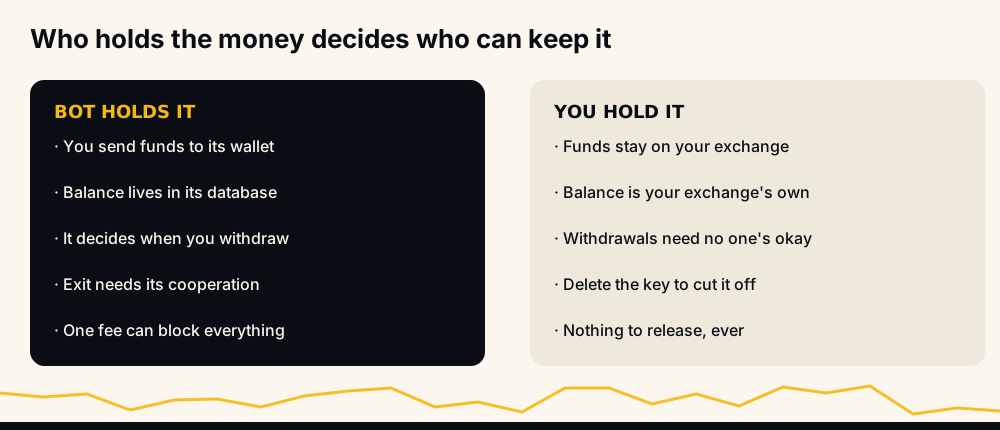
HafizeBot is one example of this model. Autotrading runs on the member's own Binance Futures account, through an API key the member creates with futures trading permission only. Withdrawals stay off, so the bot cannot move funds out, and the money never leaves the member's Binance account. The member restricts the key to HafizeBot's server IP so it works nowhere else; keys are stored encrypted and never displayed back, and deleting the key on Binance locks the bot out immediately. There is no balance to "release", because the bot never had one. Our guide to connecting a trading bot to Binance safely walks through each permission, and how to create a Binance API key covers the screens.
To be plain about it: HafizeBot does charge for membership, in USDT, and that payment buys access to signals and the autotrader. It is not a deposit you trade with. A non-custodial setup also does not protect you from losing trades; a key that can trade can lose money by trading, which is why the signal record matters as much as the key. HafizeBot publishes every signal since June 2026 on its performance page, rebuilt hourly with expired signals counted against the rate, and the free Telegram channel carries the same signals 20 minutes later, so you can watch before connecting anything. What it does not have is a third-party audit; is HafizeBot legit sets out what can and cannot be checked.
A checklist before you use any trading bot
Run these before a bot gets a cent or a key.
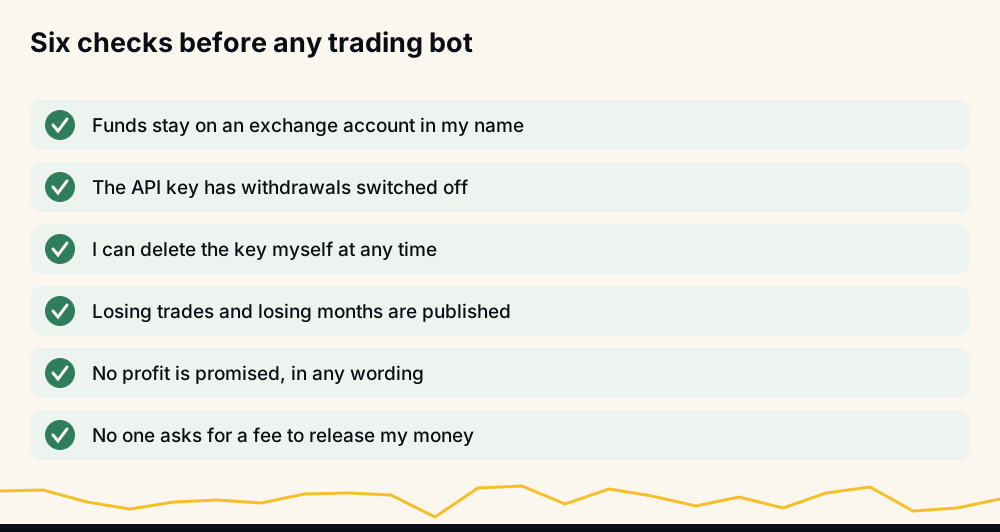
- Funds stay on an exchange account in your name. If the first step is "send USDT to this address" to trade, walk away.
- The API key has withdrawals switched off. No real trading bot needs them.
- You can cut it off yourself, by deleting the key, without asking anyone.
- Losing trades and losing months are published, in a record you can download or check, not screenshots. Our guide on how to verify a crypto signal win rate shows what to look for.
- No promised profit, in any wording: guaranteed, fixed daily returns, or "10 becomes 100".
- Nobody ever asks for a fee to release your money.
For the wider picture, Telegram crypto trading bots: legit vs scam compares the two business models, and the crypto signal scam red flags list covers signal groups that never touch your funds but still cost you.
Mining, prediction-market and "AI arbitrage" bots
The same test works for bots that do not call themselves trading bots. Cloud-mining and tap-to-earn "miner" bots, prediction-market bots, and "AI arbitrage" bots all raise the same question: who holds the money? If you deposit into the bot and it shows you a balance, everything depends on whether the operator lets you out. If a withdrawal then needs a fee, a tier or a referral quota, you have the answer, whatever the bot is called.
A bot that connects to a platform where you hold the account, with limited permissions you can revoke, is a different thing. It can still lose money, but it cannot hold your money hostage.
FAQ
Is a Telegram bot that asks for a withdrawal fee always a scam? A request to send new money before you can withdraw existing money is the advance-fee pattern, and no legitimate trading platform works that way. Real withdrawal fees are deducted from the amount you withdraw. If you are asked to deposit to unlock a balance, stop paying and report it.
Should I pay the fee just once to see if it works? No. Paying confirms you will pay, and the usual result is a new fee with a new name, often larger than the one before. The only payment that limits your loss is the one you do not make.
Can a crypto withdrawal be reversed? A confirmed blockchain transfer cannot be reversed by you or by the exchange you sent it from. Funds are occasionally frozen and returned through law enforcement when they reach an exchange that cooperates. That is why reporting with your transaction IDs matters, and why anyone promising a guaranteed recovery for a fee is not telling the truth.
Someone says they can recover my crypto. Are they real? Treat unsolicited recovery offers as a second scam, especially when they ask for an upfront fee or claim to work with the police or a regulator. The FCA warns that the people behind the first scam sometimes run the recovery offer. Report through official channels such as your police or the FBI's IC3 instead.
Is it safe to give a trading bot my Binance API key? It is much safer than sending funds to a bot, provided the key has withdrawals switched off, is restricted to the bot's server IP where possible, and is deleted when you stop. A trade-only key cannot move money off your account, though it can still lose money by trading. Start with small position sizes.
How do I know a trading bot does not hold my money? Ask where the trades happen. A non-custodial bot places orders on your own exchange account, and you see every position and every fill in that exchange's history. If your balance only exists inside the bot's dashboard, the bot holds your money.
Before you trust any bot again
Losing money to a fake bot is common, and it says more about how polished these operations have become than about the people they target. The useful lesson is structural: keep the money in an account you control, give software only the permissions it needs, and judge any service by a record you can check yourself.
If you want to see how a non-custodial service shows its work, the HafizeBot bot on Telegram and the public performance page are open to anyone, and watching the free channel costs nothing. Nothing here is investment advice, and futures trading carries a real risk of loss, so only trade with money you can afford to lose.