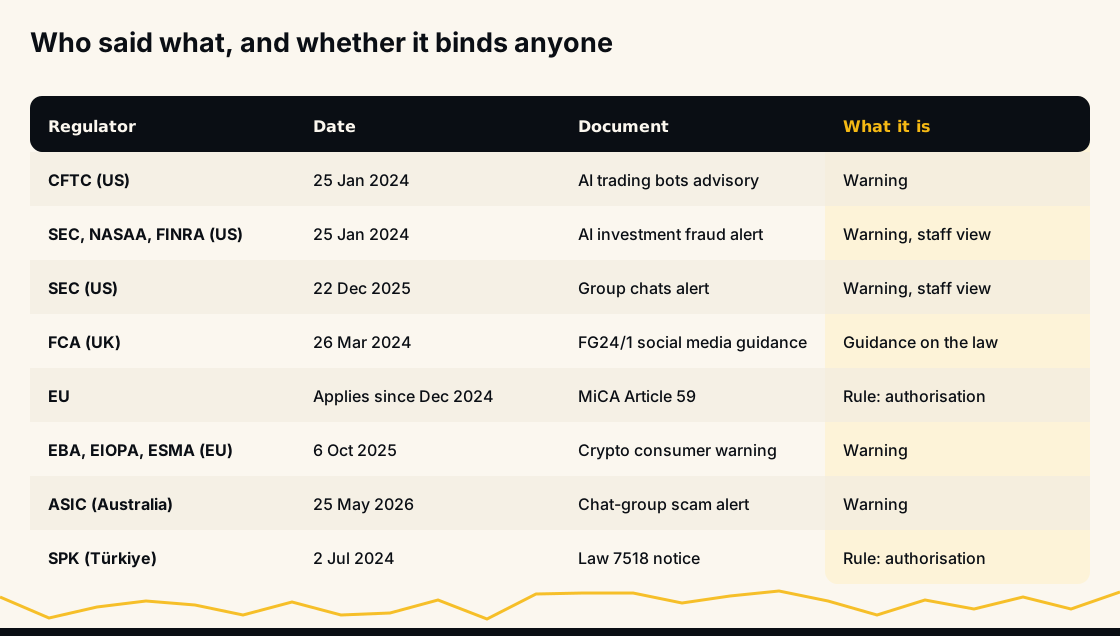
Regulators do not ban crypto trading bots or Telegram signal groups as such. What they publish are warnings, and in some places rules: the US CFTC and SEC, the UK FCA, the EU supervisors, Australia's ASIC and Türkiye's SPK warn about guaranteed returns, bots that take custody of your money, impersonated experts and pump-and-dump group chats, and several require authorisation before anyone gives personal advice, promotes investments or manages money for people in their jurisdiction.
Last checked: 2026-10-10. Every regulator claim below links to the regulator's own page and gives its date. Nothing here comes from a news report about a regulator.
We run a Telegram signal service ourselves, so we have a stake here. That is why this page uses primary sources only, names no firm or person a regulator warned about, and ends with where HafizeBot stands, including what we cannot claim.
The short answer: warnings everywhere, a ban nowhere
None of the regulator pages we read outlaws software that places trades, or a channel that posts trade ideas. They go after three things instead: false promises (guaranteed or huge returns, "AI that can't lose"), taking people's money (deposits into a bot or platform that never really trades) and acting without permission (giving advice, promoting investments or managing money where a licence is required).
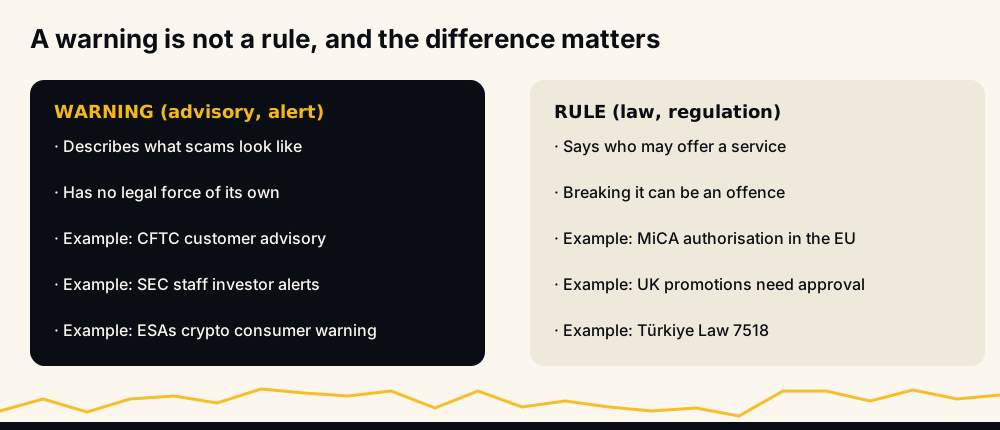
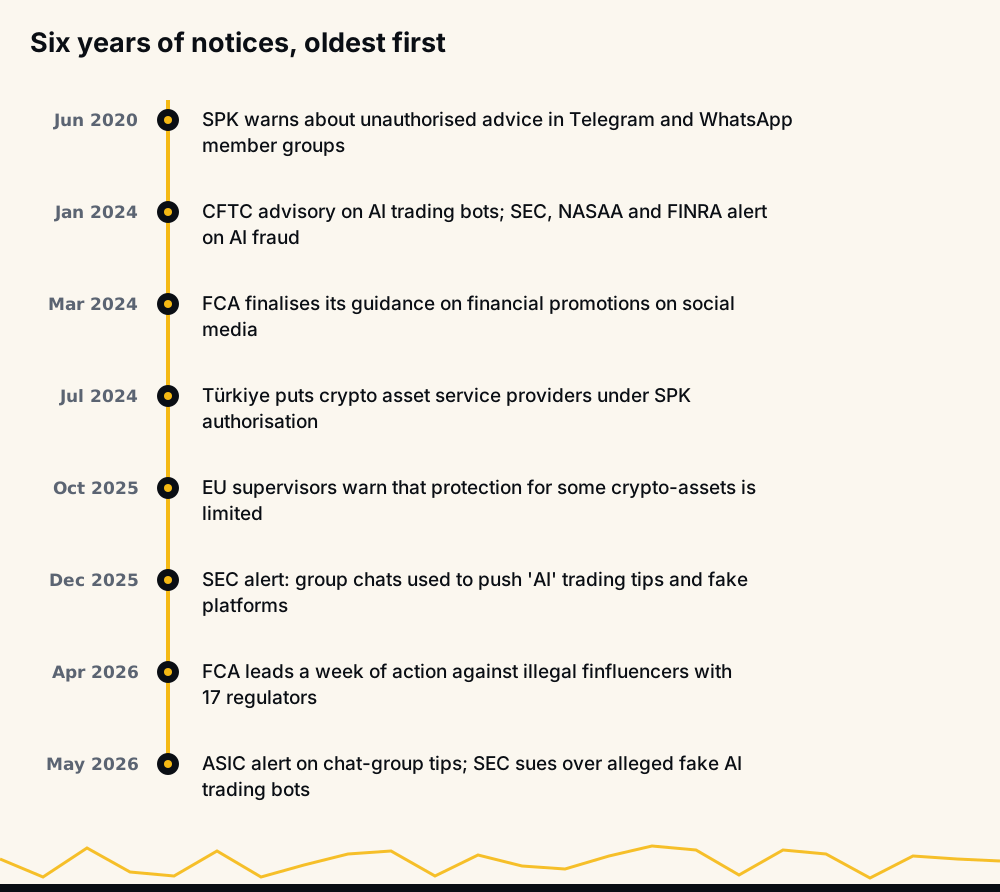
Separate two kinds of document. A warning describes what scams look like and has no legal force of its own; the SEC says so at the foot of its 2024 AI alert. A rule says who may offer a service, and breaking it can be an offence. Most of what follows is warnings; the rules are mainly the EU's MiCA, the UK's promotions regime and Türkiye's 2024 crypto law.
United States: the CFTC on AI bots and signal sellers
The clearest statement about bots comes from the Commodity Futures Trading Commission. Its customer advisory AI Won't Turn Trading Bots into Money Machines, announced on 25 January 2024, says fraudsters use public interest in AI "to tout automated trading algorithms, trade signal strategies, and crypto-asset trading schemes that promise unreasonably high or guaranteed returns", and that "AI technology can't predict the future or sudden market changes".
It names both kinds of product directly: the dubious claims "have been made about algorithms that automatically place trades, known as 'bots,' and algorithms that provide buy and sell signals to subscribers". The claims it lists are returns of "tens of thousands of percent" and "100 percent 'win' rates".
Its advice: research the company or trader (including a reverse image search on key people), check how old the website's domain is, get a second opinion, count what fees and subscription costs do to returns, and be wary of AI hype from influencers and strangers online.
United States: the SEC on AI claims and investment group chats
The SEC's investor education office, with the state regulators' association NASAA and FINRA, issued a joint AI and investment fraud alert on 25 January 2024. It warns about unregistered platforms promoting AI trading systems with lines like "Our proprietary AI trading system can't lose!" and says: "Claims of high guaranteed investment returns with little or no risk are classic warning signs of fraud." It asks readers to confirm registration.
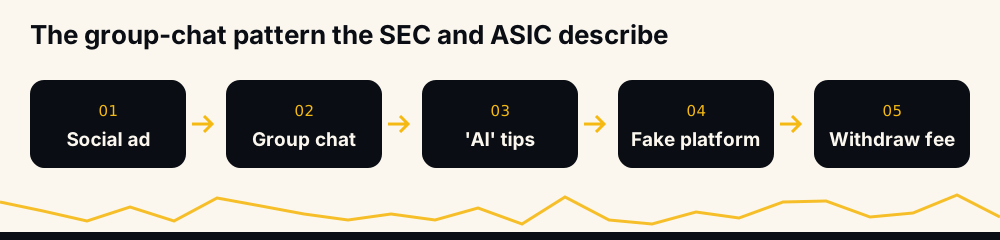
The alert closest to Telegram is Group Chats as a Gateway to Investment Scams, dated 22 December 2025. It describes chats led by an impersonated or invented expert who promotes "an AI trading node or trading algorithm", steers members to an app or website, and lets the account show "profits". When people try to withdraw, the fraudsters "may demand a fee, tax, or deposit to release the funds".
It also flags payments to an unknown wallet or individual.
Enforcement continued into 2026. In Litigation Release 26558 of 29 May 2026, the SEC said it had sued a Texas resident who allegedly raised about $12.3 million from about 150 investors by claiming "proprietary AI-based trading bots" would trade crypto. The SEC alleges the bots "did not function as represented". These are allegations in a complaint, not findings.
United Kingdom: the FCA on finfluencers, crypto scams and pump groups
The Financial Conduct Authority's finalised guidance FG24/1 on financial promotions on social media, published 26 March 2024, covers influencers as well as firms. It says unauthorised persons, "such as social media influencers", who promote a regulated product without the right approval "may be committing a criminal offence".
On crypto, the FCA's crypto investment scams page (last updated 16 February 2026) says firms offering crypto products in the UK "must be registered with us or have permission to promote them", that most crypto activities are not regulated, and that you generally will not have access to the Financial Ombudsman or the compensation scheme. Its three warning signs: contact out of the blue, pressure to invest quickly, and returns that sound unrealistic.
The page that names Telegram is the FCA's guide to pump and dump schemes (December 2025): "Group chats on messaging apps like WhatsApp, Telegram, or Discord are sometimes used by pump and dump organisers". It lists the tells: being added to a chat full of strangers, unexplained price jumps, guaranteed returns, and "screenshots of big wins that don't look genuine".
None of the FCA pages we read singles out bots or signal subscriptions; they deal with promotions, scams and manipulation, whatever the wrapper.
European Union: MiCA and the supervisors' warning
The EU has a rule. Article 59 of MiCA, Regulation (EU) 2023/1114, says a person "shall not provide crypto-asset services, within the Union" without authorisation. It does not apply to crypto-assets that qualify as financial instruments, which MiFID II covers instead.
The joint warning from the EBA, EIOPA and ESMA on 6 October 2025 tells consumers to check that a crypto provider "is authorised in the EU", to secure their wallets, and notes interest is rising "in part due to aggressive promotion on social media by finfluencers".
Australia: ASIC on chat-group tips and fake platforms
ASIC's scam alert of 25 May 2026 describes the same pattern as the SEC: social media ads for trading tips, an invitation to a messaging-app group, recommendations attributed to impersonated public figures, and a fake crypto platform that "show[s] profits and trades" with "no real trading". Withdrawal then needs a fee, and "no assets are released". It advises checking AUSTRAC's register of virtual asset service providers and calling your bank at once if you sent money.
For influencers, ASIC's information sheet INFO 269 (March 2022) says carrying on a financial services business without an AFS licence is an offence, unless an exemption applies, and that calling a return "guaranteed" is likely misleading.
Türkiye: the SPK on Telegram groups and crypto providers
Türkiye's Capital Markets Board warned as early as its press statement of 4 June 2020 that people without authorisation to give investment advice were steering investors through member-only groups on WhatsApp, Telegram and social media. It described organisers selling their own shares into the buying they urged, and warned that group members could themselves face liability. It concerned listed shares, not crypto.
For crypto, Law 7518 took effect on 2 July 2024 and, per the SPK's notice of that date, placed crypto asset service providers (trading, transfer, custody and key management) under SPK authorisation. The notice does not mention signal services.
Is there a 2026 crackdown?
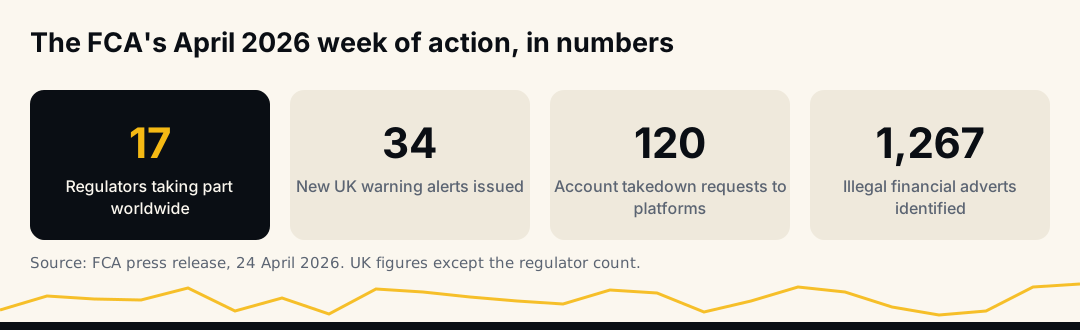
There is coordinated action, aimed at illegal promotion on social media, not at bots as such. In June 2025 the FCA led a week of action with nine regulators from six jurisdictions; in the UK it reported three arrests, seven cease and desist letters and 50 warning alerts expected to lead to over 650 takedown requests.
The second round, announced on 24 April 2026, involved 17 regulators, including ASIC, India's SEBI, Singapore's MAS and Norway's Finanstilsynet. The FCA found 1,267 illegal financial adverts and said "Social media platforms are not doing enough to uphold their own policies".
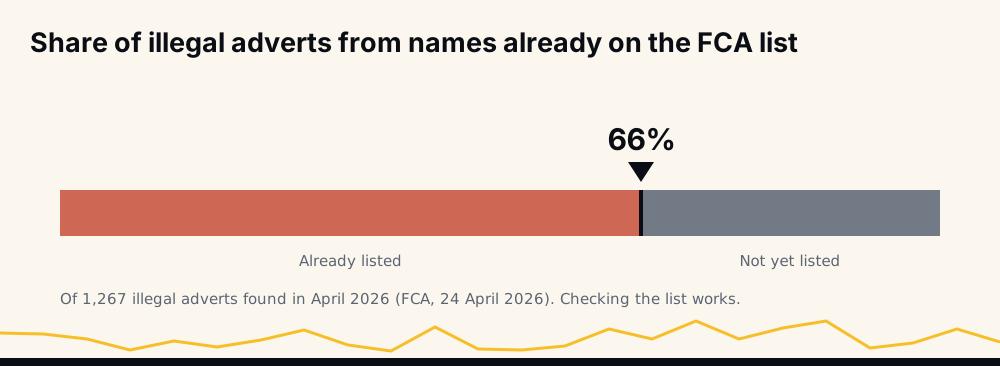
One figure is useful: 66% of those adverts came from firms or individuals already on the FCA Warning List. Checking the list would have caught two in three.
The red flags every regulator repeats
We read eight consumer warnings linked above (CFTC, the two SEC alerts, the two FCA pages, the EU supervisors, ASIC's alert and the SPK statement) and counted which red flags each one names:
- Contact from strangers or group chats: all eight.
- Not authorised or registered: seven; the CFTC advisory tells you to research the trader instead.
- Guaranteed or unrealistic returns: five.
- Impersonated experts or deepfakes: five.
- Pump-and-dump buying in a group: five.
- Pressure to act quickly: four.
- Money you cannot withdraw, or a fee to release it: three.
- AI as the selling point: three.
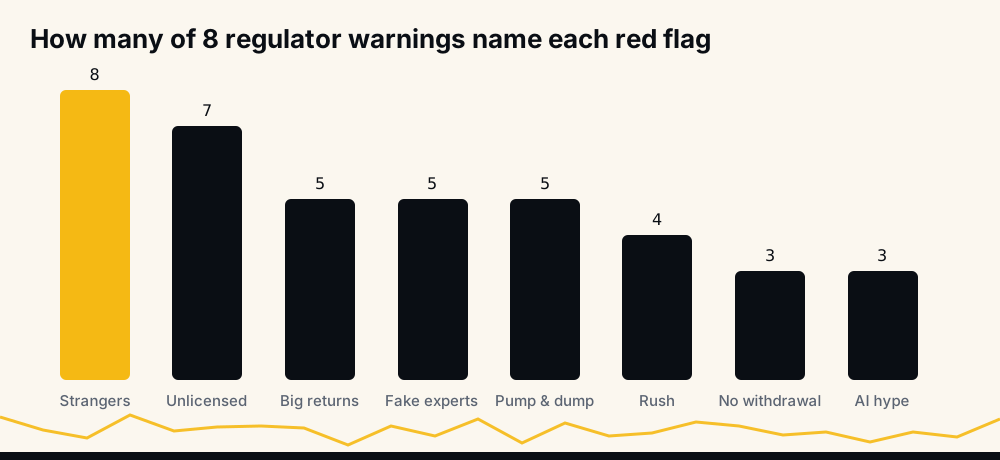
The count is our reading of those pages, a guide to emphasis rather than a statistic. Our longer list of crypto signal scam red flags explains how each one makes money for the person behind it, and how to tell a legit Telegram trading bot from a scam applies them to bots.
What this means if you use a bot: a checklist
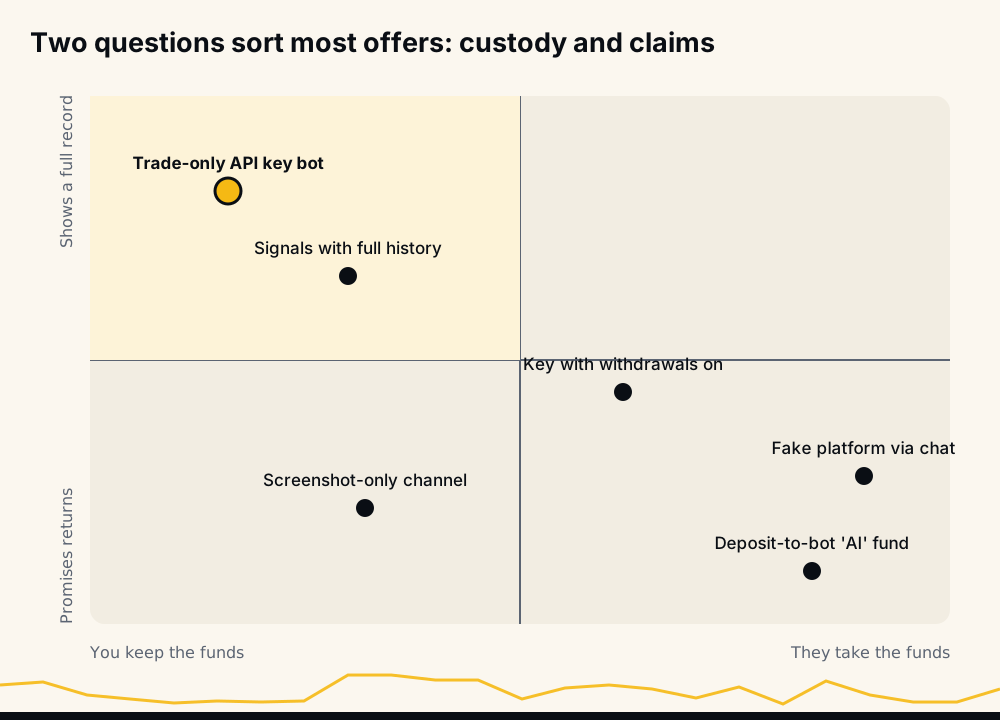
Most of this advice reduces to two questions: who holds the money, and what is promised. A bot trading your own account under a key that cannot withdraw is a very different risk from a "bot" that wants a deposit.
Run these checks before you pay anyone:
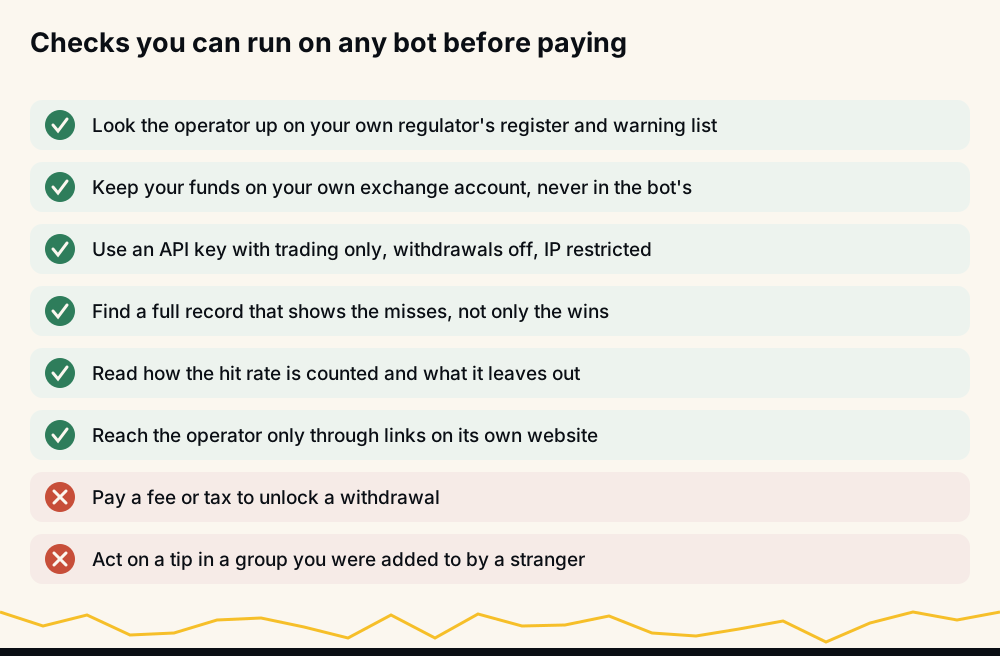
- Look the operator up on your regulator's register and warning list. Absence from a warning list proves nothing; presence settles it.
- Keep custody. Never send funds to a bot, a "trader" or a platform you found in a chat. A real autotrader works on your own exchange account.
- Restrict the key. Trading permission only, withdrawals off, an IP restriction; our guide to connecting a trading bot to Binance safely shows the settings.
- Ask for the whole record. Losing and expired calls included, with a definition of a win. How to verify a crypto signal win rate lists the questions.
- Treat a guarantee as a stop sign. Five of the eight warnings name it.
- Use official links only. Impersonation is one of the most repeated patterns.
- Never pay to withdraw. A fee, tax or deposit to release your own balance is the advance-fee withdrawal scam the SEC and ASIC describe.
- Check your local rules on derivatives, signals and automated trading. They differ by country.
Where HafizeBot stands, and where it does not
Against the warnings above, this is what we can show, and the limits.
- We never hold your money. Autotrading runs on your own Binance account through an API key you create with futures trading permission only; it never needs withdrawals, and the bot warns you if a key allows them. You can delete the key on Binance at any time.
- The record is public. As of 10 October 2026, HafizeBot has posted 24,243 signals since June 2026, every one counted on the live performance page, and the 2021 to 2024 archive is a free download at /data. Expired signals count against the hit rate.
- We promise no profit. Our terms say signals are information, not investment advice. A target-hit rate is not account profit; your result depends on leverage, stops and size.
- You can watch first. The free Telegram channel posts the same signals with a 20-minute delay.
The limits matter as much. We do not claim any licence, registration or approval from a financial regulator, and nothing on this page should be read as one. Which rules apply to any service depends on where its customers live and how it works; we cannot answer that for your country, so check it with your own regulator. The CFTC warns about very high win rates, and ours is high: that is why the performance page explains how it is counted: our signals carry no stop, so every signal that does not reach its target in time is counted as Missed and lowers the rate. There is no third-party audit; our page on whether HafizeBot is legit sets out what exists and what does not.
How to report a suspected Telegram crypto scam
Use the routes the regulators publish:
- UK: report to the FCA on 0800 111 6768 or its online form, and to Report Fraud if you lost money (FCA crypto scams page).
- US: report securities fraud to the SEC at sec.gov/tcr, and commodities or crypto fraud to the CFTC and the FBI.
- Australia: contact your bank immediately, then report to Scamwatch.
- Everywhere: keep screenshots, transaction IDs and wallet addresses, and ignore offers to "recover" your money for a fee; the FCA and ASIC both warn about recovery scams.
FAQ
Are Telegram crypto trading bots legal? No regulator page we read bans trading software or signal channels as such. What can be illegal is the business around them: unauthorised advice or promotion, managing money without a licence, false return claims, or pump-and-dump schemes. It depends on your country.
Is there a 2026 regulatory crackdown on Telegram crypto bots? There is coordinated action against illegal promotion on social media: the FCA-led week of action in April 2026 involved 17 regulators, and the SEC sued over alleged fake AI trading bots in May 2026. Both target false promises and unauthorised activity, not bots as a technology.
Do signal providers need a licence? It depends where their customers are. In the EU, crypto-asset services need authorisation under MiCA. In the UK, unapproved promotion of regulated products can be a criminal offence. Check your own regulator.
What do regulators say is the biggest warning sign? Unsolicited contact through social media or group chats is named in all eight warnings we read, and guaranteed or unrealistic returns in five. In the SEC's and ASIC's descriptions, a fee demanded before you can withdraw means the money is already gone.
Is my money protected if a crypto bot goes wrong? Usually not. The FCA says most crypto activity is unregulated, so the Financial Ombudsman and compensation scheme generally do not apply, and the EU supervisors say protection may be limited. Keeping funds on your own account, under a key that cannot withdraw, is the protection you control.
The bottom line
Regulators are not asking you to avoid automation. They ask you to doubt promises, keep custody of your money, check who you deal with, and report what looks wrong. Apply that to every bot, ours included, starting from /performance and /data.
This page summarises published regulator material; it is not investment advice and not legal advice. Rules change and differ by country, so check your local regulator before you trade, and only trade with money you can afford to lose.