Your results differ from the signal provider's because the two numbers measure different things. A published target-hit rate asks whether price reached the target from the printed entry — no fees, no funding, no slippage, no delay, every signal counted. Your ledger asks whether you made money on the trades you actually took, at the price you actually got, after everything you actually paid. Seven gaps sit between those two questions, and most of them push one way: against you. None of them means the rate is wrong. It means you are measuring your execution, and the provider is measuring the signals.
This is written from the provider's side, which is the side that hears the complaint. The honest response is not "the rate is right and you are wrong"; it is to show where the difference comes from, with numbers, so you can close the gaps you can close and stop blaming the ones you cannot.
The seven gaps
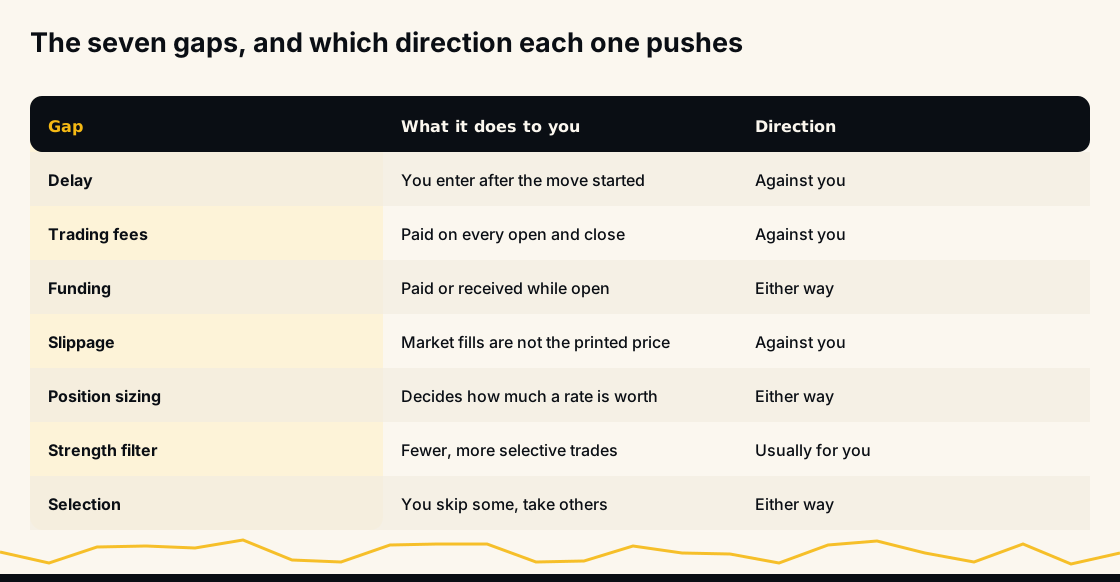
- Delay. You enter after the move began.
- Trading fees. Paid on every open and every close.
- Funding. Paid or received while the position is open.
- Slippage. A market fill is not the printed price.
- Position sizing. Decides what a hit rate is worth in money.
- The strength filter. You may be taking fewer, more selective trades.
- Selection. You skip some signals and take others.
The first four are mostly against you. The last three cut either way. Take them one at a time.
Gap 1: delay, and the arithmetic of a late entry
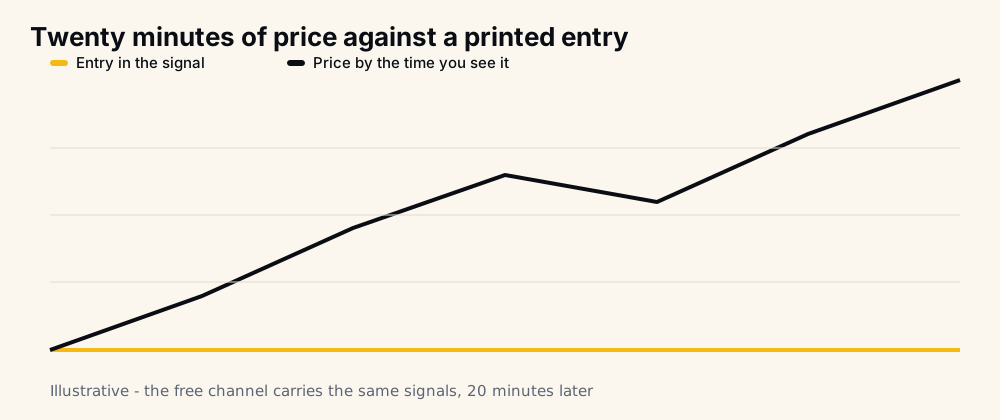
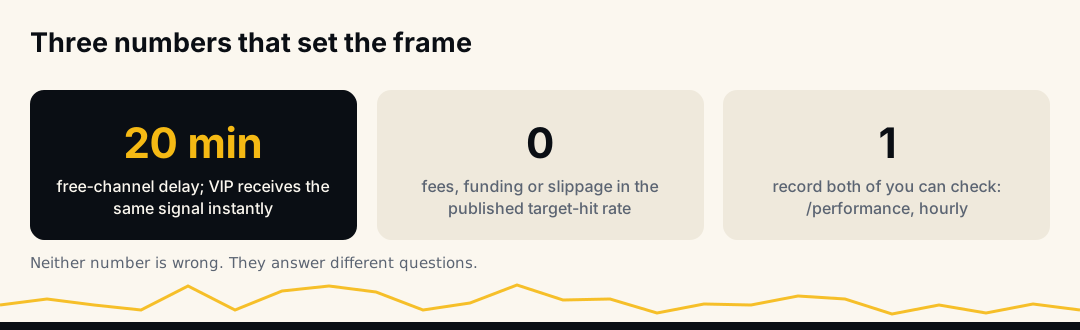
The free channel at t.me/getbinancefutures carries the same signals VIP members receive, twenty minutes later. VIP receives them instantly; the autotrader acts on them in moments. Twenty minutes is long enough for price to move.
Suppose a signal prints entry 100, target 102: a 2% move. By the time you see it, price is 101. Your reward is now 1%, and the risk that price never reaches 102 is unchanged. You have kept all of the risk and given up half the reward.
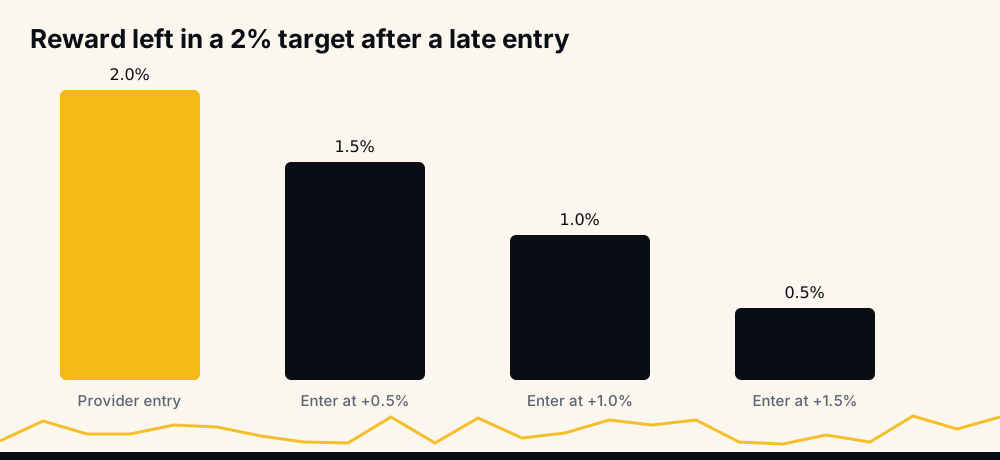
Enter at +0.5% and 1.5% remains. At +1.0%, 1%. At +1.5%, half a percent — which trading fees alone can consume. The provider's record scores this trade a win if price reaches 102. Your ledger might score it a loss on the same trade.
This is the largest gap for anyone following the free channel manually, and it is also the one the channel is honest about: the delay is the product. It exists so the record can be watched without paying, not so the entries can be copied.
Gap 2 and 3: fees and funding
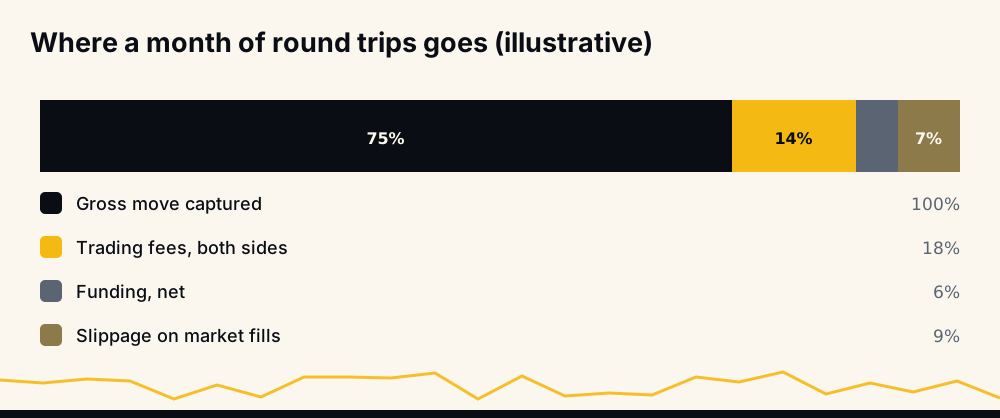
A published rate is a property of price. It contains no fees, because the signal did not pay any. You do — on the open and on the close, every trade. On a 1% target, a round trip of fees is a real share of the reward. On a 0.5% remainder after a late entry, it can be most of it.
Funding is the periodic payment between longs and shorts on a perpetual contract. Hold a position across a funding time and you pay or receive it. Across many trades it nets out to a drag more often than a gain, and across a long expiry hold it can be several payments.
The illustration above is not a measurement; it is the shape. Gross move captured, minus fees on both sides, minus net funding, minus slippage. What is left is yours. What the provider published was the first bar only.
Gap 4: slippage
A market order fills at the best available price, which in a moving market is not the printed entry. The autotrader uses market entries on purpose — a limit entry that never fills is worse than a small slip — and treats the slip as the cost of catching the signal. You pay the same cost manually, plus the delay.
Slippage is small on liquid pairs and larger on the thin ones. Since the model scans 500+ pairs, some of what it signals is thin. Check the spread before entering a symbol you do not recognise; the signal does not know your order size.
Gap 5: position sizing turns a rate into money
A 91% target-hit rate says nothing about how much you make. That is decided by how much you put on each trade, at what leverage, and — crucially — whether you sized the losers the same as the winners.
The common failure is not the rate; it is one oversized trade. Ten small wins and one large loss can net negative on a 91% month. The provider's rate is unweighted: every signal counts once. Your ledger is weighted by whatever you decided to risk. If those weights are uneven, your result will not resemble the rate, and the rate is not the reason.
Gap 6: the strength filter
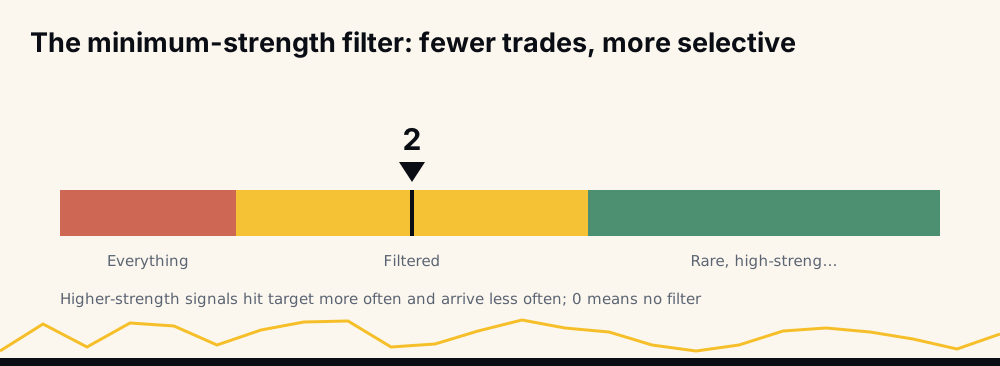
Every signal carries a strength rating. The autotrader lets you set a minimum: at 2, it enters only signals rated 2 and above; at 0, everything. Higher-strength signals hit target more often and arrive less often.
If you filter, you are trading a subset of the signals in the published record, and the subset's rate is not the record's rate. Usually it is higher — that is the point of the filter — but it is also fewer trades, so a small sample can swing either way in a given month. When your rate differs from the published one, check first whether you are even measuring the same signals.
Gap 7: selection
Following manually, you skip some signals. You were asleep, the pair looked odd, you already had a position, you did not like the chart. Every skip changes the sample.
Selection is neutral in principle and rarely neutral in practice. People skip the signals that look risky and take the ones that look obvious, and "obvious" is frequently where the move already happened. If your hand-picked subset underperforms the record, that is information about the picking, not the signals.
Where the gaps enter, in order
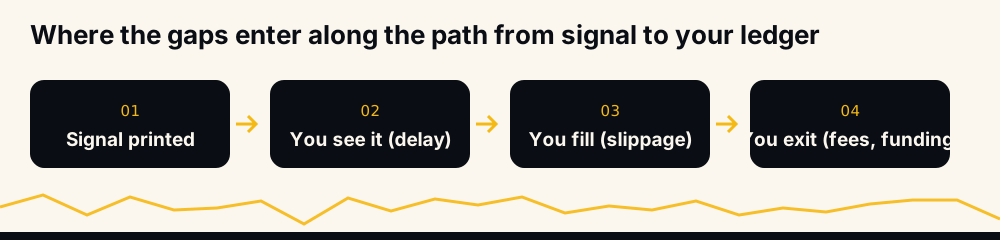
The path from signal to ledger has four stops, and each one takes something. The signal is printed. You see it — after the delay. You fill — with slippage. You exit — paying fees and possibly funding. The record measures the distance between the first stop and the target. You measure the distance between the last stop and what is left.
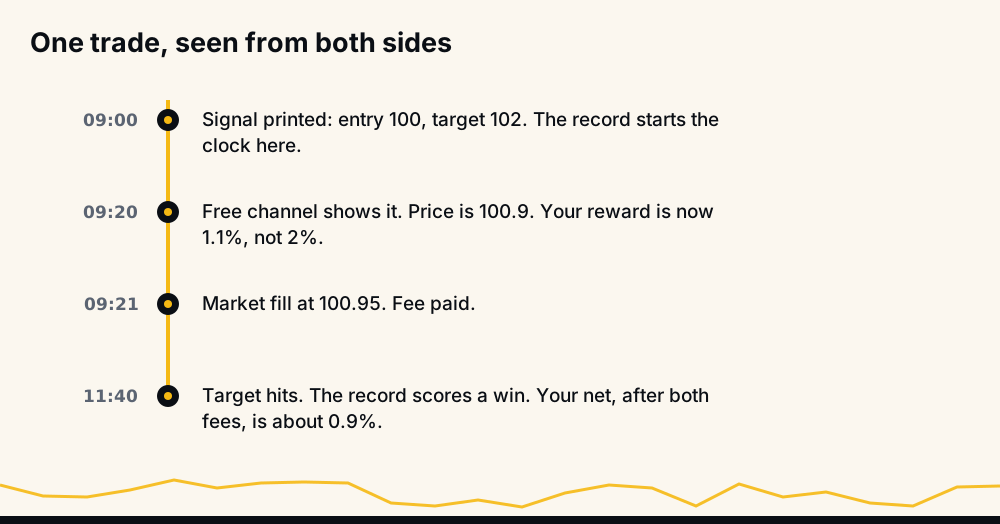
Walk one trade through it. 09:00, signal printed at 100, target 102. 09:20, the free channel shows it; price is 100.9. 09:21, you fill at 100.95 and pay a fee. 11:40, target hits. The record scores a clean 2% win. Your net, after both fees, is around 0.9%. Both are correct. They are answers to different questions.
The provider's number and your number
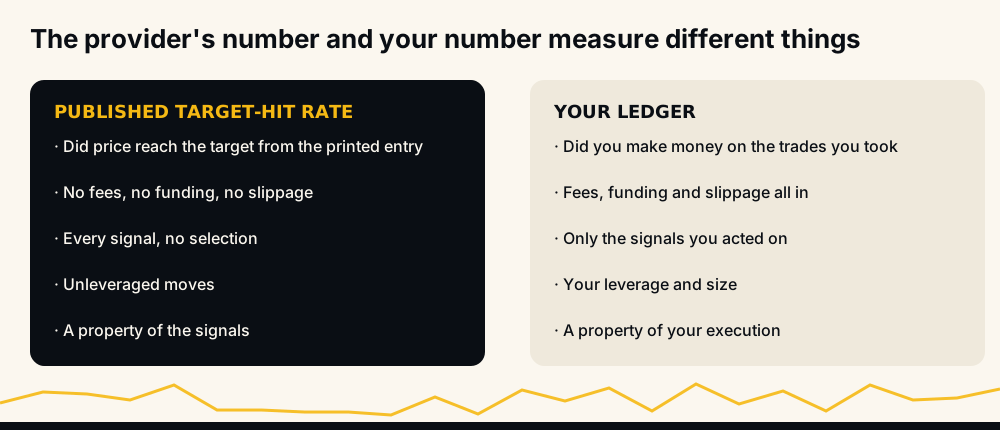
The live performance page is regenerated hourly from the trade database. Its target-hit rate counts every broadcast signal, includes expired signals against the rate, excludes open ones until they resolve, and reports PnL as the unleveraged sum of resolved moves — explicitly not an account return. Every one of those choices is stated on the page.
Your ledger includes only the trades you took, at your fills, with your fees, at your leverage. It is the more useful number for you and the less useful number for comparing providers, because it measures you.
Delay against leverage
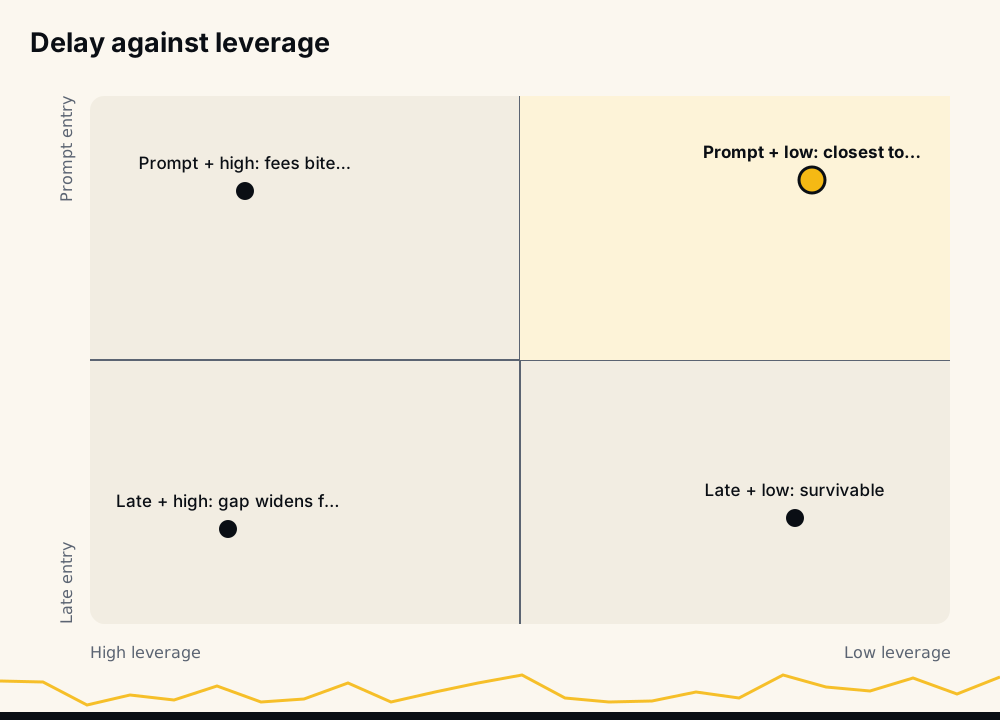
The two settings that most decide how far your results drift are how late you enter and how much leverage you use. Prompt entry at low leverage sits closest to the published rate: little reward lost to delay, fees a small share of the move. Late entry at high leverage drifts fastest: the reward is already shrunk, and leverage magnifies the fees and the slippage against what remains.
If you are following the free channel by hand, the second column is not available to you — the delay is fixed. Which leaves leverage as the setting you control, and it is the one to keep low. The mechanics are in how leverage trading works in crypto.
Reconciling your ledger against the record
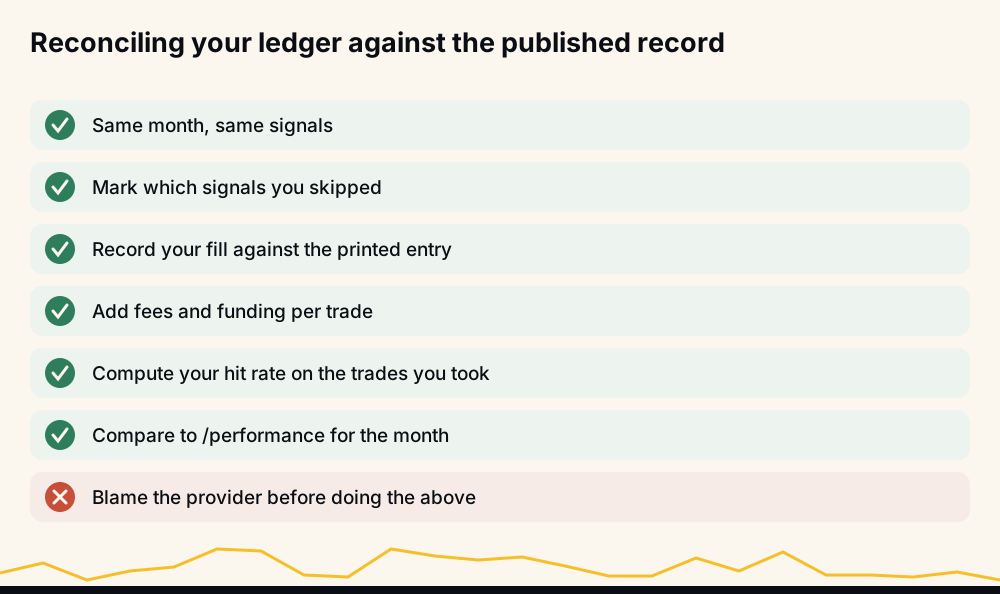
Before concluding anything about the provider, do this once:
- Pick a month and list the signals from the record for that month.
- Mark which you skipped. Your rate is only defined on the rest.
- For each you took, write your fill against the printed entry. That column measures delay and slippage.
- Add fees and funding per trade.
- Compute your hit rate on the trades you took, and your net.
- Compare the hit rate to the record's for the same month.
If your hit rate on the trades you took is close to the record and your net is still poor, the gap is fees, sizing and leverage — all yours to fix. If your hit rate is far below the record on the same signals, look at column three: you are entering late or on thin pairs. Only if you entered promptly, sized evenly, and still fell far short is the question about the signals. The method is in how to verify a crypto signal win rate, and what happens when a crypto signal expires explains the outcome that most often accounts for the difference.
What closes the gaps, and what does not
Delay closes only by receiving signals sooner, which is what VIP is, and it is worth saying plainly that this is the honest reason a paid tier exists. Free versus paid crypto signals sets out the trade. Fees and funding close by trading less and holding shorter. Slippage closes by preferring liquid pairs. Sizing closes by sizing evenly. Selection closes by either following a rule or admitting you are not.
What does not close the gap is a better provider. Every one of the seven applies to every signal service. A provider whose published results already match a follower's ledger is a provider who has published a ledger, not a rate — which is rarer, and worth asking for. How to choose a crypto signal provider has the questions.
Frequently asked questions
Why are my results worse than the signal provider's win rate? Because the rate measures whether price reached the target from the printed entry, and your ledger measures what you netted after delay, fees, funding, slippage, sizing and which signals you skipped. Most of those push against you. The rate is not wrong; it is measuring something else.
How much does the twenty-minute delay cost? It depends on how far price moved. On a 2% target, entering at +1% leaves half the reward with all of the risk. The free channel's delay exists so the record can be watched without paying, not so the entries can be copied.
Do published win rates include fees? Almost never, and this one does not. A target-hit rate is a property of price. Fees, funding and slippage are properties of your execution and appear only in your ledger.
I use a minimum-strength filter. Should my rate match the published one? No. You are trading a subset of the signals. Higher-strength subsets usually hit target more often but produce fewer trades, so a single month can land either side of the record.
Can a high hit rate still lose money? Yes. One oversized losing trade can outweigh many small wins. The rate counts each signal once; your ledger weights each by what you risked. Uneven sizing breaks the link between the two.
How do I check whether the gap is me or the signals? Reconcile one month: your fills against printed entries, fees added, hit rate on the trades you took, compared to the record for the same signals. If your hit rate matches and your net is poor, fix fees, sizing and leverage. If your hit rate is far lower on the same signals, you are entering late.
Closing note
Two honest numbers that disagree are not a contradiction. Measure your own execution before you measure the provider, and most of the gap turns out to have your name on it — which is the good news, because that part you can change.
None of this is investment advice. Cryptocurrency futures carry a high risk of loss; trade only with money you can afford to lose.