Choose a crypto signal provider on evidence you can check yourself rather than the win rate they advertise. In order: can you download their complete record including losses, is their win rate defined precisely enough to recompute, do their signals state entry and target, is there a free tier to verify with, and can you cancel without asking? A provider who fails the first check cannot pass the others.
This guide is the checklist version of that answer. Eight checks, ordered by how quickly they disqualify someone, plus a 30-day evaluation you can run without spending anything. The only track record that means much is the one you scored yourself.
What a crypto signal provider actually sells
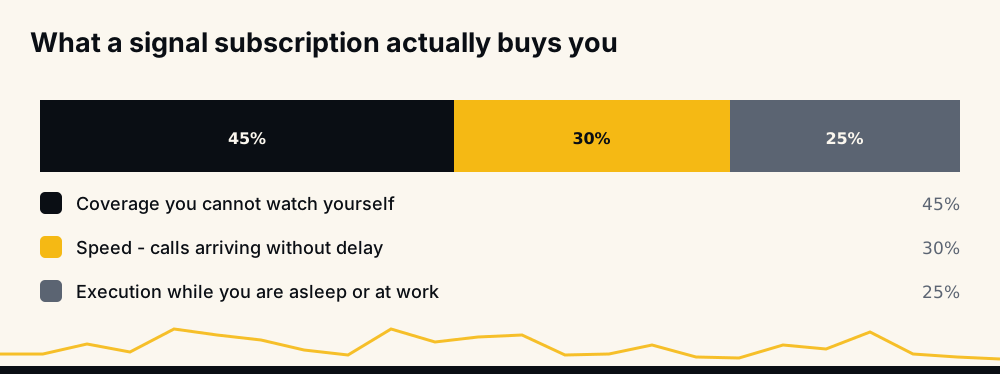
Strip away the branding and a signal provider sells three things: coverage of markets you cannot watch yourself, speed so the call reaches you while the setup is still valid, and sometimes execution so trades happen while you are asleep or at work.
Notice what is not on that list: certainty. No provider sells outcomes, because none of them controls the market. Anyone who prices their service as though they do is selling something else, and the difference between a legitimate service and a scam usually shows up right there, in how the offer is worded.
That reframing matters for choosing, because it tells you what to compare. Two providers with identical marketing can differ enormously in coverage, in latency, and in whether they will ever let you check their claims.
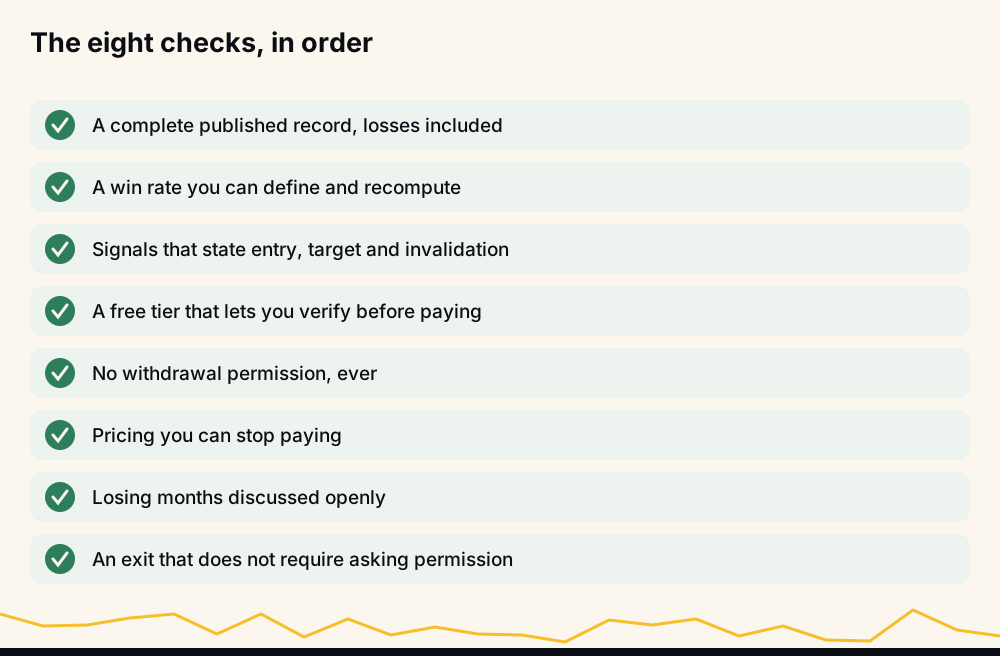
The eight checks, in order
Run them in this order. The early ones are cheap and disqualify fast; there is no point evaluating a provider's message format if their record does not exist.
Check 1: a complete published record, losses included
This is the check that eliminates most of the field, so run it first.
A record is complete when it accounts for every call in a stated period: the winners, the losers, and the ones that went nowhere. It has a start date and an end date. It exists as something you can open and count. A carousel of screenshots doesn't qualify.
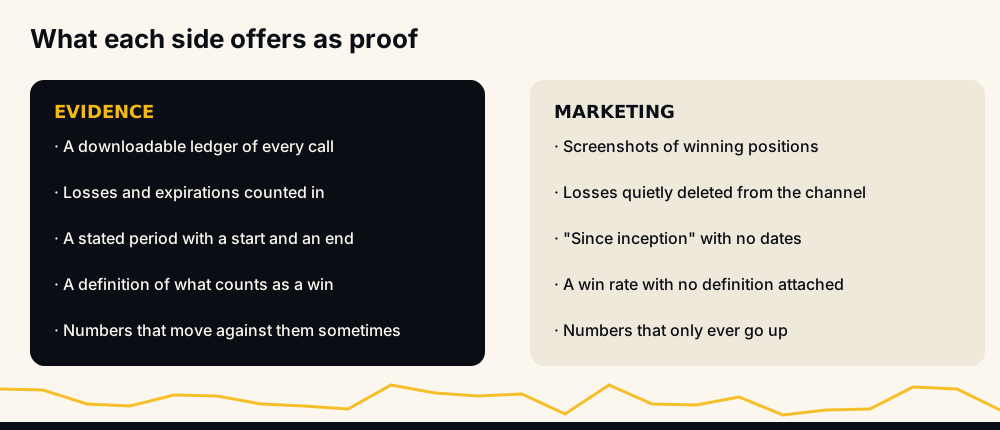
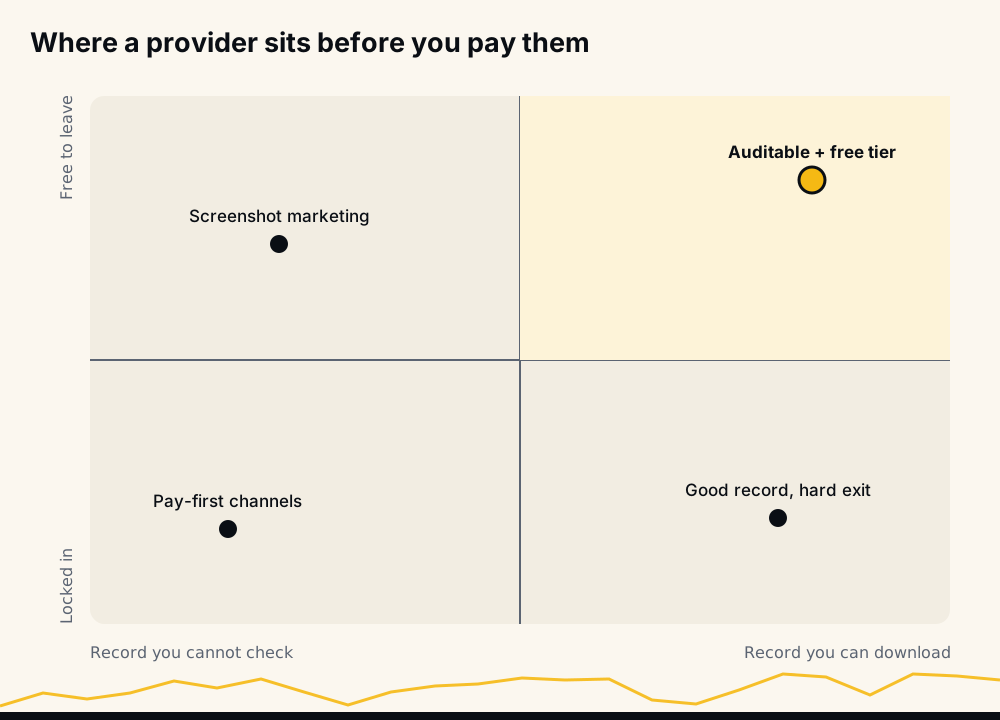
The failure mode to watch for is survivorship: a channel where losing calls are deleted, so scrolling back shows an unbroken run of winners. It is trivially easy to produce and impossible to distinguish from genuine performance by scrolling. That's exactly why a downloadable file matters: a file has a fixed number of rows, and rows cannot be quietly removed after the fact.
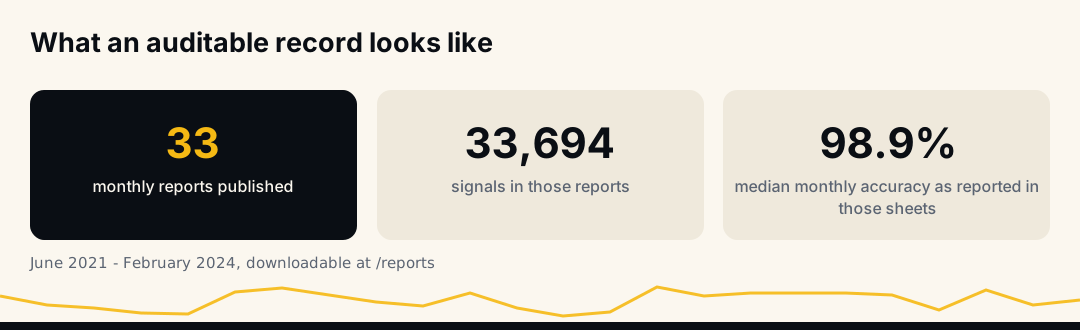
HafizeBot's answer to this check is 33 monthly spreadsheet reports covering June 2021 to February 2024, 33,694 signals, with a median monthly accuracy of 98.9% as reported in those sheets. They are downloadable at /reports so you can count the rows rather than take our word for it.
Check 2: a win rate you can define and recompute
"92% accuracy" is not a fact until someone tells you what a win is.
Ask the provider to define it. The specific things you want pinned down:
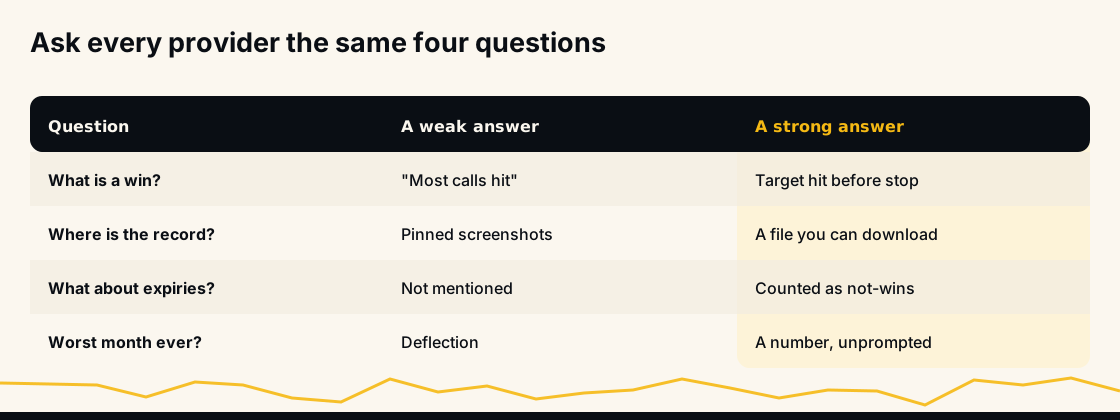
- What counts as a win? Target hit before stop is the honest definition. "Went in our favour at some point" is not, since nearly every position does that for a moment.
- What happens to trades that expire? A call that hits neither target nor stop before the provider gives up on it is not a win. If expiries are excluded from the denominator rather than counted against the rate, the number is inflated by construction.
- Is it per signal or per target? Some providers post several targets per call and count each one hit as a separate win. That multiplies the same trade into several data points.
Since June 2026 our /performance page is regenerated hourly straight from the trade database, with the definitions stated on the page: a win is a target hit, and the page shows Wins, Missed and Open. Broadcast signals carry a target and a maximum hold, not a stop, so every signal that does not reach its target in time counts as Missed and lowers the rate. PnL is shown unleveraged. Losing months appear on it when they happen, which is the point of publishing it.
Check 3: what the signal message actually contains
A signal you cannot act on precisely is not worth paying for. At minimum each message needs a pair, a direction, an entry, a target, and some notion of when the setup stops being valid.
If you have not read a signal message closely before, how to read crypto signals breaks a real one down line by line. The short version for evaluation purposes: "BTC looking strong 🚀" is not a signal. It cannot be scored, which means it can never be wrong, which is precisely why some channels write that way.
Also check what the message leaves to you. Position size, leverage and total risk are your decisions. A provider who sets those for you isn't sending signals, and one who never mentions them is skipping the part that decides whether you survive a bad week.
Check 4: how the free tier behaves
A free tier is the single most useful evaluation tool a provider can give you, and how they run it tells you what they think they are selling.
A confident provider gives away the calls and charges for latency and execution. Our free channel at t.me/getbinancefutures carries the stronger signals of the paid one, strength 3 and up, on a 20-minute delay, to roughly 3,980 members as of August 2026. The delay is part of the product, and so is the full set: VIP gets every signal the moment it fires. That's a deliberate structure: it means anyone can verify the calls for a month before paying for anything.
Compare that against a free tier that posts only the winners after the fact, or one that is a sales funnel with occasional trades sprinkled in. Both are telling you the same thing: the operator does not expect the record to survive inspection.
Check 5: what they ask you to hand over
This check has no grey area, so treat it as pass/fail.
Never send anyone your funds to trade. A provider offering to "manage" your capital is running a different business from a signal service, and it is the business with the worst outcomes.
If autotrading is on offer, the only acceptable arrangement is API keys without withdrawal permission, with your money staying on your own exchange account. HafizeBot's autotrading works that way: keys that need no withdrawal permission, funds never leaving your Binance account, and user-set limits on minimum signal strength, position size, maximum simultaneous positions and which coins are eligible. If you are setting this up, connect a trading bot to your Binance API key safely walks through the permission boxes one at a time.
A request for withdrawal permission, a seed phrase, or a deposit to the provider's own wallet ends the evaluation. There is no context in which those are needed for signals.
Check 6: what the pricing model tells you
Look for two properties: you can stop paying, and stopping is something you do rather than something you request.
Auto-renewing subscriptions tied to a card put the cancellation on your side of a support queue. HafizeBot is priced in USDT with no card, and nothing renews unless you switch on /subscribe, which renews from the USDT balance you deposited. Without it, when a period ends it ends, which removes the entire category of "I could not get them to stop charging me".
Price level itself tells you less than people expect. A cheap provider with no record is worse value than an expensive one with an auditable ledger, because the cheap one's expected value is unknown and might be negative.
Check 7: how they talk about losing months
Ask directly: what was your worst month, and what happened?
The answer sorts providers faster than almost any other question. Someone running a real service has a number ready and can describe the market conditions behind it. Someone selling a story will deflect, reframe the question, or explain that losses only happen to users who "didn't follow the signals properly".
That last one deserves its own warning. A provider whose losses are always the customer's fault has built an unfalsifiable claim, and unfalsifiable claims are the shape scams take. Our answer to this check is structural rather than rhetorical: /performance counts every missed signal against us automatically, hourly, whether or not anyone asks.
Check 8: whether you can leave
Finally, the exit. Can you stop, and does stopping require anyone's cooperation?
The things to verify before you start:
- Autotrading can be switched off by you, immediately, without contacting support.
- Revoking API access is done at the exchange, on your side, not by asking the provider to release it.
- No lock-in period that survives your decision to leave.
If autotrading is running, keep in mind that turning off new entries is not the same as closing open positions. You remain responsible for whatever is already in the market, which is one more reason to keep a stop loss on every position rather than relying on any service to manage the downside for you.
How much scepticism a claimed number deserves
There is an inverse relationship worth internalising: the higher the advertised win rate, the more evidence it needs before it means anything.
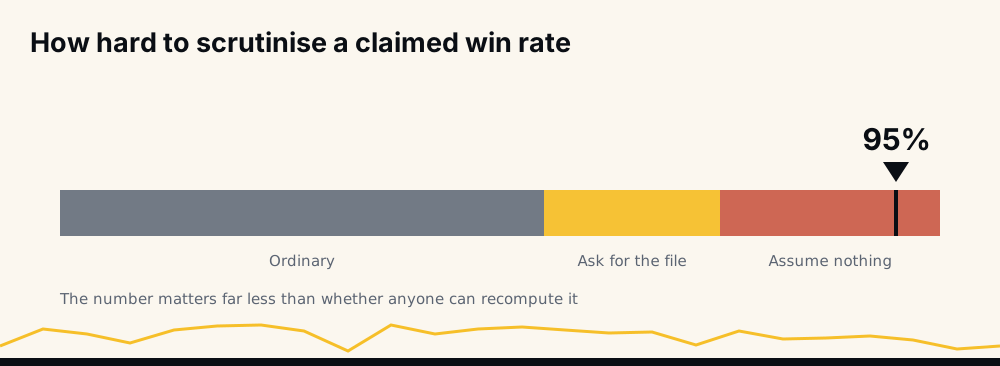
This applies to our own numbers as much as anyone's. The 98.9% median figure is what the spreadsheets report for that period, and we phrase it that way deliberately: as reported in those sheets, and never as a promise about your results. The live /performance page exists because a self-reported historical figure, however honest, is a weaker form of evidence than a number that updates itself hourly and can go down.
A 30-day evaluation you can run for nothing
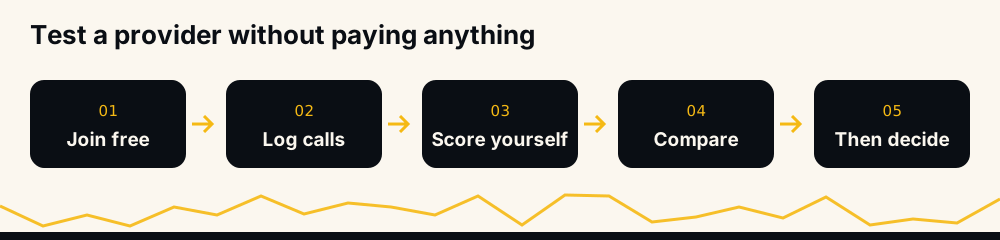
Rather than deciding from marketing, generate your own data. It costs a month and no money.
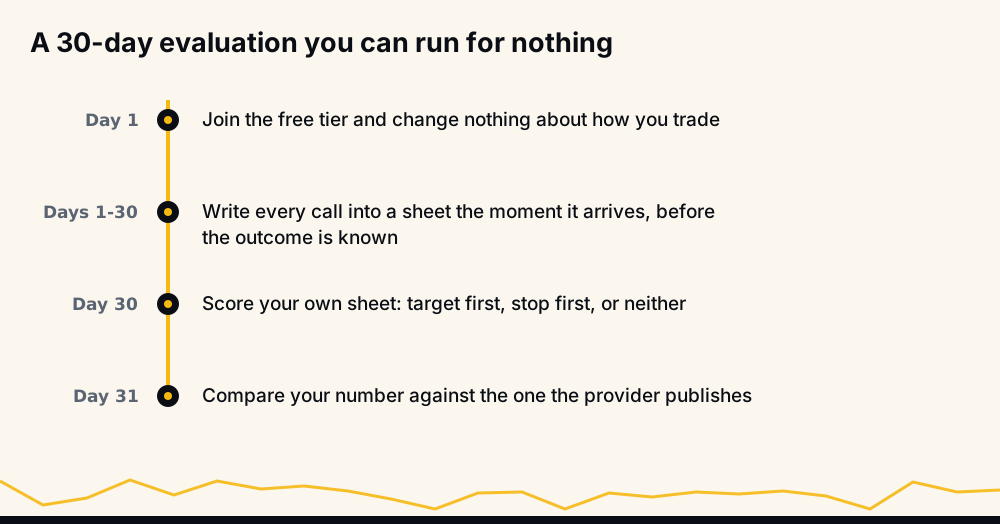
The rules that make it valid:
- Log the call before the outcome is known. Write down pair, direction, entry, target and time the moment the message lands. Recording it afterwards lets hindsight edit your sheet.
- Log every call, not the interesting ones. Skipping calls you would not have taken reproduces the exact survivorship problem you are testing for.
- Score by a fixed rule. Target first is a win, stop first is a loss, neither within the window is an expiry that counts as not-a-win.
- Do not trade it yet. Paper only. You are measuring the provider, and real money changes which calls you take.
At the end you have your own number for the same period the provider is describing. If the two are far apart, you have learned something no testimonial could have told you. If you would rather test with autotrading than by hand, decide first whether you want a bot or manual execution; they're different products with different failure modes.
How HafizeBot answers the eight checks
For completeness, in one place:
- Record: 33 monthly reports, June 2021 to February 2024, 33,694 signals, downloadable at /reports.
- Win rate: defined on /performance and regenerated hourly from the trade database, with expirations counted against the rate and PnL shown unleveraged.
- Signal content: pair, direction, entry, target, and a strength rating from a model that evaluates 240+ indicators, formulas and components across 500+ Binance USDT-M perpetual pairs.
- Free tier: the stronger signals, strength 3 and up, on a 20-minute delay at t.me/getbinancefutures.
- Custody: the API key needs futures trading only, never withdrawal permission; funds stay on your Binance account.
- Pricing: USDT, no card; nothing renews unless you switch on
/subscribe, which renews from the USDT balance you deposited. - Losing months: published as they happen on /performance.
- Exit: autotrading is toggled by you, and API access is revoked at Binance.
What we will not tell you is how the model reaches a signal; the specific components and how they are weighted are proprietary. When you want proof, look at the published record rather than the recipe.
This is information, not investment advice, and none of it makes trading safe. Leverage can remove an account faster than any accuracy figure suggests. Trade only what you can afford to lose, and size positions on the assumption that any individual call can be wrong. If you are new to the instrument entirely, start with crypto futures for beginners before evaluating anyone's signals.
FAQ
How do I choose a crypto signal provider? Work through the checks in order: a downloadable record including losses, a win rate defined precisely enough to recompute, signals containing entry and target, a free tier to verify with, no withdrawal permission, cancellable pricing, honest handling of losing months, and an exit you control. The first check eliminates most candidates.
What is a good win rate for crypto signals? There is no single number, because a win rate means nothing without its definition. A 60% rate counted strictly (target before stop, expiries counted as not-wins) is worth more than a 95% rate with expiries excluded and losses deleted. Always ask how the figure is computed before comparing two of them.
Are paid crypto signals better than free ones? Not automatically. Paid tiers typically buy speed and execution rather than better calls; our free channel carries the stronger signals, strength 3 and up, on a 20-minute delay, and VIP gets every signal at once. Pay when you have established the calls are worth having and the delay is costing you something specific.
How can I verify a crypto signal provider's track record? Log their calls yourself for 30 days before the outcomes are known, score them by a fixed rule, and compare your number against theirs. Screenshots and pinned messages cannot be verified because losing calls can be deleted; a downloadable file with a fixed row count can be.
Should I give a signal provider my API keys? Only keys with withdrawal permission disabled, and only if you want autotrading. Your funds should never leave your own exchange account. A request for withdrawal rights, a seed phrase, or a deposit to the provider's wallet is a reason to stop immediately.
Is it safe to use crypto signals from Telegram? The channel is just a delivery method. Safety depends entirely on the provider behind it and on your own risk limits. Telegram is where most providers publish, including legitimate ones, so judge the record rather than the platform.