The subscription is usually the smallest of four costs. A crypto trading bot costs you a subscription fee, exchange fees at the bot's trade frequency, slippage between the signal price and your fill, and the time you spend configuring and supervising it — and for anything trading more than a few times a day, the exchange fee bill is typically the largest line by a wide margin. A bot that trades ten times a day on 1,000 USDT positions pays roughly 300 USDT a month in fees alone at a 0.1% round trip, which dwarfs most subscriptions.
So the useful question is not "what does this bot cost" but "what does the whole arrangement cost per month at the frequency it actually trades, and what does that mean it has to earn before I am even". Below is how to compute that.
The four layers
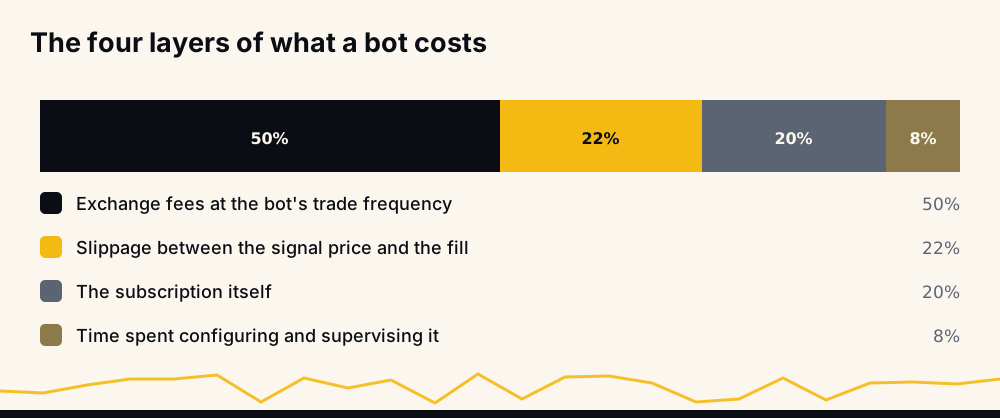
Those proportions vary enormously with how often the bot trades — that is the whole point. A conservative configuration taking two trades a week has a cost profile dominated by the subscription. An aggressive one taking twenty a day has a profile where the subscription is a rounding error and the exchange is the real counterparty to your profitability.
Which means: the same bot has completely different economics depending on your settings. Comparing bots on their sticker price, without reference to trade frequency, compares the least significant variable.
Layer 1: exchange fees, the bill nobody quotes
Fees are charged per trade on notional value. Automation increases trade count, often substantially, because a bot takes every qualifying setup rather than the ones you happened to see.
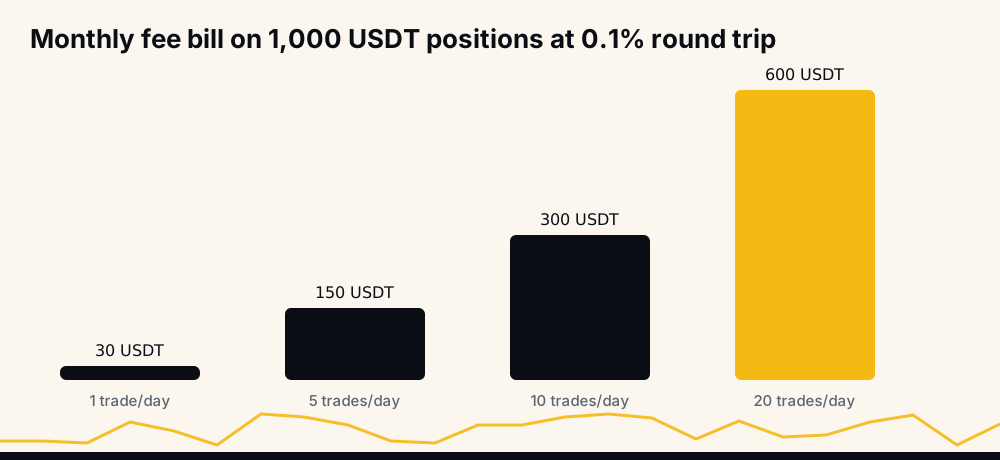
Those figures assume 1,000 USDT of notional per position and a 0.1% round-trip cost — check your exchange's current schedule and your own fee tier, since rates differ and change. But the shape is the point: cost scales linearly with trade frequency and with position size, and neither of those is set by the bot's price.
Note also that leverage inflates this. Fees are charged on notional, so a 200 USDT margin position at 5x pays fees on 1,000 USDT. Raising leverage raises your fee bill proportionally, which is one of the less-discussed costs of trading with leverage.
Layer 2: slippage
Slippage is the gap between the price the signal named and the price you actually got. It is invisible unless you record both, which is why most people never account for it.
Automation usually reduces slippage compared with manual execution — seconds rather than minutes — but it does not eliminate it, and on thin pairs during fast moves it can exceed the trading fee comfortably. If your bot is configured to trade small or illiquid markets, this layer grows quietly.
Layer 3: the subscription, and what each model rewards
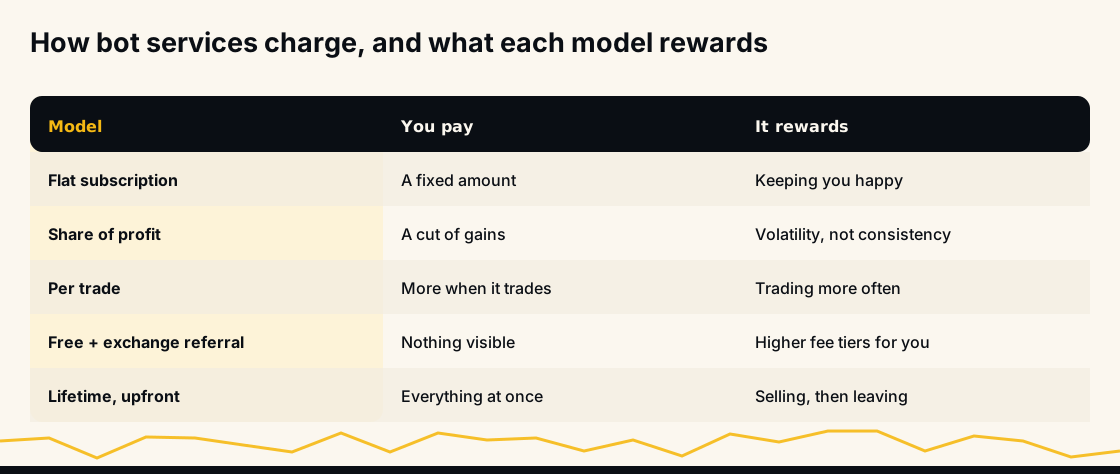
Read the right-hand column rather than the middle one, because the incentive tells you how the product will behave.
Share of profit sounds aligned and is not, quite. It pays on gains and does not refund on losses, so across a volatile year of round trips you can pay repeatedly while ending flat. It also rewards volatility rather than consistency, since a strategy that swings wildly generates more billable up-moves than one that grinds.
Per-trade pricing rewards trading more often, which is the one variable you least want the provider incentivised to increase.
Lifetime, paid upfront transfers all the risk to you at the moment of purchase, and it is common among services that do not expect to be running in two years.
Flat subscription is the least distorted: the provider's incentive is to keep you subscribed, which requires the thing to keep working.
Layer 4: the "free" bot
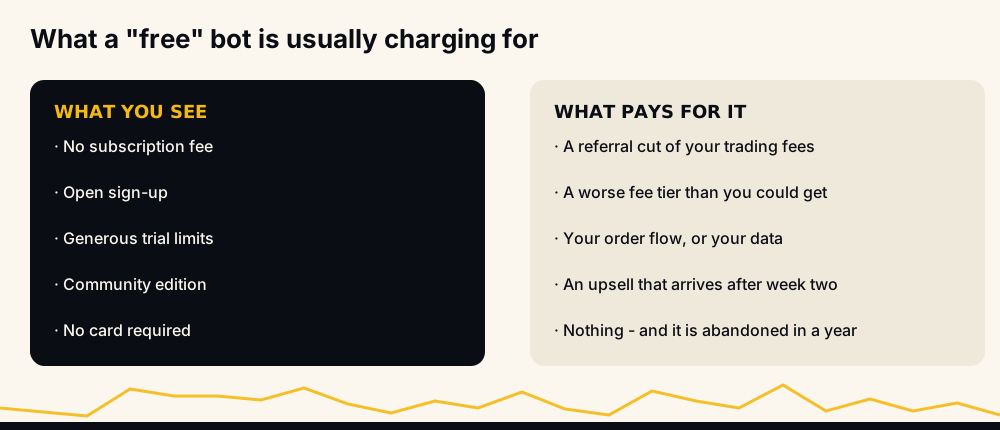
The most common arrangement is an exchange referral: the bot signs you up through its own link and takes a share of the fees you generate. This is not necessarily bad — but it means your fee tier may be worse than the one you could negotiate directly, and the difference is paid by you on every trade, forever, invisibly.
Given the fee chart above, a referral cut on a bot trading ten times a day can quietly exceed any subscription you were avoiding. Free is a pricing model, not an absence of price, and the version where nobody is being paid at all is the version that gets abandoned.
When each cost becomes visible
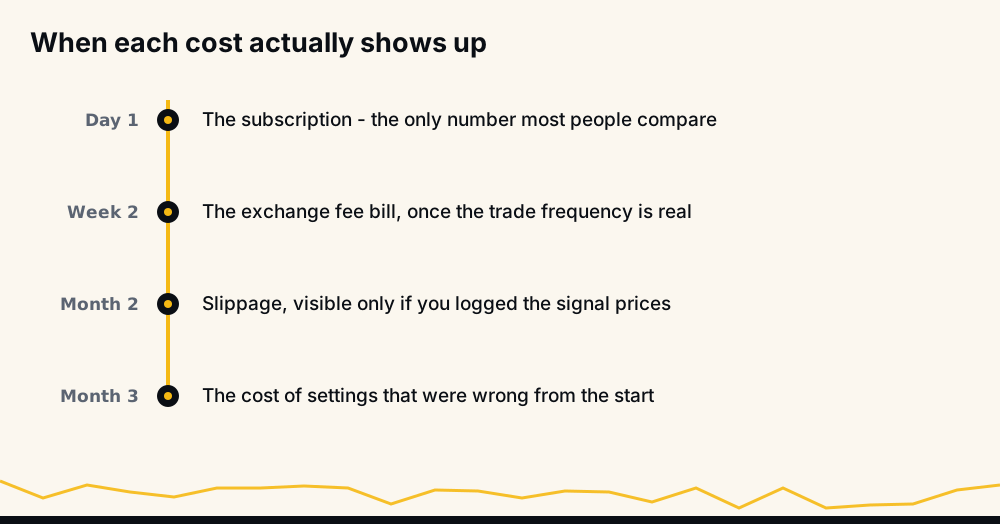
The ordering explains why people misjudge this so consistently. The only cost visible at the decision point is the smallest one, and each subsequent layer takes longer to surface than the last. By the time the fee bill is clear you have already chosen.
Computing your own hurdle
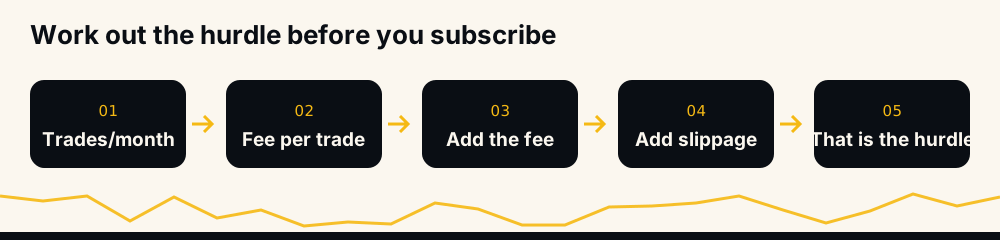
The arithmetic, concretely:
- Estimate monthly trades at the settings you intend to use — not the bot's maximum, and not what you hope. If you have watched the signals for a month, count how many met your filters.
- Multiply by your round-trip cost per trade, computed on the notional you will actually run, including leverage.
- Add the subscription.
- Add a slippage estimate. If you have no data, use a modest fraction of the fee figure as a placeholder and refine it later.
- Divide the total by your account size. That percentage is what the bot must return each month before you have gained anything.
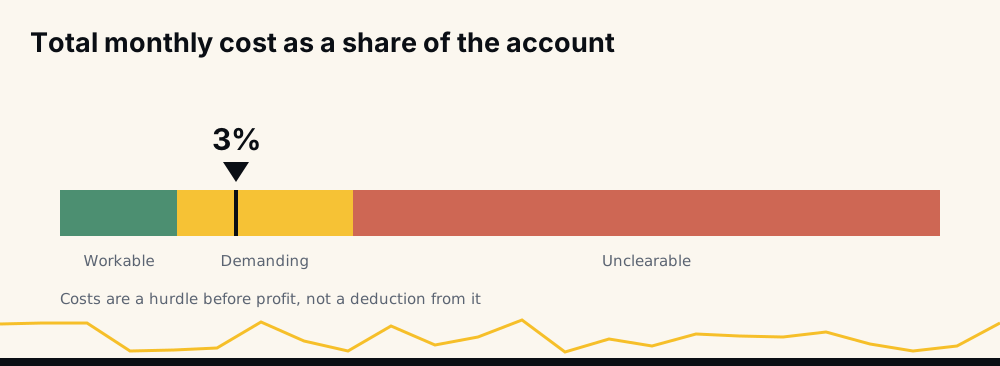
If that number comes out above roughly 5% of the account per month, the arrangement is very unlikely to work — that is a 60%-plus annual return required just to break even. The usual fixes are trading less often, trading larger positions on a larger account, or not using a bot for this account at all. Note that two of those three fixes are settings changes rather than a different product.
When the cost is worth carrying
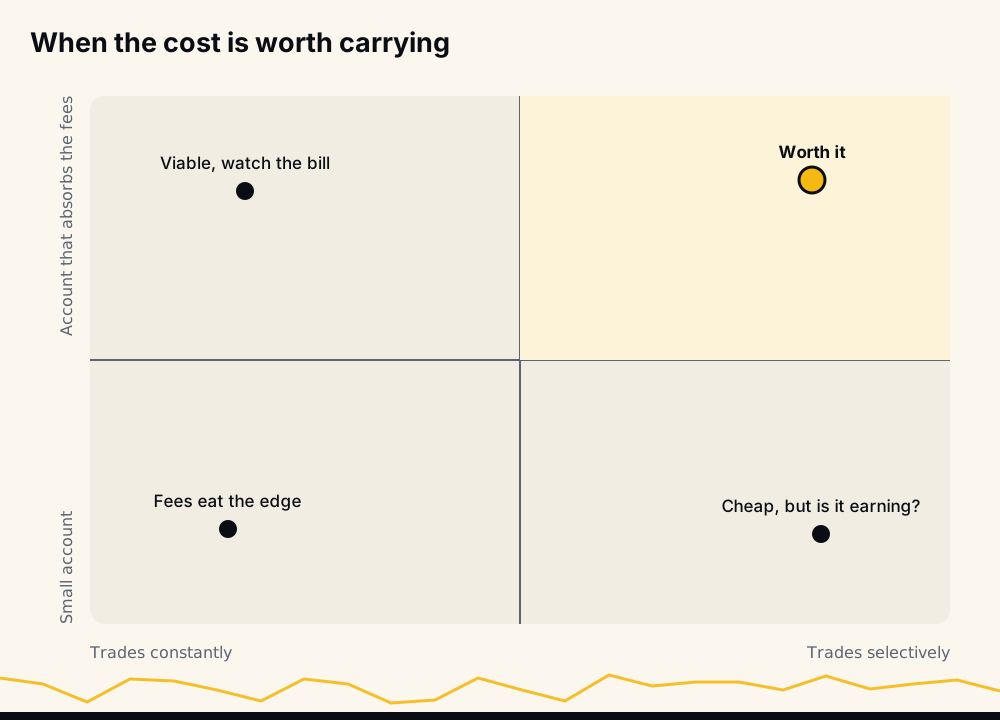
The bottom-left quadrant — frequent trading on a small account — is where most disappointment comes from, and it is entirely predictable from the arithmetic before any money is spent. A 500 USDT account running an aggressive configuration can easily face monthly costs above 10% of its balance, which no realistic strategy clears.
This is closely related to how much money you need to start crypto futures: below a certain account size the fixed costs of participating dominate, and adding automation raises them rather than lowering them.
The hidden costs
Three that do not appear on any invoice:
Wrong settings. A position size or leverage setting that was too high from the start costs more than every fee combined, and it compounds silently until a losing stretch reveals it. This is why the sensible sequence is minimum size first, raise later, and only after seeing a drawdown.
Downtime you did not notice. A bot that stopped running is not free — it is the cost of the trades you believed were being taken. Checking that the thing is actually running is a separate habit from checking whether it is profitable.
Correlated positions. Without a cap on simultaneous positions, a bot can open many trades that all move together when the whole market turns, converting what you configured as several small risks into one large one. The cap costs nothing to set and is the difference between a bad day and a bad year.
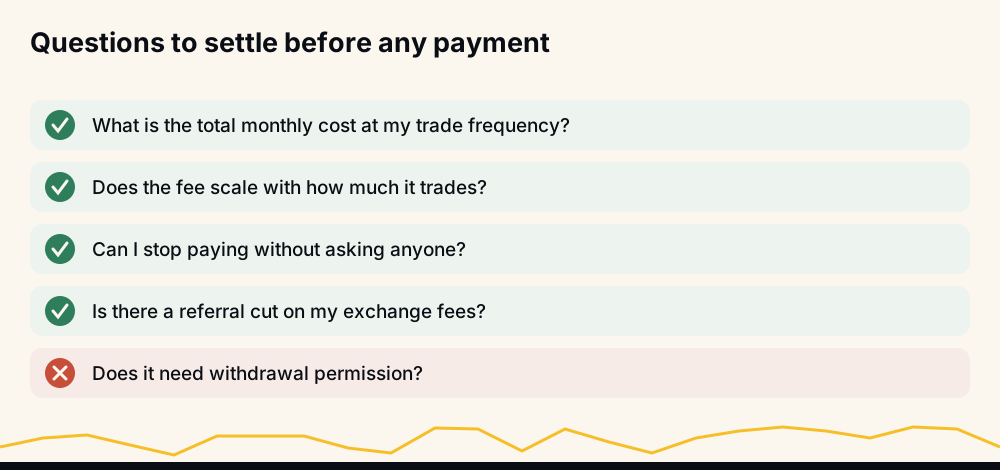
The crossed item is not a cost question at all — it is the line between automation and handing someone your funds. Autotrading requires trading permission and never withdrawal permission, as covered in connecting a bot to your Binance API key safely.
The cheapest lever you have
Everything above points at one conclusion that is easy to miss: the largest cost is set by a setting, not by a supplier.
Trade frequency is the multiplier on the biggest line, and it is controlled by the minimum signal strength you require. Raising that threshold cuts the number of trades, which cuts the fee bill and the slippage bill proportionally, while changing the subscription not at all. Someone paying 300 USDT a month in fees who halves their trade count has saved more than switching to any cheaper provider could have saved them.
The obvious objection is that filtering out trades also filters out winners. True — but it filters out losers at the same rate, and it removes the fee on every filtered trade with certainty. Costs are the only part of this arrangement that are guaranteed, which is why reducing them is the only reliably positive change available. A trade you did not take has a known cost of zero and an uncertain forgone profit; a trade you did take has a certain cost and an uncertain profit.
There is a second-order benefit as well. Fewer, higher-conviction trades make the account easier to reason about — you can actually review what happened at the end of a week, and a losing stretch is legible instead of being buried in volume. That review is the part that catches configuration problems early, and it does not happen at twenty trades a day.
So before comparing prices, spend an hour on the settings. It is the higher-value hour, and it costs nothing.
What we charge, and how
HafizeBot is priced in USDT, with no card and no auto-renewing subscription — a flat model, so nothing we charge scales with how much the bot trades, and a period simply ends rather than requiring you to cancel. There is no per-trade fee from us and no share of your gains.
Your exchange fees remain yours and are the layer worth modelling before you start. The settings that control them are in your hands: minimum signal strength, position size, maximum simultaneous positions and coin filters together determine trade frequency, and therefore most of your total cost. Raising the minimum strength is the most direct way to cut the fee bill.
The signals themselves come from a model evaluating 240+ indicators, formulas and components across 500+ Binance USDT-M perpetual pairs. For what they have historically done: /reports holds 33 monthly spreadsheets covering June 2021 to February 2024, 33,694 signals, at a median monthly accuracy of 98.9% as reported in those sheets, and /performance regenerates hourly from the trade database with expirations counted against the hit rate and losing months shown as they happen. Autotrading runs on API keys that cannot withdraw, with funds staying on your own Binance account.
Before paying anything, watch the free channel for a month and count how many signals would have met your filters. That number is what turns every estimate in this article into your actual figure — and whether a bot suits you at all is worth settling first.
This is information, not investment advice. Costs are certain and returns are not: trade only what you can afford to lose, and treat the hurdle calculation above as the minimum the arrangement has to clear before it is doing anything for you.
FAQ
How much does a crypto trading bot cost? The subscription is only one of four costs, and usually the smallest. Exchange fees at the bot's trade frequency typically dominate — at ten trades a day on 1,000 USDT positions with a 0.1% round trip, that is roughly 300 USDT a month before any subscription. Compute your total at your intended settings rather than comparing sticker prices.
Are free crypto trading bots really free? Rarely. The common arrangement is an exchange referral where the bot takes a cut of the trading fees you generate, which can exceed a subscription for an active configuration. Others monetise through an upsell, or are unmonetised and eventually abandoned.
Is a percentage-of-profit trading bot better value? It sounds aligned but pays on gains without refunding losses, so a volatile year of round trips can cost you repeatedly while you end flat. It also rewards volatility rather than consistency. A flat fee is the least distorted model, since the provider's only incentive is to keep the thing working.
How do I calculate if a trading bot is worth the cost? Estimate monthly trades at your settings, multiply by your round-trip fee on the notional you will run, add the subscription and a slippage estimate, then divide by your account size. That percentage is what the bot must return monthly before you gain anything.
Do trading bots make fees higher? Usually yes, because they take every qualifying setup rather than only the ones you noticed. The lever is your configuration: raising the minimum signal strength and capping simultaneous positions cuts trade count, and therefore cost, more directly than changing provider.
Is a trading bot worth it for a small account? Often not. Below a certain account size the fixed costs of participating dominate, and an active configuration can face monthly costs above 10% of the balance — a hurdle no realistic strategy clears. Trading less frequently or growing the account first are the workable options.