There is no single best crypto trading strategy — and anyone selling you one is selling you something. The honest answer: the best strategy is the one that fits your time, capital and temperament, and that you can execute with discipline through a losing streak. For most part-time traders that means trend following or swing trading on higher timeframes; for pure investors, DCA. This guide compares the main strategy families so you can pick yours — and actually stick to it.

What is a crypto trading strategy, really?
A crypto trading strategy is a written set of rules that answers four questions before money moves: what you trade, when you enter, when you exit (both in profit and at a loss), and how much you risk per trade. If any of those four lives in your head as "I'll know it when I see it," you don't have a strategy — you have a mood.
Most strategies build their entry rules from technical analysis: price structure, volume, and a handful of core indicators like RSI, MACD and moving averages. The exits and sizing rules matter more than the entries — which is exactly the part most beginners skip.
So which crypto trading strategy is best? Wrong question
"Best" implies one strategy beats the rest in all markets, for all people. Neither is true.
- Markets change regime. A breakout strategy that feasts in a trending market bleeds in a sideways one. Mean reversion does the opposite.
- Traders differ. A strategy needing six hours of screen time a day is worthless to someone with a job, no matter how good its rules are.
So the real question is not which strategy is best but which strategy can you execute, completely, for months — through drawdowns, boredom and FOMO. Fit beats brilliance. With that lens, here are the main families and what each one demands.
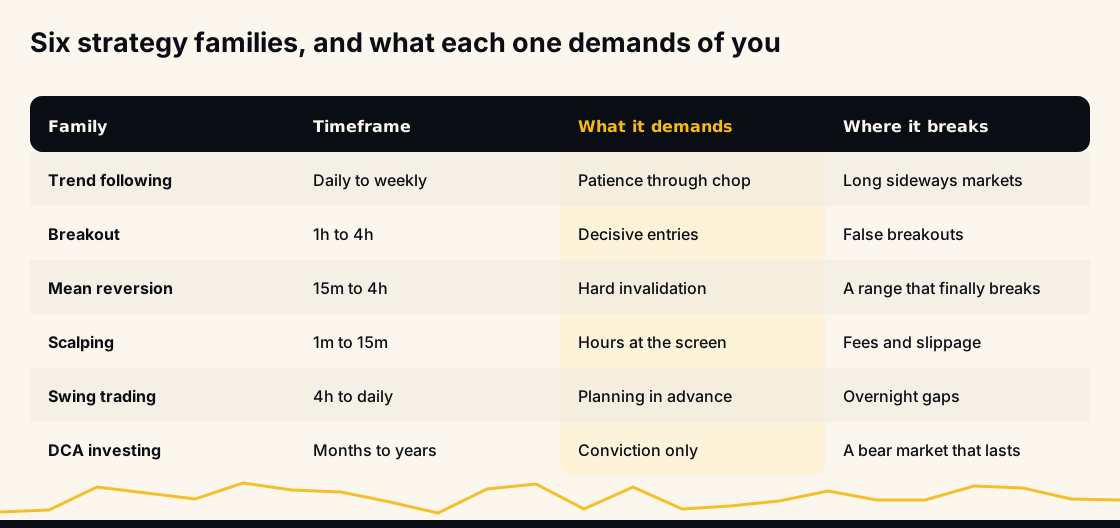
Notice that the third column, not the first, is where the choice actually gets made. Plotting the same six families against the two costs nobody budgets for — hours and nerve — makes the point sharper:
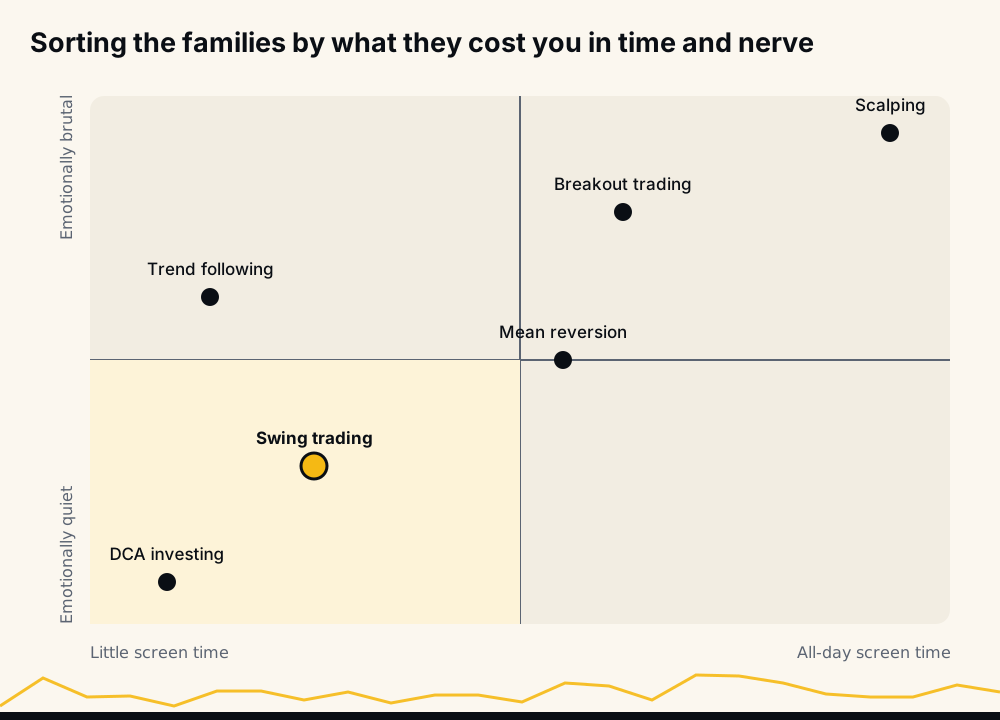
Nothing in the bottom-left corner is easy money; it is simply the corner a person with a job and a family can occupy without quitting in month three.
Trend following: ride the move, survive the chop
Trend following buys strength and sells weakness: you enter when price establishes a direction (higher highs, a moving-average alignment, a momentum confirmation) and stay in until the trend breaks. Crypto's long, violent trends make it a natural fit.
What it demands: patience and a thick skin. Trend systems typically lose small many times — chopped out in sideways markets — then earn it back on a few big runs. If you can't emotionally survive five small losses waiting for one large win, the strategy will "work" and you'll still lose money, because you'll quit at loss number four.
Breakout trading: catching the move as it starts
Breakout trading (the "box strategy" behind half of YouTube's best crypto trading strategy ever videos) waits for price to compress into a range, then enters when it escapes with volume. Done well, it gets you into trends earlier than trend following does.
What it demands: fast, decisive execution and iron acceptance of false breakouts, which are frequent in crypto. Your stop placement is the entire game — this is a strategy where knowing how to set a stop-loss properly is not optional homework, it's the strategy.
Mean reversion and range trading: selling the extremes
Mean reversion assumes price snaps back to an average after stretching too far. Range traders buy support and sell resistance inside a sideways market; oscillator traders fade overbought and oversold readings.
What it demands: discipline about invalidation. The trade wins often and small — until a range breaks and one stubborn position gives back a month of gains. Mean reversion without a hard stop is the classic account-killer, because "it has to come back" is a feeling, not a rule.
Scalping vs swing trading: which timeframe fits your life?
The same edge can be traded at very different speeds, and the timeframe decision is mostly a lifestyle decision, not a profitability one.
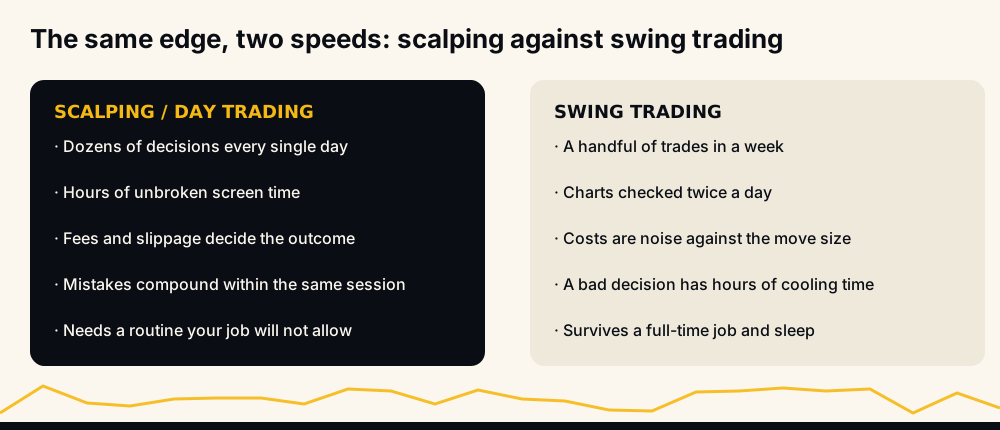
The first cost is the one you pay in hours, and it is not close:
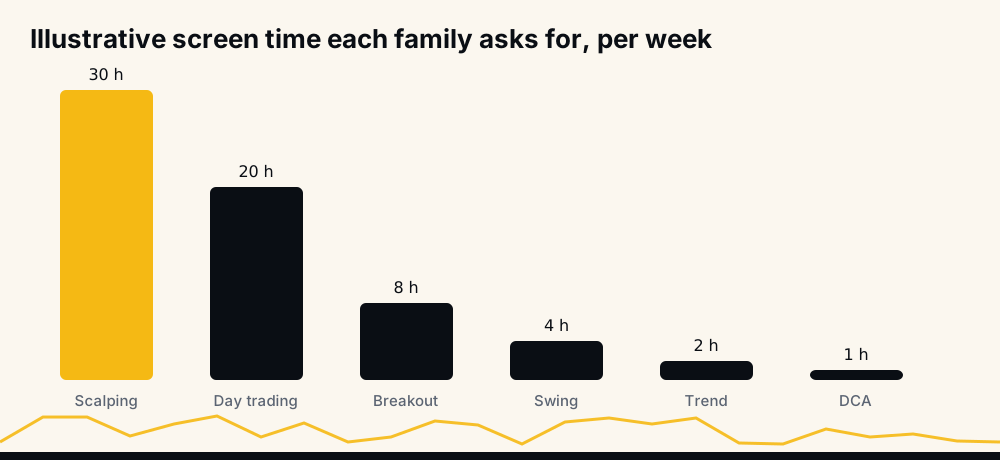
Scalping and day trading mean dozens of decisions daily, hours at the screen, and an edge thin enough that fees and slippage genuinely decide whether you're profitable. Swing trading on 4-hour and daily charts means a few trades a week, decisions made calmly in advance, and far less cost pressure per trade. For anyone with a job, a family, or a need to sleep, higher timeframes are usually the honest choice — a mediocre strategy you can actually follow beats a brilliant one you can't.
The second cost is the one the exchange collects. At a 0.05% taker fee each way, every round trip costs 0.10% of the position — multiply that by trades per week and by 52:
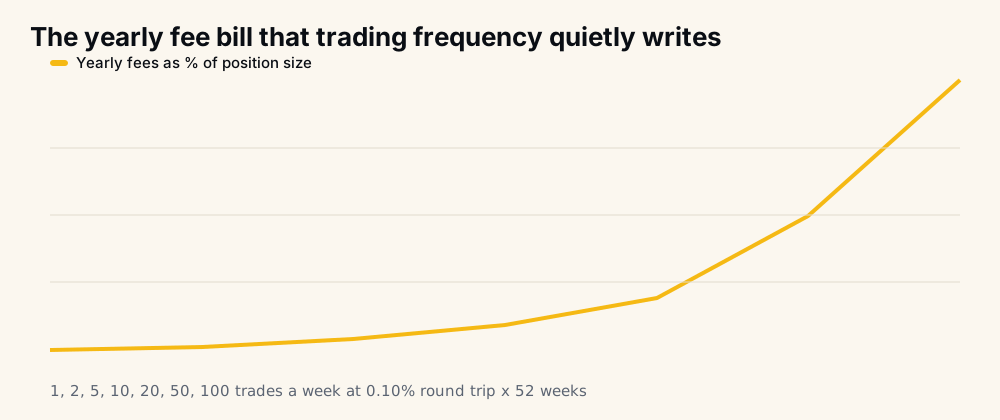
Ten trades a week hands the exchange roughly half a position's value every year. That is not an argument against trading; it is the reason a fast strategy needs a far larger edge than a slow one to end up in the same place.
DCA: the best crypto strategy for people who don't want to trade
Dollar-cost averaging — buying a fixed amount on a fixed schedule, regardless of price — isn't a trading strategy at all. It's an investing strategy that removes timing decisions entirely. For someone who believes in crypto long-term but has no time or desire to trade, DCA into one or two major assets is often the most rational plan on this page precisely because it has no execution to fail at.
Just be clear-eyed about what it is: full exposure to the market's direction, no stop, no exit rule. It's the right tool for conviction, not for trading.
Nothing says you must pick one family and abandon the rest. A common shape for someone with a job is a large passive core with a small, deliberately capped trading sleeve on top:
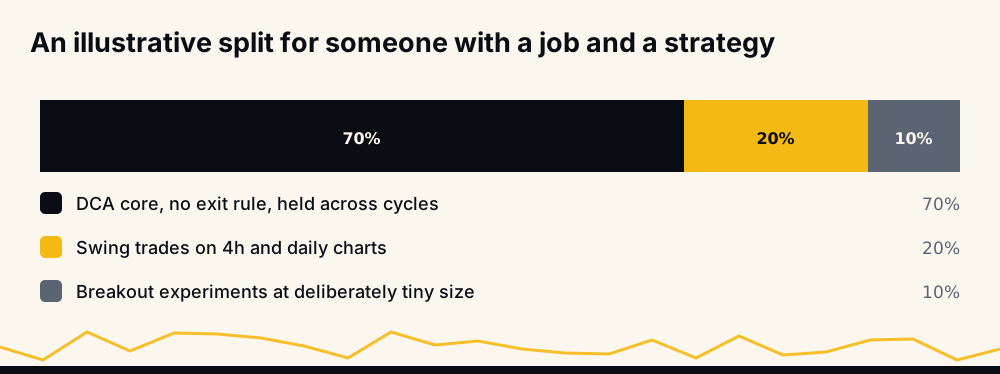
Those proportions are an illustration, not a recommendation — the useful part is the structure: the experimental sleeve is small enough that being wrong about it changes nothing important.
Which crypto trading strategy is best for beginners?
Start where mistakes are cheapest and slowest:
- Trade higher timeframes (4h/daily swing trading or simple trend following). Slow markets give you time to think and make fees nearly irrelevant.
- One or two liquid majors, not a zoo of small caps.
- Tiny size — small enough that a full stop-out annoys you and nothing more.
- A written plan with entry, stop, target and size decided before the trade, plus a journal of every trade after it.
- No leverage until boredom. If your strategy only excites you with 20x, you don't have a strategy, you have a lottery ticket.
Skip scalping entirely as a beginner: it stacks the maximum number of decisions, costs and emotions onto the person least equipped to handle them.
What is the most profitable crypto trading strategy?
Nobody can name it honestly, because profitability lives in the future and depends on regimes nobody can forecast. What can be said honestly:
- Any "most profitable strategy" claim you find is a backtest or a marketing page, not a guarantee about next year.
- Across real traders, the differentiator is rarely the entry logic. It's risk per trade, exit discipline and consistency — the unglamorous half.
- A strategy with a modest, real edge, executed completely, beats a spectacular edge executed at 60%. The profit is in the follow-through.
That's also why "no loss crypto trading strategy" and "high win rate" searches lead somewhere dark: a strategy can print a 95% win rate simply by taking tiny profits and letting losses run — right up until it doesn't. Win rate without risk-reward context is a sales number. Attach the reward-to-risk ratio and the number finally means something:
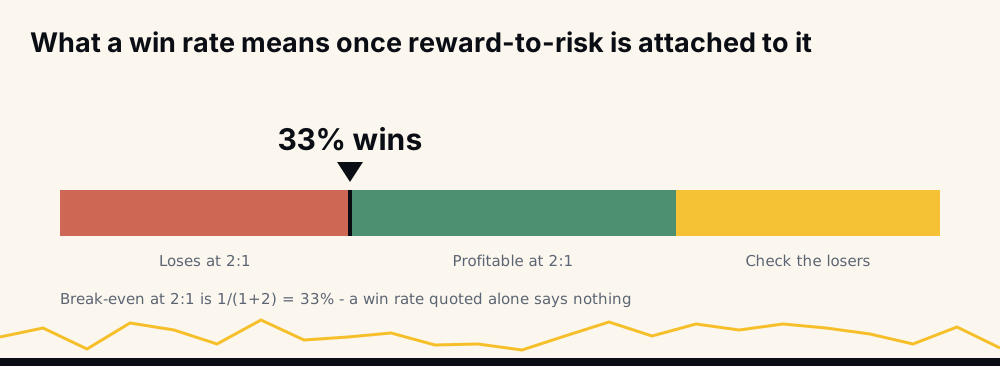
A system risking 1 to make 2 breaks even at 33% and is genuinely good at 45%. A system advertising 95% is telling you almost nothing until you see the size of its losses — and any full record must count the losers too. That's the standard we hold our own live record to: wins, missed and open signals all on one page, with every missed signal counting against the hit rate.
Why most strategies fail in execution, not design
Here is the uncomfortable core of the whole topic: most retail traders don't lose because their strategy was bad. They lose because they didn't trade their strategy.
They move stops "just this once." They cut winners early to feel the win and hold losers to avoid feeling the loss. They revenge-trade after a stop-out, double size after three wins, and abandon a system in the drawdown that was in its backtest all along. None of that is stupidity — it's human wiring, and it's well documented in why humans are so bad at trading.
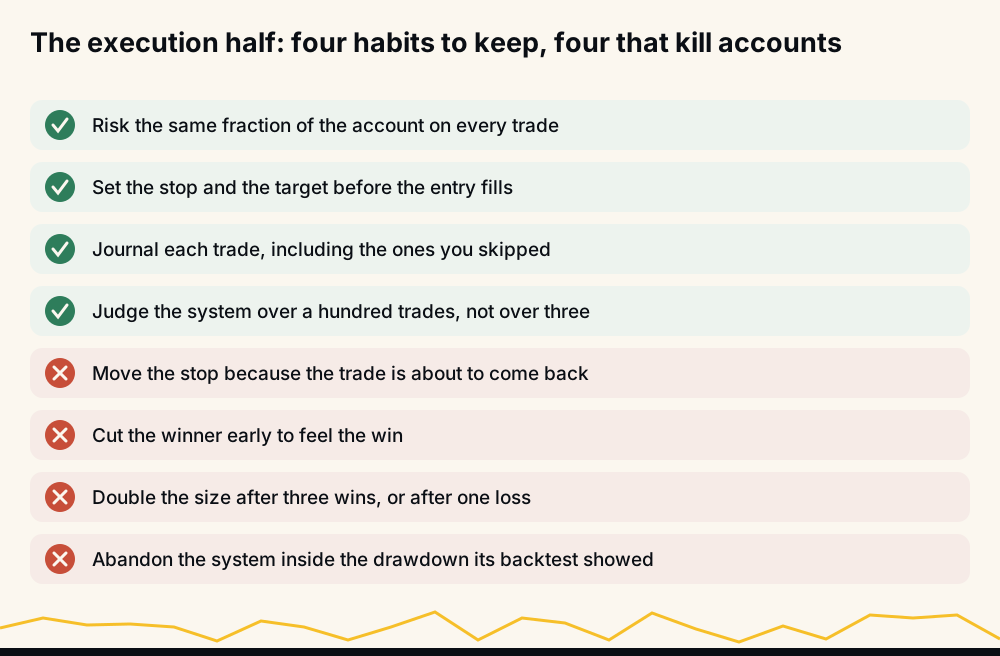
Read that checklist as a mirror: every line is somewhere a good-on-paper strategy quietly dies. The design half of trading is intellectual; the execution half is emotional. The second half is where the money is decided.
How to backtest a crypto trading strategy — without fooling yourself
Before risking anything, test the rules on history. But know that backtests flatter by default:
- Curve fitting. Tune parameters long enough and any strategy "works" on the past — you've memorized history, not found an edge. Fewer rules and round parameters age better than optimized ones.
- Costs. Add realistic fees, slippage and (on futures) funding to every simulated trade. Thin-edge strategies often die at this step alone — better in a spreadsheet than in your account.
- Cherry-picked windows. Test through at least one full cycle: a euphoric run, a crash, and a long boring chop.
- Look-ahead bias. Make sure each simulated decision only uses information available at that candle's close.
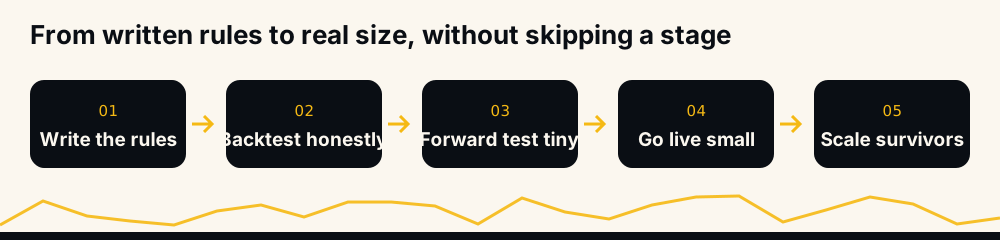
Then forward test: paper-trade or trade minimum size in real time for weeks. The gap between your backtest and your forward test is a measurement of how much your backtest lied. Only scale what survives.
Done properly, that sequence is measured in months, not in an evening:
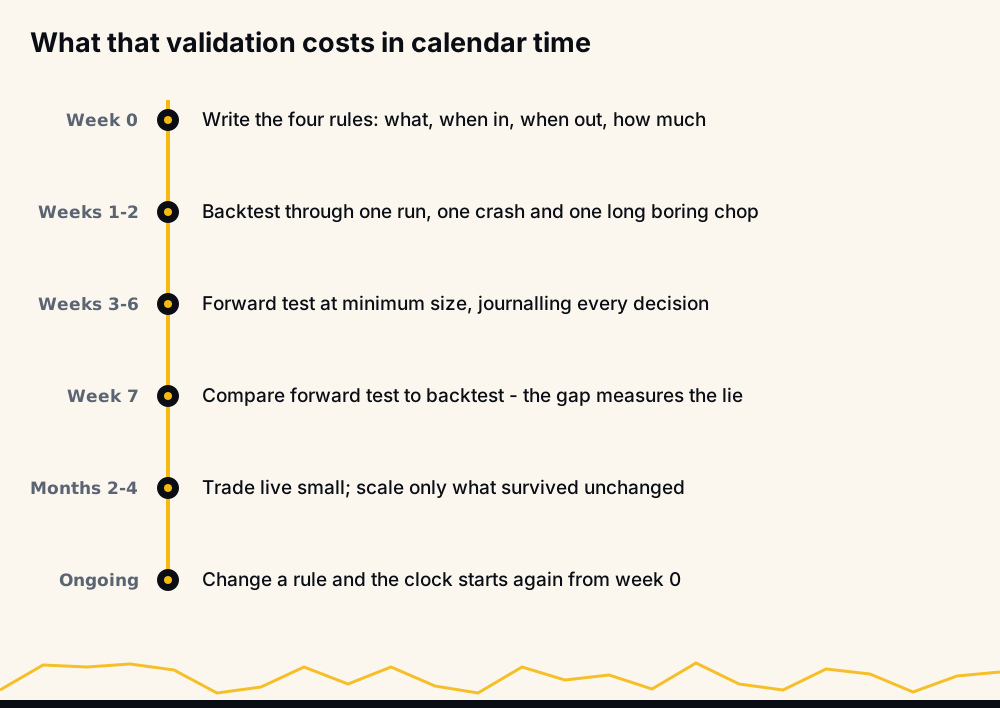
The last line is the one people hate: change a rule and the validation starts over, because the thing you tested is no longer the thing you are trading.
Can automation execute your strategy better than you can?
The execution half — the half that kills most strategies — is exactly what rule-based automation is built for. Software doesn't widen a stop out of hope, revenge-trade at 3 a.m., or hesitate on a valid entry. It also watches more market than any human: HafizeBot's model, for example, evaluates 240+ indicators, formulas and components across 500+ Binance USDT-M perpetual pairs, rates each setup by strength, and either sends the signal to Telegram or trades it automatically within limits you set — minimum strength, position size, max simultaneous positions, coin filters. It never needs withdrawal permission on the API key, and funds stay on your own Binance account.
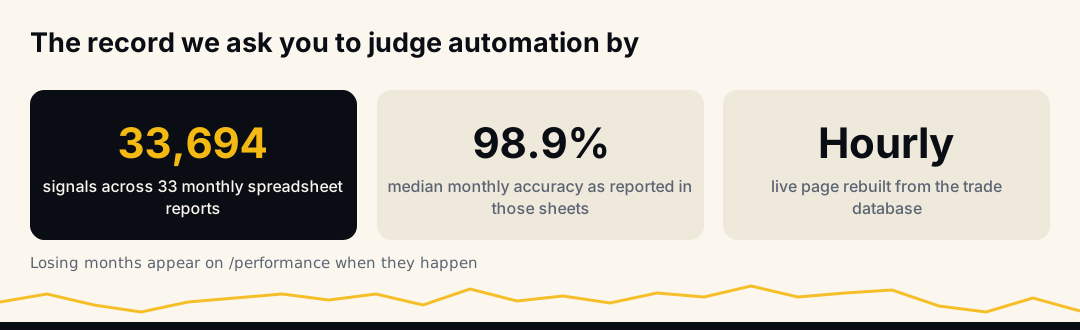
Automation is not a shortcut past the record, though — it just makes the record checkable. Learn how to read crypto signals before acting on any, and judge any system by its full published history: ours is 33 monthly spreadsheet reports covering June 2021 – February 2024 — 33,694 signals, median monthly accuracy 98.9% as reported in those sheets, downloadable at /reports — plus the live performance page, regenerated hourly from the trade database since June 2026, where losing months appear when they happen.
FAQ
Is crypto trading profitable? It can be, and most people who try still lose money — usually through oversized positions and abandoned plans rather than bad entry signals. Profitability is a function of edge, costs and discipline compounded over many trades, not of one great call. Treat any claim otherwise as marketing.
What is the most successful crypto trading strategy? There's no verified league table, and past success doesn't bind the future. The consistent pattern among successful traders is boring: defined risk per trade, a written plan, higher-timeframe setups, and full execution of the rules — whatever the entry style.
What is the best crypto day trading strategy? For the few suited to it: one liquid pair, one setup (typically breakout or momentum), fixed risk per trade, and a hard daily stop. But day trading is the most demanding family in time, fees and psychology — most people get a better result from swing trading the same ideas on 4-hour charts.
How do I learn crypto trading strategies? Pick one family, write its rules, backtest it honestly, then forward test tiny for a month while journaling every trade. Free signal channels are a useful classroom too: watching structured entries and targets in real time — for example HafizeBot's free channel, which posts VIP signals of strength 3 and up on a 20-minute delay with an entry, a target and a strength rating but no stop, so placing the stop is your part of the exercise — teaches more than a playlist of strategy videos.
Is trading crypto worth it? Only if you treat it as a skill with a real learning cost, not a shortcut to income. If you're not willing to write rules, test them and size small for months, DCA investing or staying out entirely are both respectable answers.
Can a bot make a bad strategy profitable? No. Automation executes whatever it's given with perfect discipline — a bad plan included. It fixes the execution half of the problem; the model or strategy behind it still has to be good, which is why a full published record matters more than any feature list.
The honest bottom line
The best crypto trading strategy is a boring sentence: a simple edge that fits your life, risk small enough to survive being wrong ten times in a row, and rules you actually follow. Trend or breakout if you can stomach losing streaks, range trading if you respect invalidation, swing timeframes if you have a life, DCA if you'd rather invest than trade — and automation if you've verified the record behind it, starting with a free channel and a delay, not a deposit.
None of this is investment advice, and no strategy — manual or automated — removes risk: only trade money you can afford to lose. If you want to see what disciplined execution looks like in a checkable ledger, the live performance page shows every win, missed and open signal in public. That's the standard to hold any strategy to — including your own.