The spot market is where an asset is bought and sold for immediate delivery at today's price — you pay, you receive the thing itself, and the trade is finished. In crypto that means the coin lands in your account within seconds, you own it outright, and there is no liquidation price, no funding rate and no contract to close later.
That short definition hides a lot of useful detail. "Immediate" means two business days in gold and forex but seconds in crypto. "Owning it" is the difference between a coin you can stake and a number in a margin account. And spot being the simpler venue does not make it the safer one for every purpose. This article works through each of those.
What "spot" means across crypto, forex, gold and freight
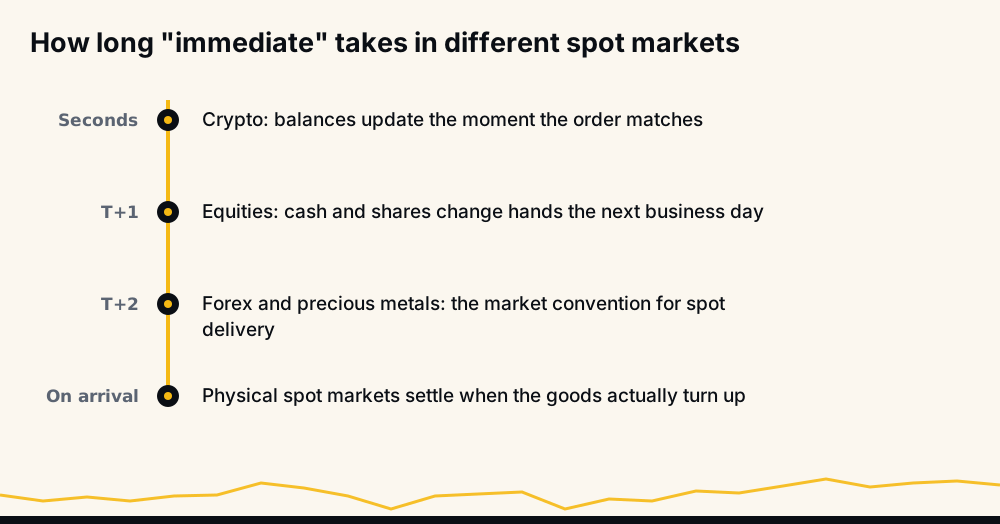
The word turns up in markets that have nothing to do with each other, always with the same core meaning: buy now, at the current price, for delivery now — as opposed to agreeing today on a price for delivery later.
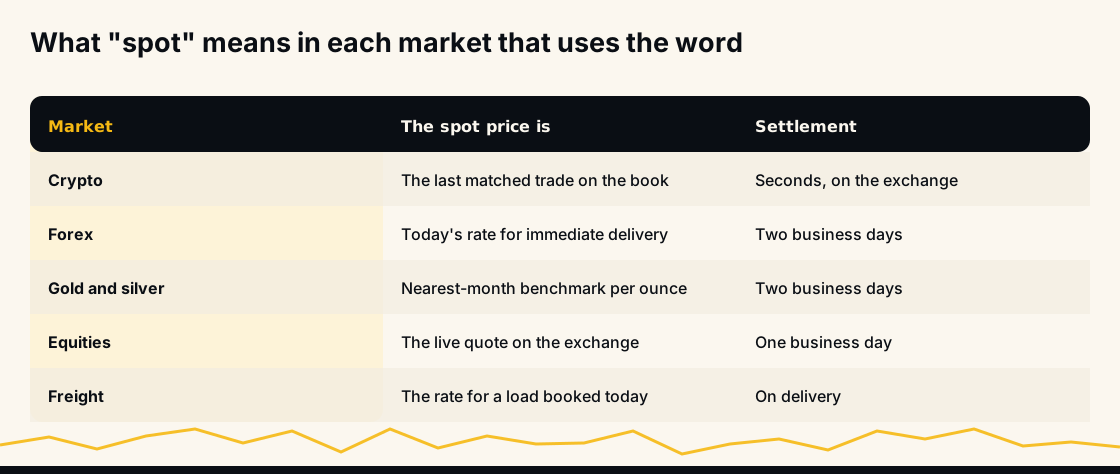
The differences are conventions, not concepts. Gold and forex settle in two business days because that is how long the plumbing traditionally took. Crypto settles in seconds because the exchange simply moves two balances in its own ledger. Trucking has a spot market for exactly the same reason commodities do: a rate agreed today for a load moving today, against a contract rate agreed months in advance.
How a spot trade actually works, step by step
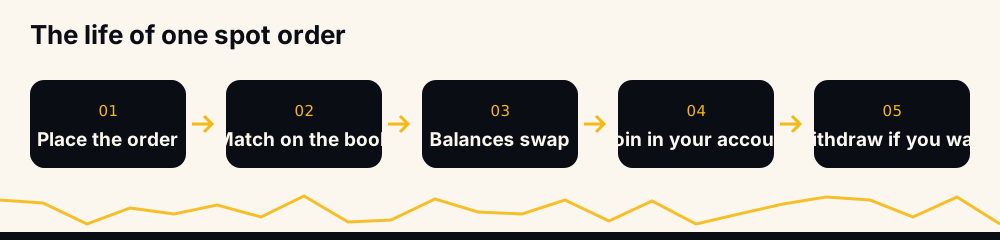
On a crypto exchange, a spot trade is a swap between two balances on the same order book. Your buy order rests until a sell order at a matching price arrives, or it takes an existing sell order immediately.
The distinction that costs beginners money is between the two ways of doing that. A limit order names your price and waits — you may never get filled, but you never get a worse price. A market order takes whatever the book offers right now — you are always filled, at a price you find out afterwards.
Once matched, the balances swap and the transaction is settled. On a centralised exchange nothing touches the blockchain at that moment; the chain is only involved when you deposit or withdraw. That is worth knowing, because it means an exchange spot trade produces no blockchain transaction fee at all — the trading fee is the exchange's, and the network fee only appears on withdrawal.
Spot market vs futures: the differences that actually matter
This is the comparison most people arrive looking for, and it is best read as a list of consequences rather than definitions.
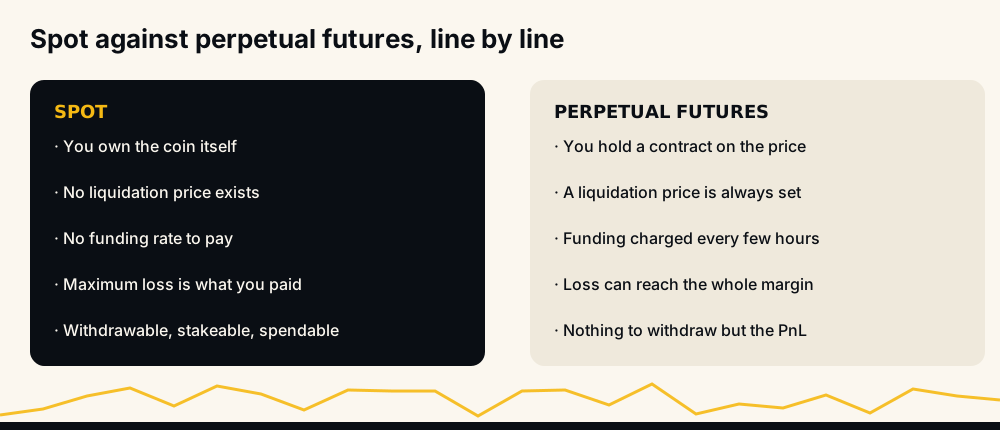
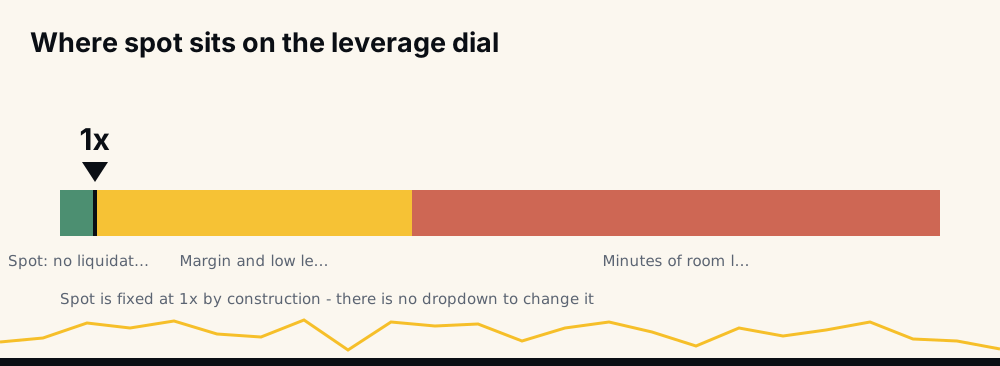
A futures contract is an agreement about a price, not a transfer of the asset. Perpetual futures — the dominant crypto form — never expire, and are held to the spot price by a funding rate paid between longs and shorts every few hours. So a perp position has two ongoing costs a spot position does not have: funding, and the standing risk of liquidation.
The mechanics of margin, both directions and forced closure are covered in the long and short position in the crypto market. The one-line version: on spot your worst case is that the coin goes to zero; on futures your worst case arrives long before that.
What "settlement" means, and when the asset is really yours
Settlement is the moment ownership transfers. In crypto spot, it is the moment the order matches — but ownership on an exchange means the exchange owes you the coin, not that you hold it.
Withdrawing to a wallet you control is the second settlement, the one that actually removes the exchange from the picture. Traders who intend to hold for months usually do it; traders cycling in and out weekly usually do not, and accept the counterparty exposure as the price of convenience. The choice is a real one either way, and it is separate from the trade itself.
Can you short on the spot market?
Not in the plain sense. A spot trade requires you to already hold what you are selling, so there is nothing to sell short with. Selling a coin you own is closing a long, not opening a short.
There are two workarounds and both leave the spot market proper. Margin trading lets you borrow the coin from the exchange, sell it, and buy it back later — that is a real short, but you are now a borrower with interest and a liquidation price. Futures let you take a short position with no borrowing at all, which is why most crypto shorting happens there.
If your view is that something is going down, the honest options are: don't own it, or use a venue built for the trade. Trying to force a downside view through a spot account usually ends up as an expensive imitation of one of the two.
Spot market hours: why crypto never closes
Every question about when the spot market opens is a question about a specific market. Gold and forex spot follow the interbank week, roughly Sunday evening to Friday evening in New York terms, with holidays. Equities follow exchange hours. Crypto spot markets never close — no open, no close, no weekend, no holiday.
That is a genuine structural difference and not only a convenience. It means crypto rarely gaps the way an equity does between Friday's close and Monday's open, because there is no gap to accumulate in. It also means adverse moves happen at 4am your time, whether you are awake or not, which is one of the reasons rule-based execution exists at all.
What spot prices are, and why yours differs from the quote
The spot price is simply the last price at which a trade matched on that book. It is not a single global number: every exchange has its own, and they differ by small amounts because they are separate markets connected only by arbitrageurs.
Your fill can differ from the quoted price for three reasons. The spread — the gap between the best bid and the best ask — means you always cross something. Depth means a large order eats through several price levels and averages worse. Movement means the price changed between your click and the match. Together these are why slippage occurs between the buying and selling price.
Thin books make all three worse. Trading volume in cryptocurrencies is the first thing to check on any pair you have not traded before, and low volume against a large circulating supply is a warning that the market capitalisation on the screen is not liquidity you can actually exit into.
What a spot trade costs
Three costs, in descending order of how often they are ignored.
- The trading fee. Charged on each side, so a round trip costs it twice. Maker orders that add liquidity are usually cheaper than taker orders that remove it.
- The spread and slippage. Invisible on the statement and often larger than the fee on illiquid pairs.
- The withdrawal fee. Only on the way out to a wallet, and network-dependent.
What is not on the list is the important part: no funding rate, no borrowing interest, no margin call. A spot position costs nothing to hold. That single fact is why spot suits long holding periods and why futures suit short ones — the cost structures are built for different time horizons.
When spot is the right venue, and when it is not
Spot is the right answer more often than the volume figures suggest, and the wrong answer in specific, identifiable cases.
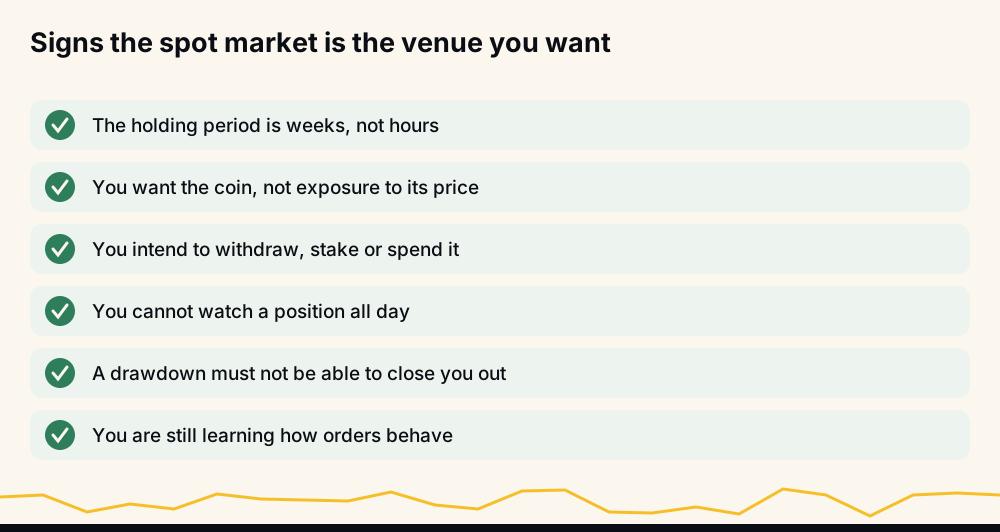
It is the wrong venue when you need a short, when you need to hedge an existing holding, or when you need capital efficiency — putting up a fraction of the notional to hold an exposure. Those are precisely the things futures were invented for.
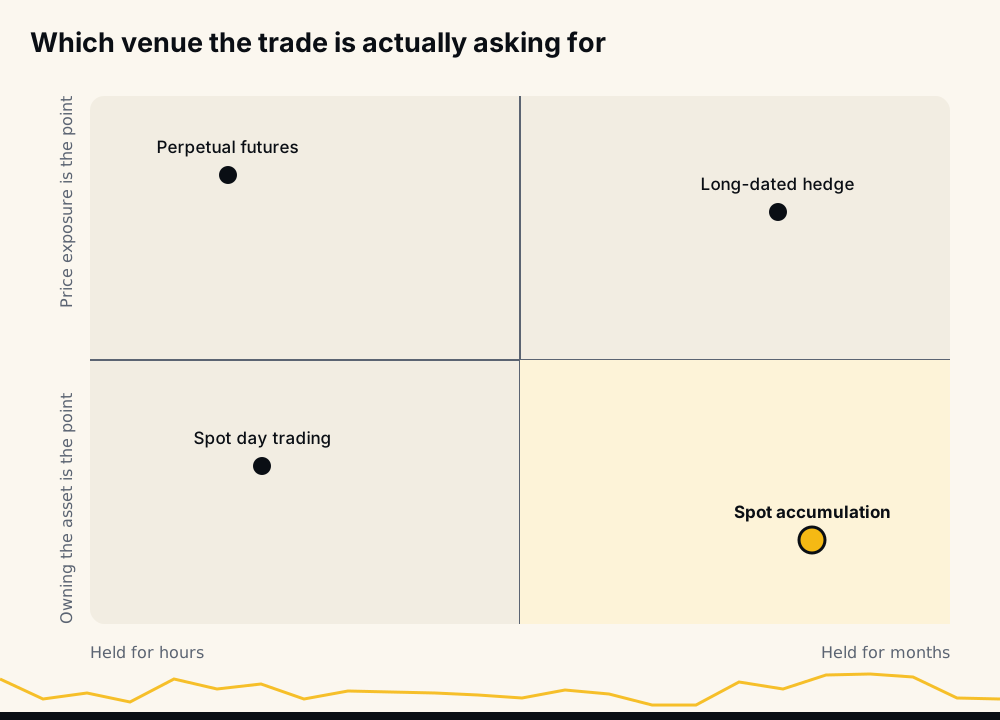
Reading the chart as a question: is the point of this trade to own the asset, or to be exposed to its price? If it is ownership — you want to stake it, spend it, hold it through a cycle, use it in decentralised finance — the answer is spot, and nothing else is a substitute.
Spot risk is still risk
Spot removes liquidation. It does not remove loss. A coin bought on spot can fall 80% and stay there, and the position that cannot be closed out against you is also the position nobody forces you to admit is wrong.
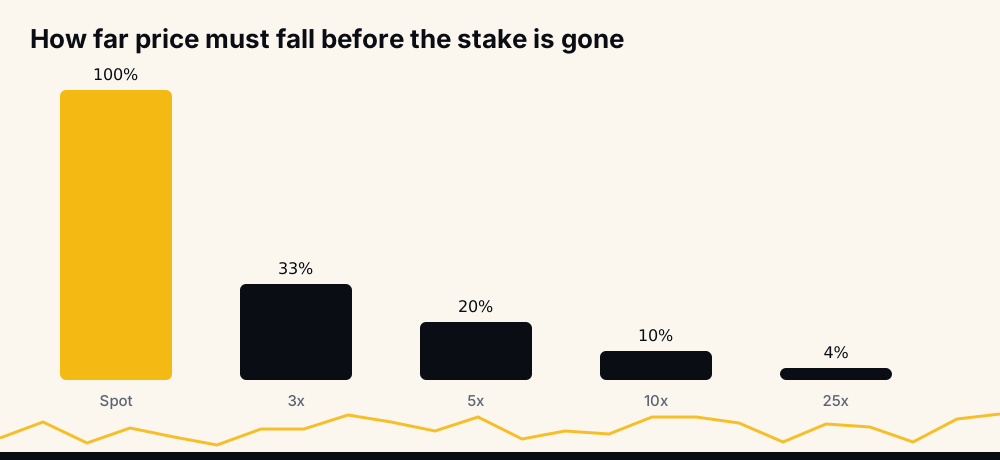
The bars above are just division: at 10x, roughly a 10% adverse move exhausts the margin, while on spot the price has to reach zero. Same view, same coin, entirely different survival window.
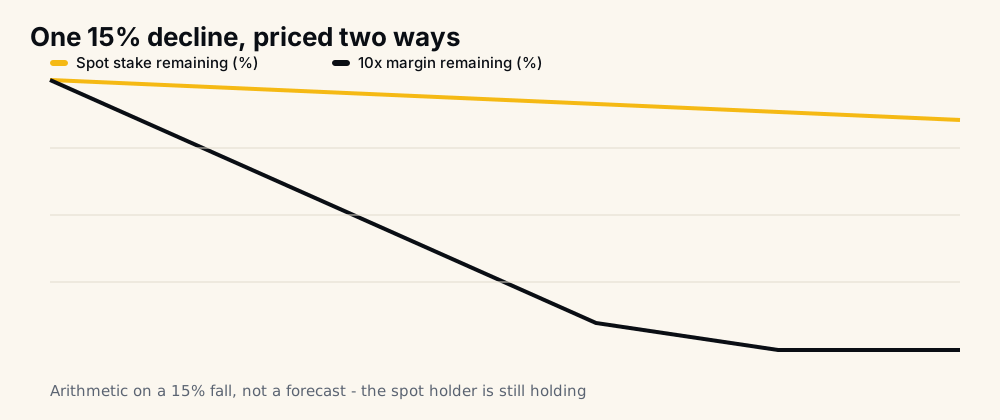
That chart is arithmetic on a 15% fall, not a forecast. The spot holder is down 15% and still holds the coin; the 10x position stopped existing somewhere in the middle. Which is the better outcome depends entirely on what happens next — and neither one is free.
Spot also carries the risks that have nothing to do with price: the exchange itself, a delisting, a pair whose book empties out. Those apply to every venue. Market manipulation in cryptocurrency is a spot-market phenomenon at least as much as a futures one — thin spot books are where it is cheapest to move a price.
How automation fits alongside a spot-first approach
Plenty of people hold on spot and trade a separate, smaller futures allocation, which keeps the two decisions apart: what to own, and what to trade. Automation belongs to the second. If the category is new to you, what a crypto bot is is the primer.
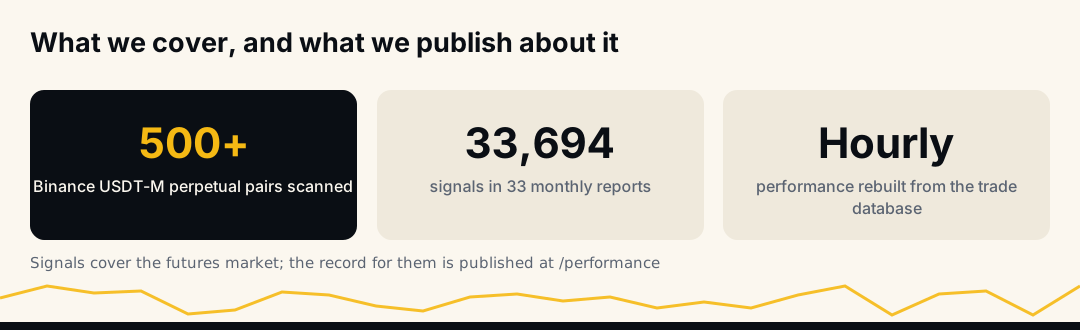
HafizeBot produces AI-generated signals from a model that evaluates 240+ indicators, formulas and components across 500+ Binance USDT-M perpetual pairs, rating each by strength. Those signals are for the futures market, not spot. Optional autotrading never needs withdrawal permission on the API key, so funds never leave your own Binance account, and you set your own limits: minimum signal strength, position size, maximum simultaneous positions and coin filters. Pricing is in USDT, with no card, and nothing renews unless you switch on /subscribe, which renews from the USDT balance you deposited.
The honest framing is that automation changes execution, not exposure. It will not make a leveraged position behave like a spot one, and it will not turn a bad thesis into a good one.
Checking the record before you follow any signal
Thirty-three monthly spreadsheet reports covering June 2021 to February 2024 hold 33,694 signals, with a median monthly accuracy of 98.9% as reported in those spreadsheets; the files are downloadable at our published reports. Since June 2026, the performance page has been regenerated hourly from the trade database : a win is a target hit, and the page shows Wins, Missed and Open. Broadcast signals carry a target and a maximum hold, not a stop, so every signal that does not reach its target in time counts as Missed and lowers the rate. PnL there is shown unleveraged, and losing months appear when they happen.
You can also watch the stronger calls, strength 3 and up, arrive with a 20-minute delay on the free channel at t.me/getbinancefutures, around 3,980 members as of August 2026, before deciding whether any of it is worth paying for.
None of this is investment advice. Spot removes the liquidation risk, not the risk of loss, so trade only what you can afford to lose — on either venue.
Frequently asked questions
What is the spot market in crypto? It is the market where coins are bought and sold for immediate delivery at the current price. The trade settles in seconds on the exchange's own ledger, the coin appears in your account, and you can withdraw, stake or spend it. There is no contract, no expiry and no liquidation price.
What is the difference between spot and futures markets? On spot you buy the asset itself and hold it with no ongoing cost. On futures you hold a contract on the price, post margin against it, pay or receive funding while it is open, and carry a liquidation price. Spot loss is capped at what you paid; futures loss can reach the whole margin much sooner.
Can you short in the spot market? Not directly, because you can only sell what you already hold. Shorting requires either margin trading, where you borrow the coin and take on interest and a liquidation price, or a futures position, which is why most crypto shorting happens on futures rather than spot.
When does the spot market open and close? Crypto spot markets never close — they run every hour of every day, including weekends and holidays. Forex and precious-metal spot markets follow the interbank week, and equity spot markets follow their exchange's session hours.
What is a spot price? The spot price is the price of the most recent matched trade on that particular order book. Each exchange has its own, which is why quotes differ slightly between venues, and why your actual fill depends on the spread and the depth of the book rather than on the number displayed.
Is spot trading better for beginners? It is usually the safer place to learn, because nothing can close your position for you and there is no funding cost running in the background. The trade-off is that a spot position ties up the full amount and gives you no way to profit from a fall.