Fiat currency is money that a government declares to be legal tender and that is not redeemable for gold, silver or anything else physical. A ten-dollar note buys ten dollars of goods because the state says it settles debts, because tax offices demand payment in it, and because everyone around you prices things in it — not because a vault holds metal against it.
That sounds fragile written down, and yet it is the system every country on earth now runs. Below is where that value actually comes from, how it gets destroyed, why the gold standard was abandoned rather than stolen, and an honest ledger of what fiat does better than cryptocurrency and what it does worse.

Why it is called "fiat", and what the word admits
"Fiat" is Latin for let it be done — the same word as in fiat lux, "let there be light". It is not an acronym, despite how often that gets repeated; there is no phrase hiding behind the letters, and it has nothing to do with the Italian car company beyond a coincidence of spelling.
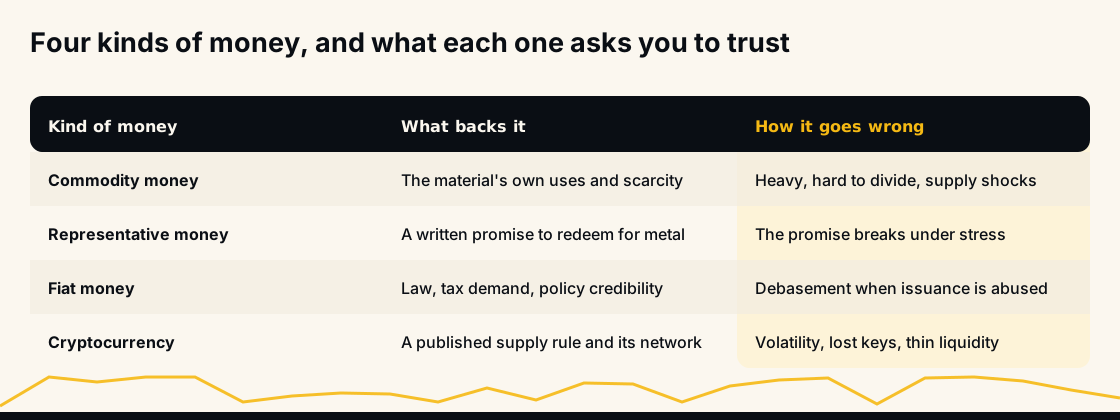
The name is unusually honest about the mechanism. Fiat money is money because an authority declared it so. Commodity money asks you to trust a metal. Fiat money asks you to trust an institution, and tells you as much in its own name.
What backs a fiat currency if not gold?
Four things do the work that metal used to do, and they reinforce each other:
- Legal tender status. Courts will treat a debt as settled if you pay it in the national currency. That single legal fact makes refusing the currency expensive.
- Taxes. The state demands payment in its own money and accepts nothing else. Everyone who owes tax — meaning everyone — needs a steady supply of it, which creates permanent baseline demand.
- Network effects. Wages, rents, mortgages and supermarket shelves are already denominated in it. Switching means renegotiating your entire life at once.
- Managed scarcity. A central bank with a credible mandate keeps the supply from growing faster than the economy. Credibility here is the whole product.
Take away the fourth and the first three hold for a while, then collapse quickly. That asymmetry explains almost every currency crisis in history.
How fiat money is actually created
Most people picture a printing press. Physical notes are a small slice of the money supply in any developed economy; the overwhelming majority of money exists as commercial bank deposits, which are created when banks make loans.
When a bank approves a mortgage it does not hand over someone else's savings. It writes a deposit into the borrower's account and books a matching loan as an asset. New money exists. When the loan is repaid, that money is extinguished again. Central banks influence how much of this happens by setting the policy rate and the reserves banks must hold, then by buying or selling assets outright.
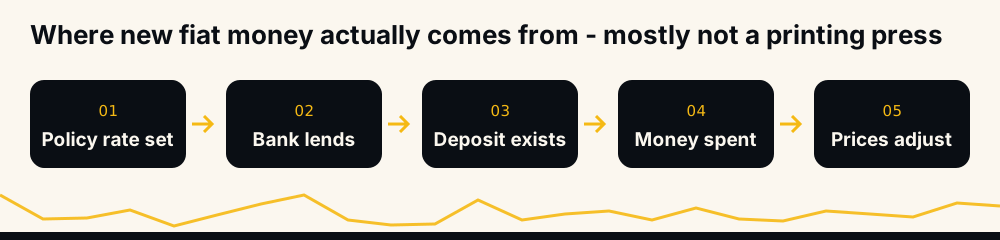
This is why "the government prints money" is a bad shorthand. The government issues debt; the central bank sets conditions; commercial banks do most of the actual money creation, one loan at a time. It also explains why money supply can shrink — in a credit crunch, loans are repaid faster than new ones are written.
The gold standard, and why every country left it
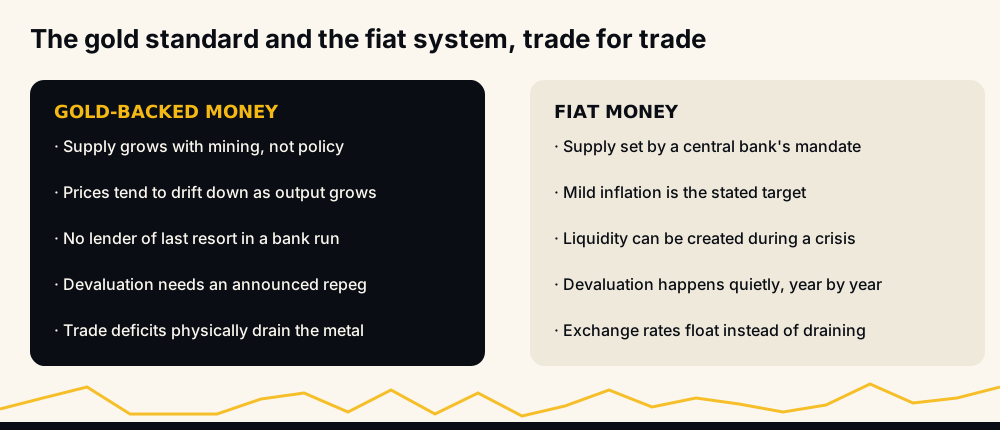
The classical gold standard ran from roughly the 1870s to 1914 and worked as advertised in one respect: prices over long stretches were remarkably stable. Its cost was rigidity. A country losing gold had to raise rates and squeeze employment whether or not its economy could take it, and a run on banks could not be met with liquidity that did not exist.
Bretton Woods in 1944 replaced it with a softer version — other currencies pegged to the dollar, the dollar convertible to gold at $35 an ounce. By 1971 the United States was holding far less gold than the dollars foreign governments could claim. On 15 August 1971, Nixon suspended convertibility. The temporary measure became the permanent system.
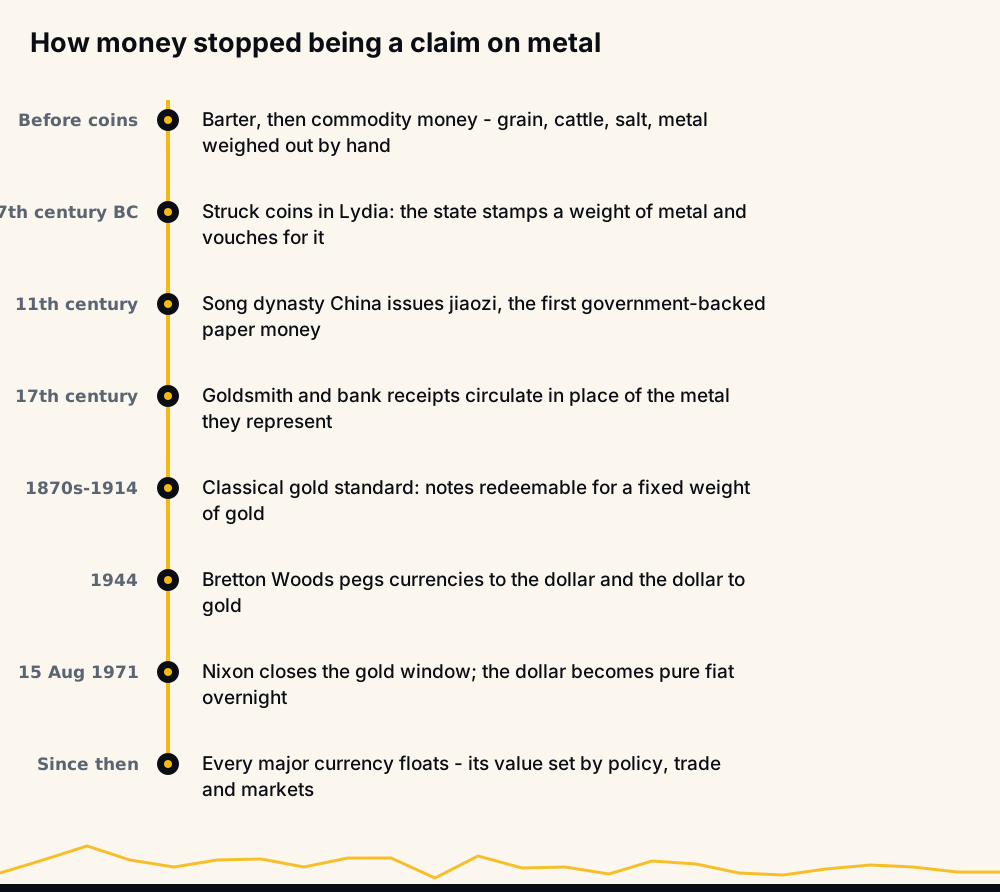
No country was tricked into fiat. Every one of them chose it, in a crisis, because the alternative was worse at that moment. That is an argument worth taking seriously in both directions.
Inflation and debasement: the arithmetic of slow loss
Fiat's defining weakness is that its supply is a decision. Decisions can be made badly, and the cost lands on anyone holding cash.
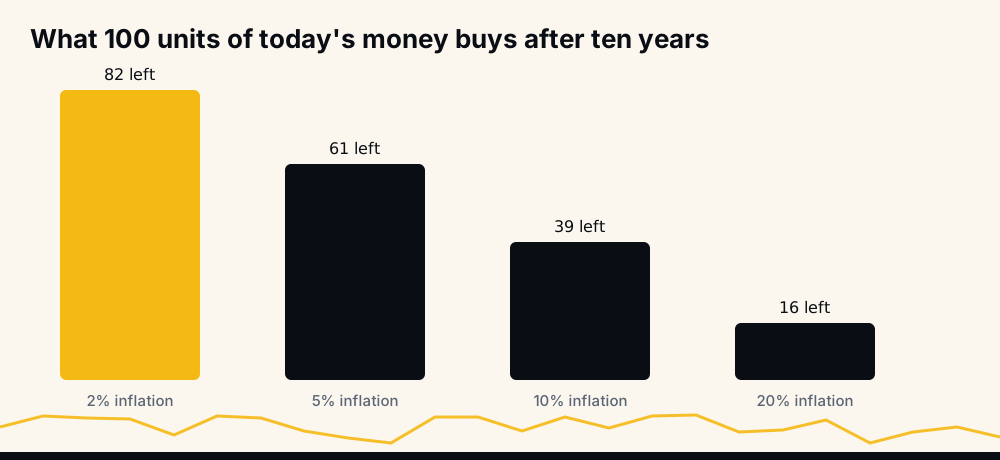
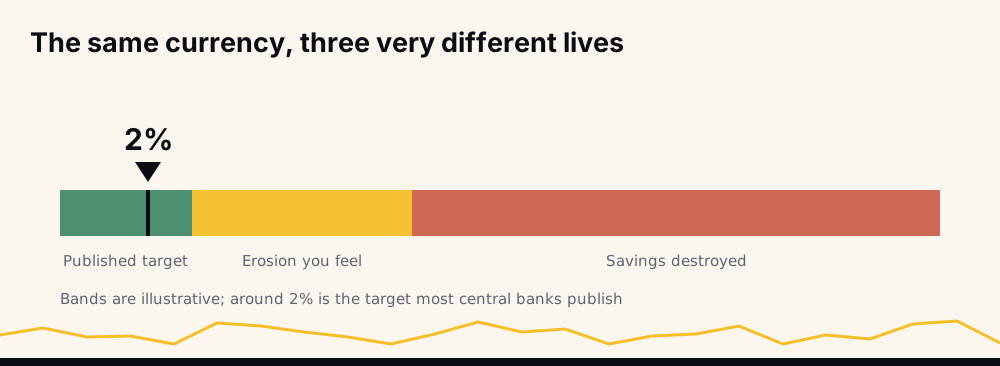
Most central banks publish a target near 2% a year. That sounds harmless until you compound it. Divide 100 by 1.02 ten times and you get 82 — a fifth of your purchasing power gone in a decade, by design, in the well-run case.
The rule of 72 makes this fast to check in your head: divide 72 by the inflation rate to get the years it takes for money to lose half its value. At 2%, that is 36 years. At 7%, ten. At 20%, under four.
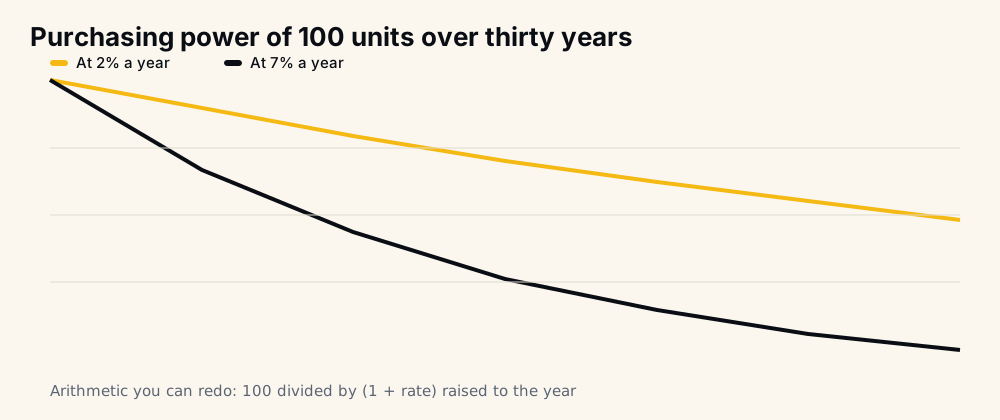
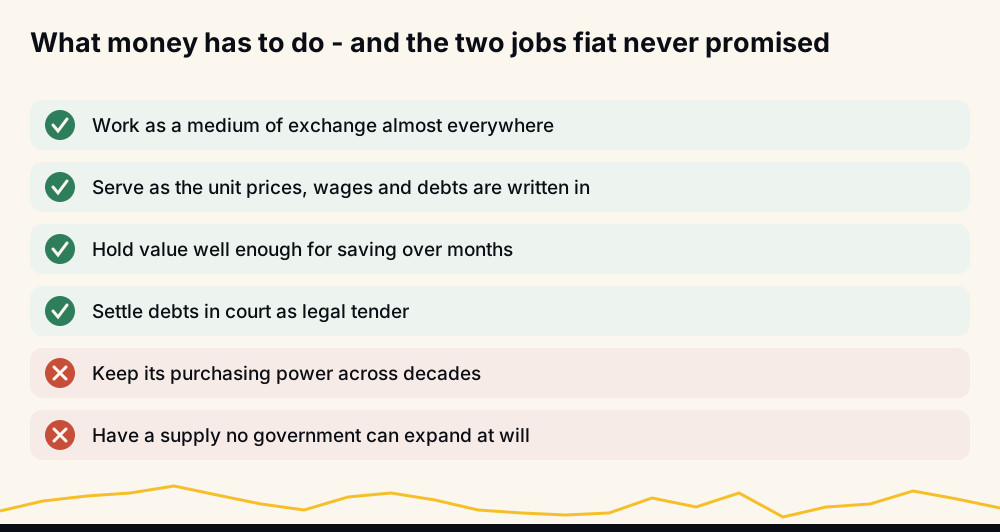
None of this means fiat is a scam. It means cash is a terrible thirty-year store of value and an excellent medium of exchange, and confusing those two jobs is the actual mistake.
What happens when a fiat currency fails
Hyperinflation is not the normal end state; it is a specific policy failure, usually when a government funds spending it cannot tax or borrow for. Weimar Germany in 1923, Zimbabwe in 2008 and Venezuela in the late 2010s all followed that shape. Turkey and Argentina show the milder version — chronic double-digit inflation, where citizens hold dollars, gold or crypto not as an investment thesis but as a defence.
The pattern is consistent. Confidence goes first, prices follow, and the currency stops being a unit of account long before it stops being legal tender. People keep using it for coffee and price their apartment in dollars.
Fiat versus cryptocurrency: the honest comparison
Bitcoin was designed as an answer to exactly this: a supply schedule written in code instead of decided in a meeting. Whether that is an improvement depends entirely on which job you are asking the money to do. We covered the value question at length in why bitcoin has value despite backing nothing, and the short version is that crypto and fiat derive value from different, equally social, sources.
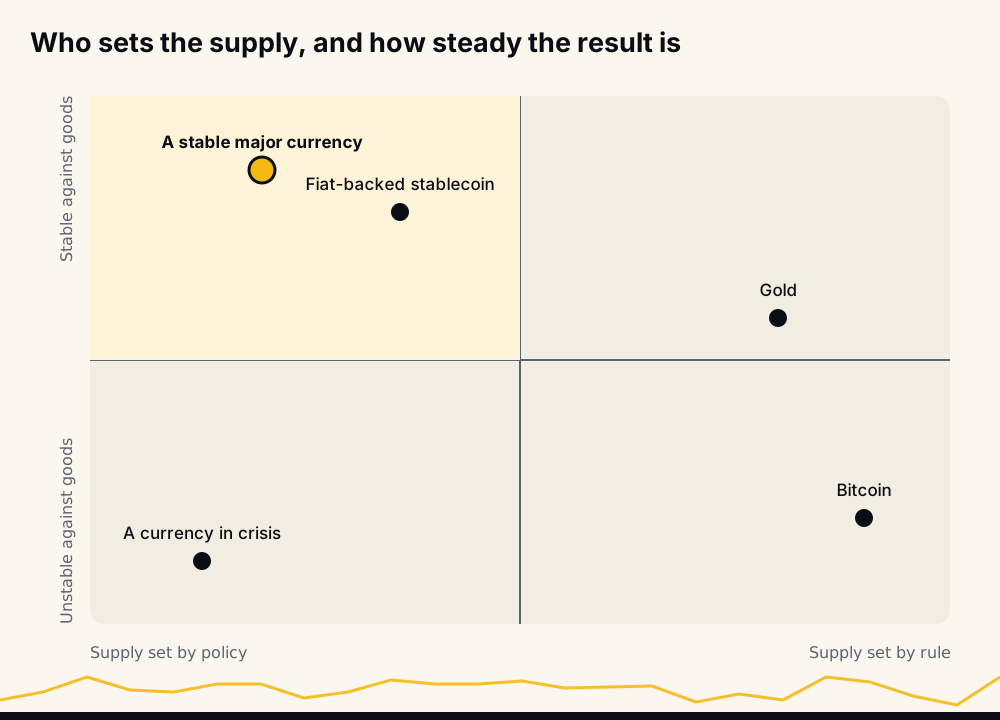
Where crypto genuinely wins: a supply schedule anyone can verify and no committee can change; settlement that does not stop at 5pm on Friday; access without a bank's permission; and a genuine escape hatch for people whose own currency is failing. Those are real, and dismissing them is how commentators looked foolish for a decade.
Where fiat genuinely wins
This is the part crypto content usually skips, and skipping it is why that content is untrustworthy.
- Stability for pricing. You cannot write a two-year employment contract in an asset that moves 15% in a week. Fiat's low volatility is a feature, not an accident.
- Legal enforcement. A stolen bank transfer has a recourse process. A stolen private key has none. Reversibility is a service, and crypto deliberately does not offer it.
- Elastic supply in a crisis. In March 2020 central banks created liquidity in days. A fixed-supply system cannot do that. You can argue the intervention was wrong; you cannot argue the option was worthless.
- Credit. Mortgages, business loans and payroll financing all rest on an expandable money supply. Most of the economy runs on credit, and credit needs elasticity.
- No key risk. Forgetting a bank password is an afternoon of paperwork. Forgetting a seed phrase is permanent.
The honest summary: fiat is better money for living and worse money for saving; crypto is the reverse, and the volatility that makes it a poor unit of account is the same volatility traders are there for.
Stablecoins: fiat wearing a crypto jacket
The market resolved this argument in practice. Almost all crypto trading is quoted against USDT or USDC — dollar-pegged tokens that exist precisely because traders want fiat's stability with blockchain settlement. The mechanics of how those pegs hold, and what breaks them, are covered in how stablecoin prices stay stable.
It is worth noticing what that implies. A market built to replace fiat chose to import the dollar as its unit of account. That is not a defeat for crypto; it is evidence that "stable unit of account" and "scarce store of value" are two different products, and a working financial system wants both. The same pragmatism shows up across decentralized finance, where lending markets quote rates in stablecoins because nobody wants to owe a debt denominated in something that can double.
What "fiat" means in practice when you trade crypto
Three things change once you internalise this.
Your profit and loss is measured in a shrinking ruler. A 5% annual gain in a currency inflating at 6% is a loss. Judge results against inflation, not against zero.
Your quote currency has its own risk. Holding USDT is a dollar position plus an issuer position. Both can move against you independently of the coin you are trading.
Costs are paid in the same fiat terms. Fees, funding and spreads compound against you exactly the way inflation does. We break the on-chain side of that down in what blockchain transaction fees actually pay for.
How this shapes the way we publish results
HafizeBot produces AI-generated signals from a model that evaluates 240+ indicators, formulas and components across 500+ Binance USDT-M perpetual pairs. Everything it reports is denominated in USDT, which means every result is a fiat-denominated result, with the fiat caveats above attached.
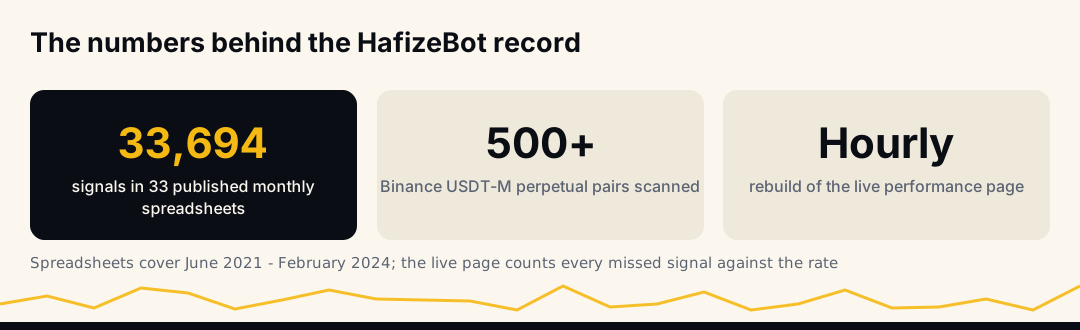
The historical archive is 33 monthly spreadsheet reports covering June 2021 to February 2024 and 33,694 signals, with median monthly accuracy of 98.9% as reported in those spreadsheets — the files themselves are on the reports page so you can check the arithmetic rather than take our word for it. Since June 2026 the live performance page is rebuilt hourly from the trade database, where a win is a target hit, and the page shows Wins, Missed and Open. Broadcast signals carry a target and a maximum hold, not a stop, so every signal that does not reach its target in time counts as Missed and lowers the rate. Losing months appear when they happen.
Frequently asked questions
Is fiat currency backed by anything? Not by a physical commodity. It is backed by legal tender laws, by the state's demand for taxes in that currency, by the network of prices and contracts already written in it, and by the central bank's credibility in managing supply. Those are real supports, but they are institutional rather than physical.
Why did the world abandon the gold standard? Because a metal-linked supply could not expand during banking panics, depressions and wars. Countries left it in stages — most during the 1930s, and finally when the United States ended dollar-gold convertibility on 15 August 1971. Each exit happened under crisis pressure, not by long-term design.
Is fiat currency going to collapse? Individual currencies do collapse, and several have within living memory, usually when a government monetises deficits it cannot fund otherwise. A simultaneous global collapse is a much stronger claim with much weaker evidence. Chronic slow erosion is the realistic risk for most currencies, not overnight failure.
What is the difference between fiat currency and cryptocurrency? Supply and enforcement. Fiat's supply is a policy decision and its rules are enforced by courts; crypto's supply is a published schedule and its rules are enforced by software and consensus. Fiat is more stable and reversible; crypto is scarcer by design and permissionless. Neither property set is strictly better.
Is a stablecoin fiat currency? No. A stablecoin is a token that aims to track a fiat currency, usually by holding reserves against it. You are trusting the issuer and its reserves in addition to the underlying currency, which adds a layer of risk rather than removing one.
How much of a currency's value is just confidence? Most of it, and the same is true of gold and of bitcoin. What differs is whose confidence you depend on: a central bank and a legal system for fiat, a mining and validator network plus a fixed rule for crypto.
Before you act on any of this
Understanding fiat does not tell you what to buy. It tells you what your returns are actually measured against, which is a more useful thing to know than most trading advice.
If you want to see how signals behave in a fiat-denominated market before committing anything, the free channel at t.me/getbinancefutures carries the calls of strength 3 and up on a twenty-minute delay and had around 3,980 members in August 2026. Autotrading, when people get there, never needs withdrawal permission on the API key — funds never leave the user's own Binance account, and the user sets minimum signal strength, position size, maximum simultaneous positions and coin filters.
None of this is investment advice, and nothing here is a promise of profit. Currencies erode, markets fall, and automated systems lose money in exactly the conditions they were designed for. Trade only what you can afford to lose.